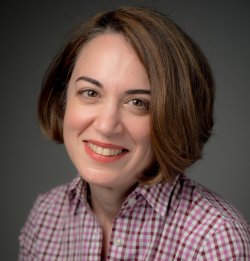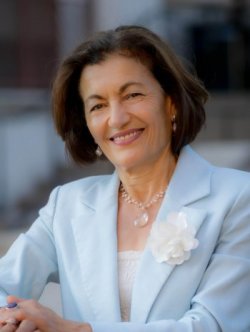
Montclair State welcomes two new deans this
fall: Daniel Gurskis, dean of the College of the Arts, and Francine Peterman,
dean of the College of Education and Human Services. An Emmy Award-winning producer,
Gurskis comes to Montclair State from Brooklyn College of the City University
of New York, where he was a professor, chair of the Department of Film, and a
special assistant to the president. Peterman—a frequent writer and speaker on
topics related to urban teacher education and assessment—joins Montclair State
from Queens College of the City University of New York, where she was a
professor and dean of education. They recently told us a little about
themselves, what drew them to Montclair State and the plans they have for their
colleges.
Daniel
Gurskis – College of the Arts
Q: What are your first impressions of Montclair
State?
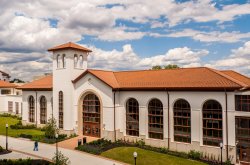
A: This is an exciting place that’s undergone
significant academic and physical changes. Any university with its own
on-campus diner is doing something right!
Q: What drew you to the College of the Arts?
A: Montclair State is clearly on the ascent, gaining
in reputation through bold initiatives, many of which are associated with the
College of the Arts. There’s plenty of opportunity for someone in my position
to contribute to the growing success of the University as a whole.
Q: What are the college’s greatest strengths?
A: Definitely the people—students, faculty,
staff and alumni.
Q: What would you most like to accomplish in
the next few years?
A: I am absolutely committed to student success,
faculty advancement and increased visibility for both the College and the
University. I hope to build on the many good things that have been accomplished
in those areas.
Q: Will you teach any classes?
A: Unfortunately, there are only 24 hours in
a day. As I look at the scope of the position of dean, it’s hard to see how there
would be enough time for me to teach a class—or at least teach it well.
Q: What will you most miss about teaching?
A: I really enjoy being in the classroom.
I’ll miss the give-and-take with students.
Q: You won an Emmy Award for producing the
documentary James Stewart’s Wonderful Life. Where do you keep your Emmy?
A: The Emmy is on a shelf in my home office.
She’s always looking over my shoulder, keeping an eye on what I’m doing.
Q: Do you have a favorite screen hero?
A: My taste runs more toward antiheroes and
similarly ambiguous characters like Jake Gittes in Chinatown, Chili
Palmer in Get Shorty, William Munny in Unforgiven, Michael
Clayton, Thelma and Louise, and Ray, Ken, and Harry—the three murderous main
characters in the British film In Bruges.
Q: Do you still plan to write or make films?
A: Woody Allen once said, “If you want to make
God laugh, tell Him your future plans.” I’d love to continue to write and make
films. In fact, my most recent screenplay is for a film scheduled to go into
production later this year. But, as I’ve told the director and the producer, if they need a major rewrite from me, the time
for that was before I became dean.
Q: Will you move to Montclair?
A: I live on Long Island. My wife, Jennifer McLogan,
is a reporter who covers Long Island for CBS 2, so for the near term at least,
we’re pretty much tethered there.
Q: Is there a single thing you cannot do
without?
A: First thing in the morning, a couple of cups
of the darkest French roast I can pour. The rest of the day, my three-year-old MacBook
Pro.
Q: What do you like to do on your day off?
A: Day off? You mean I get a day off?
Francine
Peterman – College of Education and Human Services
Q: What has impressed you most about Montclair
State?
A: Its commitment to the preparation of the
best teachers, educators, counselors and health professionals to serve in schools
and communities. I see this commitment through its outstanding reputation
across the country, its ongoing work in Newark, the quality of the programs and
the intellectual engagement of the faculty members in teaching, research and
service.
Q: What are the greatest strengths of the
College of Education and Human Services?
A: The College has a deep and ongoing commitment
to making a difference in the lives of children and families through robust,
responsive programs and initiatives. Our faculty members lead these efforts and
are dedicated to using their research to resolve problems by working
collaboratively with community partners to respond to complex concerns related
to health, education and social issues.
Q: What do you most look forward to in your
role as dean?
A: I’m just beginning to get to know [the College’s]
exceptional faculty, staff and students. I can’t wait to get to know them
better.
Q: What would you most like to accomplish in
the next few years?
A: One of my enduring questions is: How do we
know? Over the next few years, I look forward to many conversations to help us
define the evidence and practices that differentiate the College of Education
and Human Services and its programs, centers, faculty and graduates from others
throughout the country and the world. Documenting and telling the story of our
successes and what we have learned is an important task for every community,
including our own.
Q: Why did you decide to become a teacher?
A: I have always wanted to be a teacher. My
father used to tell the story of my coming home from school in the fourth grade
and exclaiming, “I want to join the Future Teachers Club!” Much to the chagrin
of my fourth grade teacher —who imagined me a mathematician and computer
scientist—and who still reminds me of his dream, I chose teaching as a career.
It's still how I most define myself.
Q: Will you continue your research?
A: Yes, I am currently studying two things: the
creation of a culture of assessment and the characteristics of settings that contribute
to developing innovation and creativity. In particular, I am interested in how
we use information to inform and improve our practice and shape our organizations
to ensure that everyone involved—faculty, staff, students, graduates and those
we serve outside the University—creatively and collaboratively solves community
problems.
Q: Who is your personal hero?
A: My intellectual mentor is the late Seymour
Sarason, a noted authority on school reform who insisted on the importance of
bringing people together to effect change. I worked on a school reform project
with him early in my career and will always appreciate how carefully he
listened to everyone, so that each of us felt special and very “heard.”
Q: What is your greatest extravagance?
A: Everyone knows I love food! My friends say
there’s no need for Zagat’s when I’m around!
Q: How do you like Montclair?
A: I love this beautiful area! Now I understand why they call New Jersey
the Garden State.