Back in the fall of 2007, when I was a sophomore undergraduate
student at the School of Business, I stumbled upon an interesting article in a
major publication regarding business students choosing to go into the Peace
Corps after graduation. I originally thought that this was a particularly odd
trend. Most of my classmates were focused on landing a job in accounting,
consulting, or something within the realm of business administration. I wanted
some international experience to compliment my degree and looked at several
internships opportunities but something, or someone, would always reference the
Peace Corps. It seemed that the more I
researched, I better it sounded.
After talking it over with friends, family, and Montclair
State University faculty, I decided to apply. After a long and rigorous
application process, I received my invitation to become a Small Enterprise
Development trainee in Senegal, West Africa. Trainees are sent to their
respective countries and receive 9-week intensive language and technical
training. You become a volunteer only after you have completed the training
process.
For many volunteers the first months were dedicated to
absorbing as much of the language and culture as possible. Much like the work
of a general consultant, we had to create networks of work partners, grasp
various aspects of daily life in our towns/villages, and research. We spent
weeks talking to teachers, farmers, doctors, town elders, etc. Flexibility was
key.
I was fortunate enough to have a dynamic Peace Corps service
while living in Senegal. I lived in three different locations (a small town, a
city, and the capital city) and worked on three separate projects. The largest
of those projects, and my favorite, revolved around working with the health
organization PATH, or Program for Appropriate Technology in Health, on a
malaria surveillance initiative in the northern part of the country.
The goal of the project was to set up a network for health
care providers (doctors, nurses, etc.) to submit weekly reports on malaria
transmission from their respective health centers. This data would provide the
World Health Organization and Senegal’s Ministry of Health with a clearer
picture of malaria transmission. Submissions
were done through text messages eliminating the need for computers or a
hardline connection to the Internet. My job in this process was to collaborate
with local health care providers and analyze the data results. By taking
advantage of cellphone coverage and usage, we were able to capture weekly
real-time data from health posts including those with little to no access to
electricity.
I’m very proud of what we were able to accomplish through
this partnership. The real success came from strength of our partnerships with
Senegal’s Health Ministry and the national malaria coordinators. Our partners
were highly involved in strategic planning and invested much into the project.
We were able minimize costs by utilizing technology that was cheap, readily
available, and required little to no training.
Admittedly, my service was unique compared to my follow
volunteers. Many volunteers don’t work
on regional specific jobs. In fact, it’s very difficult to describe a day in
the life of a single volunteer. Experiences vary from town, region, country, and
even continent. Some volunteers travel 20 to 40 miles on bikes to get to
work. Most don’t have access to running
water or electricity (Sorry folks, no twitter or Facebook here). Many of us
worked with talented individuals that have never had access to formal education
or job training. It is through these hardships and sacrifices that define our
service and strengthen our world perspective. We returned with two or more
languages under our belts and unique set of skills and competencies.
As alumni, we must find ways of promoting these values to our undergraduate and graduate students. Surely there are more students like myself who are interested in cultivating a global perspective. In a recent commercial, a former volunteer was asked a question during an interview to which his response was, “You think managing a sales team is tough, try working with five different villages.”
Indeed, truer words have never been spoken.
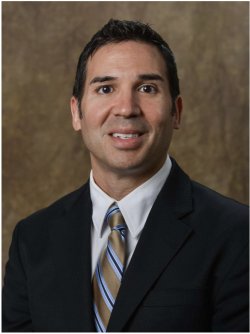
Chris Besmir Ruli is a member of the graduate class of 2010. He earned a bachelor’s degree in Business Administration with a minor in Political Science from the School of Business. Mr. Ruli has served as Attorney General, Secretary of Commuter Affairs, and Secretary of the Political Science Club under the Student Government Association of Montclair State University. While serving two years as a Peace Corps volunteer in Senegal, he became the liaison to Program for Appropriate Technology in Health (PATH). He is currently a Master of International Relations candidate enrolled in the School of International and Public Affairs at Columbia University.