
View Profile Page
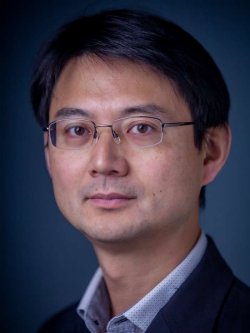
Yang Deng
Professor, Earth and Environmental Studies, College of Science and Mathematics
- Office:
- Center for Environmental & Life Sciences 424
- Email:
- dengy@montclair.edu
- Phone:
- 973-655-6678
- vCard:
- Download vCard
Profile
Environmental Resilience, Innovation, and Sustainability Engineering (E-RISE) Laboratory
RECENT NEWS
Our paper in Nature Water is published: Small Islands as Laboratories and Testbeds for Resilient Water Supply. We propose a new approach for infrastructure resilience - small islands serve as natural labs to capture early climate and disaster warnings, and as real-world testbeds for developing and refining adaptation strategies for continental water infrastructure. This island-based approach can also be applied to other civil infrastructure on the mainland. Read the paper here: https://rdcu.be/eH7O1
My new book, PFAS Treatment Technologies, has been released by the Royal Society of Chemistry. As the lead editor, I worked with two colleagues to bring together U.S. experts who contributed chapters to this volume, which showcases both re-emerging and innovative solutions for PFAS removal from water. Read more: https://books.rsc.org/books/edited-volume/2335/Per-and-Polyfluoroalkyl-Substance-Treatment
We are pleased to start a new NSF-supported project, which aims to advance our understanding of the resilience behaviors of small community water systems in the coastal areas and barrier islands of Southwest Florida during Hurricanes Helene and Milton.
Dr. Yang Deng is inducted into American Academy of Environmental Engineers and Scientists (AAEES) as a Board Certified Environmental Engineer (BCEE) through the "Certification Through Eminence" program.
Dr. Yang Deng is named "2024 Educator of the Year" by ASCE - New Jersey Section.
https://www.montclair.edu/earth-and-environmental-studies/2024/05/20/faculty-named-asce-new-jerseys-2024-educator-of-the-year/
Congratulations to Qiufeng! She is a recipient of the 2024 Graduate Scholarship Award from the New Jersey Society of Women Environmental Professionals (NJSWEP). https://www.montclair.edu/environmental-management-phd/2024/07/01/phd-student-receives-njswep-award/
Dr. Yang Deng is honored with prestigious WEF 2023 Camp Applied Research Award (https://www.montclair.edu/csam/2023/11/20/professor-honored-with-prestigious-national-research-award/)
Congratulations to Qiufeng Lin for being awarded the 2023 Tracey G. Liberi Drinking Water Careers Memorial Scholarship from American Water Works Association (AWWA)! This prestigious scholarship recognizes her PhD dissertation research on building resilient water treatment technologies and water supply infrastructure to adapt to the impacts of climate change.
We are thrilled to implement a new NSF RAPID project to assess the resilience of different water supply systems in Puerto Rico during and after Hurricane Fiona. An exciting collaboration with the University of Puerto Rico.
Dr. Deng was awarded the prestigious 2022 Project Innovation Award (Gold Winner) of the International Water Association in Copenhagen, Denmark on September 13, 2022. The award in the category of Breakthroughs in Research and Development is for his research to develop ferrate-enabled daily and emergency household water treatment (HWT) and explore interrelated, general principles for the design of resilient HWT. The efforts promise water autotomy and deliver innovation-based HWT processes and design principles for the people without safely managed potable water services, particularly in low- and middle-income countries, in an equitable and sustainable manner.
We are awarded a new two-year research grant from the Dept. of the Interior (Desalination and Water Purification Research and Development Program). This project will explore the integration of emerging processes and established technologies to remove PFAS in water in a more energy and cost-efficient manner. The novel scheme builds on complementary advantages of innovative and traditional PFAS treatment technologies, while overcoming their respective restrictions, thus enabling the emerging treatment process for true application to water treatment.
Congratulation to Qiufeng Lin. Qiufeng is awarded 2022 John J. LaGrosa Award from NJ Water Environment Association for her research on water supply resilience for climate change. https://www.montclair.edu/csam/2022/05/03/environmental-science-and-management-phd-student-receives-njwea-award/
Dr. Deng has recently been awarded an EPA grant to explore innovative household water treatment (HWT) for PFAS in drinking water. Although the removal of PFAS in centralized water supply systems has been practiced over the years, the PFAS mitigation is challenging for the point-of-use (POU) and point-of-entry (POE) water treatment at a household scale. Globally, 2.2 billion people, mostly from developing countries, need or are using HWT devices. In the U.S., the HWT user population is over several millions. Technically viable, low-cost, and simple-to-use HWT technologies with broad industrial and social acceptance are urgently needed for eliminating PFAS from drinking water. Equally important is that innovative HWT enables emergency water supply for disaster-affected populations in the aftermath of natural disasters. The effort enhances our disaster resilience, particularly when climate change is increasing the strengths and frequencies of climate and weather-related disasters (e.g., hurricanes, floods, and droughts, and heat weaves).
Dr. Yang Deng is leading a new multi-year USDA NIFA project to explore innovative ferrate(VI)-based technologies for resilient and sustainable water reuse in agriculture. With the collaboration of soil and plant nutrition scientists, we are exploring a new paradigm for water reuse, mitigation of greenhouse gas emission, pollution abatement, and nutrient retention in an agroecosystem. The project will combat worsened droughts due to climate change, reduce electricity consumption for long-distance water conveyance, and mitigate greenhouse gas emission from electricity production, thus strengthening the U.S. agricultural resilience and sustainability.
Dr. Yang Deng is among Top 2% of scientists and engineers in terms of citation (arranged by their c-scores) in the sub-fields of Environmental Engineering and Environmental Science as listed by Stanford University (c-score = 3.641) https://elsevier.digitalcommonsdata.com/datasets/btchxktzyw/3
Dr. Deng joins an interdisciplinary team for a NOAA grant in innovative GI/LID techniques for mitigating runoff and pollution impacts on the U.S. freshwater systems, and abating runoff pollution-related environmental, economic and social issues for community resilience.
(https://seagrant.noaa.gov/News/Article/ArtMID/1660/ArticleID/2877/Sea-Grant-announces-three-initiatives-to-protect-freshwater-resources-and-improve-Great-Lakes-resilience)
Congratulation to Lisitai Yang! Lisitai was awarded the Student Research Grant ($5,000) from USGS New Jersey Water Resources Research Institute. His project will be on development of new processes for safeguarding harmful algal blooming impacted water resources.
Dr. Deng delivers 2020-2021 University Distinguished Scholar Lecture. His lecture is entitled "Innovative Solutions to Environmental Challenges"
Dr. Deng starts to serve as Editor for the Journal of Hazardous Materials (https://www.journals.elsevier.com/journal-of-hazardous-materials/editorial-board)
We recently published a Viewpoint paper on ES&T to discuss the potential impacts of intensified disinfection during the COVID pandemic on the environment and water supply safety.
https://pubs.acs.org/doi/10.1021/acs.est.0c04394
Dr. Deng is named the University Distinguished Scholar for his outstanding record of scholarly achievement.
Junkui Cui is the winner of 2020 Kenneth S. Stoller Award from the New Jersey Water Environment Research (NJWEA). Congratulation! (https://www.montclair.edu/csam/2020/06/02/phd-student-receives-2020-kenneth-s-stoller-award-by-njwea/)
Dr. Deng joined the Editorial Board of Chemical Engineering Journal Advances in the April of 2020 (https://www.journals.elsevier.com/chemical-engineering-journal-advances/editorial-board/yang-deng-phd)
Dr. Deng receives the 2019 Top Reviewer Award from Water Environment Research and 2019 Excellence in Review Award for the Journal "Frontiers of Environmental Science & Engineering".
Dr. Deng has started to serve as Invited Papers Editor for Journal of Environmental Engineering-ASCE since the February of 2020.
Congratulation to Junkui Cui! Junkui won 2020 New Jersey Licensed Site Remediation Professionals Association (LSRPA) Elmeryl Davies Memorial Scholarship ($3,000) (https://www.lsrpa.org/assets/docs/Scholarships/NJJBM-March2020-LSRPA%20Scholoarships%20Reprint.pdf)
Dr. Deng has started to serve as Editor for the Water Environment Research since the August of 2019.
https://onlinelibrary.wiley.com/page/journal/15547531/homepage/editorial-board
Dr. Deng joined the Editorial Board of Journal of Hazardous Materials in the July of 2019.
https://www.journals.elsevier.com/journal-of-hazardous-materials/editorial-board/y-deng
Harshal Agrawal won the 2019 US EPA's Patrick H. Hurd Sustainability Award at the Intel International Science and Engineering Fair (ISEF). Harshal completed his 4th year pilot tests (summer research intern) in 2018 and did sample analyses for his 5th year large scale tests in our lab.
https://www.epa.gov/research/epas-patrick-h-hurd-sustainability-award
Dr. Deng has started his service as the Associate Editor for Journal of Environmental Engineering - ASCE since the May of 2019.
Dr. Yang Deng received 2019 Superior Achievement Award from the American Academy of Environmental Engineers & Scientists (AAEES) for his disaster resilience research.
(http://www.aaees.org/e3scompetition/2019superiorachievement2.php)
Dr. Yang Deng received 2018 Nanova Frontier Research Award in the Chinese-American Professors in Environmental Engineering and Science (CAPEES) Society.
(http://www.capees.org/frontier-research-award.html)
EDUCATION:
Ph.D., Civil Engineering (Environmental Discipline), 2006
University of Miami, Coral Gables, FL
M.S., Civil Engineering (Environmental Discipline), 2001
Tongji University, Shanghai, China
B.S. (Hons), Civil Engineering (Water and Wastewater Engineering) (Major), 1998
Computer Science (Minor), 1998
Tongji University, Shanghai, China
Professional Engineer (Environmental Engineering) (Florida, License No. 70917, since 2010)
Specialization
SELECTED AWARDS:
2024, Educator of the Year, American Society of Civil Engineers (ASCE) - New Jersey
2023, Camp Applied Research Award, Water Environment Federation (WEF)
2022, Project Innovation Award (Gold Winner), International Water Association (IWA)
2020, University Distinguished Scholar, MSU
2019, Superior Achievement Award, American Academy of Environmental Engineers & Scientists (AAEES)
2018, Nanova Frontier Research Award, Chinese-American Professors in Environmental Engineering and Science (CAPEES) Society
2017, Johnson A. Edosomwan Outstanding Publication Award, Y. Deng and J. Englehardt (2007) “Electrochemical Oxidation for Landfill Leachate Treatment,” Waste Management, 27(3), 380-388 (College of Engineering, the University of Miami)
2016, Best Alumni Achievement Award Over the Past Fifteen Years (2001-2016) (School of Environmental Engineering and Science, Tongji University, Shanghai, China)
2016, Faculty Award for Excellence in Research, College of Science and Mathematics, MSU
2014, Johnson A. Edosomwan Outstanding Publication Award, Y. Deng and J. Englehardt (2006)“Treatment of Landfill Leachate by the Fenton Process,” Water Research, 40 (20), 3683-3694 (College of Engineering, University of Miami)
2010, Outstanding Professor Award, Department of Civil Engineering, University of Puerto Rico – Mayaguez
PUBLICATIONS: 170+ peer-reviewed articles
Citations (17,000+; h-index = 62) (https://scholar.google.com/citations?user=MXiF1xkAAAAJ&hl=en&oi=ao)
Top 2% of scientists and engineers (arranged by c-scores) in the subfields of Environmental Engineering and Environmental Science as listed by Stanford University during 2021-present)
Links
Montclair State University does not endorse the views or opinions expressed in a faculty member's webpage or website. Consistent with the principles of academic freedom, the content provided is that of the author and does not express the opinions or views of Montclair State University.