
View Profile Page
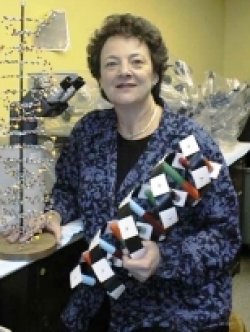
Ann Marie DiLorenzo
Professor, Biology
- Email:
- dilorenzoa@montclair.edu
- Phone:
- 973-655-4396
- Degrees:
- BA, Trinity College
- MS, New York University
- PhD, New York University
- vCard:
- Download vCard
Profile
I strive to bring the strategies of problem-based learning to our students. To facilitate this goal I encourage the formation of student teams for research which mirror the diverse student population of our department. I strive to move research forward, and continue to bring out the potential of not only our finest students, but also those who struggle. My research interest in in the field of in vitro Genetic Toxicology. The effects of heavy metals and the xenobiotic contents of the particulate matter from the World Trade Center attack of 2001 are studied as they effect the cellular/ biochemical functions of human lung cells grown in culture. My teaching and research will continue to use cooperative learning, inquiry and problem solving strategies to enable students of all levels to understand and appreciate the process of science.
Specialization
Utilizing in vitro techniques to study the effects of environmental chemicals on toxicity, mutagenicity or carcinogenicity. All projects study cells or organs grown in culture under normal conditions as well as conditions of stress. All research falls within the area of “Alternatives to Whole Animal Testing” and strives to reduce the need for, and use of, excessive numbers of animals in scientific research. These projects all are within the scope of my expertise and continued research interest in the study of the effects of stress on in vitro systems as an indicator of the effects of stress on the human population. The ability to withstand and cope with environmental insult from xenotoxic agents has been seen to diminish with the added insult of either mental or physiological stress.
Previous work focusing mainly on heavy metals is now being directed to the specific contaminants in the dust from the World Trade Center tragedy (WTC) which has been analyzed by the Rutgers team of Dr. Paul Lioy. I was able to justify a request to Dr. Lioy of the Environmental and Occupational Institute of Rutgers University, and he generously sent us this WTC dust sample in late 2007. I plan to continue to expand our research to include more molecular and cytogenetic techniques. Studies of chromosomal damage are being measured by the Micronucleus test which shows small broken pieces of chromosomes as small darkly staining outside of the normal nucleus. Apoptosis Assays are employed to study DNA damage from heavy metals and WTC dust . Embryonic bone of chickens is also exposed to the WTC dust to study development in presence of these toxins.
Resume/CV
Office Hours
Spring
- Tuesday
- 1:00 pm - 2:00 pm
- Thursday
- 1:00 pm - 2:00 pm
Links
Montclair State does not endorse the views or opinions expressed in a faculty member's webpage or website. Consistent with the principles of academic freedom, the content provided is that of the author and does not express the opinions or views of Montclair State University.
Research Projects
Current Research Projects
Teaching/Learning & Research Interests
I continue to strive to bring the strategies of problem- based learning to our students. To facilitate this goal I encourage the formation of student teams for research which mirror the diverse student population of our department. I strive to move research forward, and continue to bring out the potential of not only our finest students, but also those who struggle. My continued work with PRISM ( Professional Renewal in Science and Math) encourages teachers to revise and improve curriculum K-12. This interest in the strategies to improve Science Education allows me to continue to visit schools through the Adopt-A-Professor Program. My teaching and research will continue to use cooperative learning, inquiry and problem solving strategies to enable students of all levels to understand and appreciate the process of science.
Effects of xenobiotic agents on programmed cell death, Apoptosis.
Human fibroblasts and Chinese Hamster Ovary cells are grown in varying amounts of serum 10%, 5%, 2.5%, 1%. Levels of serum below 10% are generally considered to be increases in physiological stress. The mutagenic effects on the DNA of cells will be measured by the new molecular technique of Apoptosis detection by the addition of fluorescent tags to the fragmented ends of chromosomal DNA. Our earlier work on the effects of heavy metals has been expanded to now be able to study the effects of particulate matter from the tragic events of September 11, 2001 on human cells grown in vitro. Membrane integrity, apoptosis, toxicity, cell proliferation and evidence of molecular/cellular stress are being investigated.
Competitive incorporation calcium and lead into developing chick embryo bones
Embryonic bones of chick embryos are dissected and grown in vitro on organ culture grids under sterile conditions. In one week the bone undergoes many physiological changes resulting final differentiation and elongation. This is comparable to the differentiation and calcification of bone in human children. This project attempts to utilize this technique of bone growth in culture to further elucidate the competitive nature of lead in the calcium incorporation into bones. The effects of nutritional stress is measured by the ability of developing bone to incorporate calcium in the presence of lead competition.
The Role of Molecular Genetic Techniques in Identifying Human Migration of the Peoples of Magna Graecia
A small piece of DNA of approximately 450 base pairs of DNA can be found in a tiny cellular organelle called the mitochondrion. This piece of DNA, has remained in our DNA, but has had a series of minor changes over the period of 150,000 years. These changes are preserved over time and can show us our ancestral geographical movements. This mitochondrial piece, known as the D-Loop of the mitochondrion, holds the clues to the movement of our ancestors on our mother’s side. We inherit our mitochondria only from the egg of our mother. It is thus passed on only in the female ancestor. From this an “ Italian -American “ can discover the hidden past movements of the ancestors in the maternal line!
We have today a wonderful opportunity to help our Italian-American community to find their history………dating back to 150,000 years ago. By study of minor mutations ( changes ) in a piece of DNA only 405 base pairs in length, this history can be exposed. With techniques of DNA, extraction, Polymerase Chain Reaction( PCR) , DNA purification, and DNA Sequencing we can trace the route of Homo Sapiens out of East Africa…through routes in Arabia or Mid-East, through India, to the mountains of Central Asia/ Russia, China and finally the division of travel either toward Europe or over the land bridges of the frozen North to the Americas!
. The gift of the Molecular Geneticist to the Humanities is to discover the true meaning of the “ Italian-American “. We can look at our ancient history , we can discover the “ talkative ghosts” of the many contributors of the peoples of Magna Graecia. Sanniti, Iripini, Lucani, Etruscans, Greeks, Romans, Goths, Minor Lombards, Saracens, Normans, French, and Spaniards are to be discovered in the “Italians” and hence all “ Italian-Americans” of today, who all trace their roots to Magna Gracia.
Mutagenic Effects of Lead/ Cadmium as measured by Micronucleus Assay
Chromosomal damage is measured by the Micronucleus test which shows small broken pieces of chromosomes as small darkly staining particles outside of the normal nucleus. These studies of cytogenetic mutagenicity look at incorporation lead and/or cadmium as seen as damage to the chromosomes of replicating mammalian cells. Confluent monolayers of cells as well as biopsy cultures of mammalian or avian tissue are studied in vitro to show both cell proliferative changes as well as changes in DNA. I propose to form a research team interested in both environmental, psychological, and biological effects of these heavy metals.