
View Profile Page
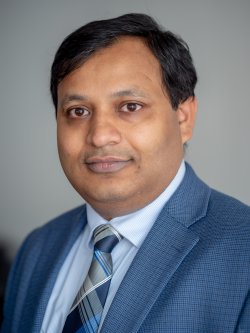
Pankaj Lal
Professor, Earth and Environmental Studies, College of Science and Mathematics
- Office:
- Center for Environmental & Life Sciences 426
- Email:
- lalp@montclair.edu
- Phone:
- 973-655-3137
- Degrees:
- B.A., University of Delhi
- M.A., Delhi School of Economics
- M.B.A., Indian Institute of Forest Management
- Ph.D., University of Florida
- vCard:
- Download vCard
Profile
Ph.D., Forest Resource and Conservatipn, 2011
Food and Resource Economics (minor), University of Florida, Gainesville FL
M.B.A., Forestry Management, 2004
Indian Institute of Forest Management, India
M.A., Geography, 2001
Delhi School of Economics, India
B.A.(H), Economics, 1999
Delhi University, India
Pankaj Lal, PhD, is founding director of Clean Energy and Sustainability Analytics Center and professor in the Department of Earth and Environmental Studies, Montclair State University. He is responsible for shaping the Center's vision, securing external funding, leading research initiatives, and fostering collaborations with policymakers, businesses, state agencies, international institutions, community organizations, and other stakeholders. He forges collaborative partnerships and lead the development and execution of the Center's vision in alignment with the University's mission, while proactively identifying and securing state, federal, international and private funding to sustain and expand the Center's visibility, reach and impact.
Dr. Lal utilizes a combination of quantitative and qualitative methods to develop place-based solutions in the diverse landscapes, including South and Southeast Asia, Africa, Caribbean and North America. He conducts original and applied research in the areas of energy and environmental policies and economics, energy preferences and adoption, global climate change, valuing environmental services, economic and energy modeling, industrial ecology, and natural resource conservation and management. He undertakes integrative, interdisciplinary research that explores interconnections among society and the environment. His ongoing research projects involve aspects of clean energy, water, natural resources, and economies that collectively impact communities around the world.
Dr. Lal has longstanding research support and engagement in practice with multilateral institutions such as Inter-American Development Bank and World Bank, and international NGOs like World Wildlife Fund and Wildlife Conservation Society, and received more than $27 million in grants and contracts for his research, including funding from the National Science Foundation, U.S. Department of Energy, U.S. Department of Agriculture, Wildlife Conservation Society, NJ Board of Public Utilities, NJ Department of Environmental Protection, U.S. Environmental Protection Agency, Rockefeller Foundation, PSEG Foundation, Orsted, German Development Agency GIZ, amongst many others.
Dr. Lal was awarded Presidential Early Career Award for Scientists and Engineers (PECASE) by President Obama. The PECASE Award is the highest honor bestowed by the U.S. government on outstanding scientists and engineers beginning their independent careers. This Presidential Award embodies the high priority placed by the government on maintaining the leadership position of the United States in science by producing outstanding scientists and engineers and nurturing their continued development. The Awards identify a cadre of outstanding scientists and engineers who will broadly advance science and the missions important to the participating federal agencies. He is the first Montclair State University faculty recipient of the PECASE award. His PECASE award nomination stressed his contributions, saying that, “Besides fostering innovative developments in science and technology, Dr. Lal’s efforts and commitment enhance connections between fundamental research and the grand challenges facing the nation, and highlight the importance of interdisciplinary and systems-approached science, engineering, and technology for America’s future.”
Dr. Lal has been awarded the prestigious NSF CAREER Award to explored place-based opportunities for bioenergy sustainability. He was Advisory Board member for Rockefeller Foundation’s initiative on “Valuing the Resilience Dividend”, that was undertaken by RAND Corporation and the Global Infrastructure Basel Foundation. He was economic analysis lead in NJ Governor’s Office of Recovery and Rebuilding grant whereby ecosystem inventory for natural resources was developed and ecosystem tradeoffs due to potential engineering design solutions for flood mitigation across the state was evaluated. Dr. Lal conducted rapid economic impact analysis of regional summer flounder restrictions, which was successfully used by NJ DEP in their request to reconsider Atlantic States Marine Fisheries Commission’s Summer Flounder Management Board's harvest restrictions. He is also primary author of a research report titled "Economic Values of Nyungwe National Park & Rugezi Wetlands and their contributions towards national policy goals in Rwanda", that was supported by MacArthur Foundation and Wildlife Conservation Society.
Dr. Lal earned his Master’s degree in geography from the University of Delhi, MBA from Indian Institute of Forest Management, and PhD with specialization
in natural resource economics from the University of Florida. Prior to his terminal degree, he worked with Winrock International India as a program officer in natural resource management division and Pricewaterhouse Coopers India in the government reforms and infrastructure development practice. He has reviewed competitive grant proposals for agencies like National Science Foundation, United States Department of Agricultur and served as a reviewer for The National Academies of Science, Engineering, and Medicine along with a diverse array of environmental and energy journals.
Dr. Lal has published numerous scholarly articles in peer-reviewed journals, federal research agencies technical reports and book chapters. He is thesis committee chair of twenty two doctoral students and committee member for another ten students. Dr. Lal is environmental science and management doctoral faculty at the University and has taught courses in environmental law and policy, environmental economics, life cycle analysis, water resource management, human environment, world geography, and introduction to global studies. He loves spending time with his wife Aditi and daughters Myra and Mahika.
NATIONAL/STATE POLICY INPUTS/IMPACTS
2024-2025 Led Montclair State Team that provided Technical Advisory Energy Efficiency services to the NJBPU to reduce the budget through negotiations with seven electric and gas utilities from $6 billion filing to $3.75 billion without going through a litigation process. The revised program to be implemented over a 30-month period from January 1, 2025 through June 30, 2027 will help the state achieve Governor Murphy’s goals outlined in Executive Order 316 and is anticipated to reduce annual electricity usage by customers by 2.3 million megawatt hours, annual natural gas usage by 8.9 million MMBtu, and annual greenhouse gas emissions by 1.5 million metric tons.
2021-2022 Led Montclair State team that developed NJ Fuel Cell Task Force report that was submitted to the Governor and the Legislature which outlines strategies to increase the use of fuel cells in New Jersey, including fuel cell electric vehicles. The Fuel Cell Task Force was established through a Bill (S762/A741) signed into law (Reference New Jersey Statutes 26:2C-68). Received Notable Document Award for this report. The award is presented annually by Legislative Research Librarians at the National Conference of State Legislatures Annual Summit. The award formally recognized excellence in documents that explored topics of interest to legislators and legislative staff while presenting substantive material in an exemplary format.
2021-2022 Led the team that was providing technical assistance to NJ BPU to assess the policy options and associated impacts of the moratorium on utility service shutoffs announced by Governor Murphy in 2020 and ending in March 2022. The impact on the NJ economy was assessed and a detailed analytical report was submitted to the NJBPU. There was a state enacted legislation requiring all water, sewer, electric, and gas utilities to submit monthly, zip code-level data on shutoffs, customer arrears, tax liens, and participation in assistance programs.
2019-2020 Led economic assessment of the impacts of potential leakage from New Jersey rejoining the Regional Greenhouse Gas Initiative (“RGGI”) pursuant to Executive Order No. 7 signed by Governor Murphy on January 29, 2018. The report showed NJ reduces CO2 emissions significantly and boosts its renewable electricity portfolio considerably in the coming decade, thereby positively contributing to the growth of the economy. The model-predicted results showed an emission leakage in the Eastern Interconnection region, particularly when accounting for the entirety of the upcoming decade. We recommended monitoring and modeling GHG gas leakage and the sources contributing to this leakage, to analyze and understand the role of border adjustment measures and how efficient and effective the selected prices and mechanisms of implementation are in mitigating the emissions leakage, and encourage other states in to join the RGGI initiative.
2018-2019 Contributed to integrated energy plan to help identify promising pathways capable of meeting New Jersey’s to create a 100% clean energy system by 2050, per Governor Murphy Executive Order no. 28. The inputs assisted in strategic vision for production, distribution, consumption, and conservation of energy in the State of New Jersey.
2018 Led community Solar Credit assessment to inform draft rules by NJBPU via P.L.2018, c.17 Section 5, subsection b.5, to enable utility customers to participate in a solar energy project that may be remotely located from their properties and receive a credit on their utility bills for their participation in a community solar pilot project. Our community solar credit analysis helped NJBPU determine “the value of the credit on each participating customer’s bill.” Additionally, the analysis provided insights into cost variations for different types of projects (e.g., low medium income, brownfield, landfill, parking lot canopy, etc.). The community solar program was piloted and scaled up to a full-scale community solar program implemented statewide.
2018 Invited Reviewer for National Academies’ committee preparing Fourth National Climate Assessment (NCA4) Report under U.S. Global Change Research Program (USGCRP). The NCA4 examines climate change impacts across a broad range of sectors and U.S. regions.
2017 Conducted socioeconomic impact study of summer flounders increased size limit for NJDEP. The study findings were used by the US Department of Commerce to overturn Atlantic States Marine Fisheries Commission restrictions. The US Department of Commerce sided with NJDEP harvest limits of summer flounder along the Atlantic coast.
2011 Primary author of the University of Florida’s response to U.S. House of Representatives questionnaire on climate change options. This response was sent by the Dean of Research on behalf of the College of Agriculture and Life Sciences, University of Florida.
PUBLICATIONS
Extensive publication record spanning interdisciplinary domains at the nexus of sustainability, climate policy, environmental economics, energy transition and socio-ecological resilience. Contribution includes peer-reviewed scientific articles, conference papers, books, monographs, book chapters and technical reports that collectively informs science-based decision making. Research integrates diverse and advanced methodologies such as environmental valuation, computable general and partial equilibrium models, industrial ecology, energy and environmental analytics, spatial and behavioral science approaches to address complex challenges in sustainable energy transition, food-energy-water systems, natural resource conservation and management, socioeconomic integration, nature-based solutions, and environmental equity and justice. Numerous projects have been commissioned by, or have directly informed, government agencies, non-governmental organizations, and multilateral institutions, demonstrating a strong commitment to actionable science, policy relevance and measurable public impact. This publication portfolio reflects a strategic ability to lead and collaborate across disciplines, and a proven ability to translate rigorous research into evidence-based policy and programmatic action.
* Post-doctoral associate or student
PEER-REVIEWED JOURNAL ARTICLES (PUBLISHED)
Shrestha, K*., Lal, P., & Smith, M (2025). Offshore Wind Development and Associated Impact on Recreational Fisheries in New Jersey: A Socio-spatial Approach. Marine Policy-Accepted.
Smith, M., Fiore, J., & Lal, P. (2025). Forest landowners’ perception of and participation in a woody bioenergy market. Biomass and Bioenergy, 202, 108144.
Coffey, B., Borgerson, C., Lal, P., & Feehan, C. J. (2025). Co-location of seaweed farming with offshore wind energy: a quick scoping review. Frontiers in Marine Science, 11, 1471204.
Tariq, Z., Smith, M., & Lal, P. (2025). Unlocking value from food waste: A cross-regional meta-analysis of economic opportunities. Bioresource Technology Reports, 102087.
Bhushal, G., Smith, M., Lal, P., & Vedwan, N. (2025). Influence of Field Trips on Adolescent Environmental Stewardship: Examining the Role of the Dominant Social Paradigm. World, 2025, 6(3), 88.
Oluoch, S., Lal, P., Susaeta, A., Smith, M., & Wolde, B. (2024). Consumer Preferences for Wood-Pellet-Based Green Pricing Programs in the Eastern United States. Energies, 17(8), 1821.
Bhushal Adhikari, G*., Wolde, B*., & Lal, P. (2024). Human-wildlife conflict and the likelihood of reporting losses in Nepal. Trees, Forests and People, 15, 100512.
Lyttek, E., Lal, P., Oberle, B., Dubey, R. S., & Forgoston, E. (2024). Impact of Fraxinus snag fall on electric distribution and infrastructure stability: An empirical analysis. Ecological Economics, 225, 108323.
Bittencourt, I., Varde, A. S., & Lal, P. (2024). Opinion mining on offshore wind energy for environmental engineering. In International IOT, Electronics and Mechatronics Conference (pp. 487-505). Singapore: Springer Nature Singapore.
Luong, T.*, Birur, D. K., & Lal, P. (2024). The Global Economic Recovery From COVID-19 Vaccinations. Journal of Applied Business & Economics, 26(3).
Smith, M., Shoaib, N*., & Lal, P. (2024). Life Cycle Assessment of New Jersey Offshore Wind. Wind Energy Science Discussions, 2024, 1-22
Bhushal, G.*, Wolde, B., & Lal, P. (2024). Human-Wildlife Conflict and the Likelihood of Reporting Losses in Nepal. Trees, Forests and People, 15, 100512.
Cade, R*., Yu, D., Whyte, K., Lal, P., & Borgerson, C. (2024). Environmental Justice Indicators: Evaluating Their Effectiveness in Identifying At-Risk Communities for Drinking Water Violations. Cleaner Water, 100035.
Blumberg, R., Fowler, E., Guerrero, G., Bai, Y., Mahadevan, M., & Lal, P. (2024). Differences in Farmers’ Market Patronage among Participants in the Special Supplemental Nutrition Program for Women, Infants, and Children (WIC). Dietetics, 3(2), 179-190.
Smith, M.*, Lal, P., & Vedwan, N. (2023). Motivations underlying farmers’ management decisions and willingness to adopt sustainable practices: A case study of the northeastern United States. Journal of Rural Studies, 103, 103138.
Prasad, A*., Lal, P., Wolde, B*., Zhu, M., Samanthula, B. K., & Panorkou, N. (2023). Examining the Impact of a Field Trip in Nature on Students' Environmental Perceptions and Feelings of Empowerment: A Case Study from the ACMES STEM Summer Camp. Journal of STEM Education: Innovations and Research, 24(3).
Cade, R*., Yu, D., Whyte, K., Lal, P., & Borgerson, C. (2023). Poor Water Quality Persists in Diverse Urban Communities. Water, 15(19), 3446.
Radakovic, D., Singh*, A., Varde, A., & Lal, P. (2022). Enriching Smart Cities by Optimizing Electric Vehicle Ride-Sharing through Game Theory. 2022 IEEE 34th International Conference on Tools with Artificial Intelligence (ICTAI) pp. 1-7.
Blumberg, R., Fowler, E., Bai, Y., Lal, P., Smolen, A., & Dubrovsky, I. (2022). An Investigation of Social Ecological Barriers to and Facilitators of WIC Farmers Market Nutrition Program Voucher Redemption. Nutrients, 14(9), 1871.
Nguyen, H. T. G*, Lyttek, E*., Lal, P., Wieczerak, T*., & Luong, T*. (2022). Evaluating Loblolly Pine Bioenergy Development Potential Using AHP Integrated Weighted Overlay and Network Optimization in Virginia, USA. Trees, Forests and People, 100271.
Smith, M*., & Lal, P. (2022). Environmental and economic assessment of hard apple cider using an integrated LCA-LCC approach. Sustainable Production and Consumption, 32, 282-295.
Wieczerak, T*., Lal, P., Witherell, B., & Oluoch, S*. (2022). Public preferences for green infrastructure improvements in Northern New Jersey: a discrete choice experiment approach. SN Social Sciences, 2(2), pp 1-20.
Singh, J.P.*, Lal, P., Prasad, A*., Wolde, B*, Smith, M*., Iranah, P*., Zhu, M., Panorkou, N., & Samanthula, B.K. (2022). Student attitude towards environmental issues following extracurricular STEM activities: evidence from a student survey. Middle States Geographer. 54.
Wieczerak, T*., Rynerson, D*., Prasad, A*., Wolde, B*., Lal, P., Vashisth, A., Goodey, N., Tuininga, A. (2022). Measuring the effect of sustainability programs on interest in STEM disciplines: a pre-post survey study of the student green team internship program. SN Social Sciences, 14.
Prasad, A*., Lal, P., Wolde, B*., Zhu, M., & Samanthula, B. K. (2022). Exploring Impacts of a STEM Day Camp on Adolescent Desire to Pursue STEM in College. Journal of STEM Outreach. 5(1), pp 1-8.
Smith, M*., Bevacqua, A.*, Tembe, S., & Lal, P. (2021). Life cycle analysis (LCA) of residential ground source heat pump systems: A comparative analysis of energy efficiency in New Jersey. Sustainable Energy Technologies and Assessments, 47, 101364.
Oluoch, S*., Lal, P*., Bevacqua, A.*, & Wolde, B*. (2021). Consumer willingness to pay for community solar in New Jersey. The Electricity Journal, 34(8), 107006.
Smith, M*., Lal, P., Oluoch, S*., Vedwan, N., & Smith, A. (2021). Valuation of sustainable attributes of hard apple cider: A best-worst choice approach. Journal of Cleaner Production, 318, 128478.
Prasad, A*., Lal, P., Wolde, B*., Smith, M*., Zhu, M., Samanthula, B., & Panorkou, N. (2021). Exploring the human-nature connection and the perceived risk of nature in children. Applied Environmental Education & Communication, pp.1-15.
Oluoch, S*., Lal, P., Wolde, B*., Susaeta, A., Soto, J. R., Smith, M., & Adams, D. C. (2021). Public preferences for longleaf pine restoration programs in the southeastern United States. Forest Science, 67(3), 265-274.
Oluoch, S*., Lal, P., & Susaeta, A. (2021). Investigating factors affecting renewable energy consumption: A panel data analysis in Sub Saharan Africa. Environmental Challenges, 4, 100092.
Oluoch, S*., Lal, P., Susaeta, A., & Wolde, B*. (2021). Public preferences for renewable energy options: A choice experiment in Kenya. Energy Economics, 98, 105256.
Burli, P*., Lal, P., Wolde, B*., Jose, S., & Bardhan, S. (2021). Perceptions about switchgrass and land allocation decisions: Evidence from a farmer survey in Missouri. Land Use Policy, 109, 105615.
Rossi A, Wolde B,* Lal P, Harclerode M. Inaction on Lead Despite the Relevant Knowledge: Predictors, Covariates, and Outreach Implications. International Journal of Environmental Research and Public Health, (2020). 15;17(24):9391. doi: 10.3390/ijerph17249391. PMID: 33333985; PMCID: PMC7765355.
Basu, D., Panorkou, N., Zhu, M., Lal, P., & Samanthula, B. K. (2020). Exploring the mathematics of gravity. Mathematics Teacher: Learning and Teaching, 113(1), 39-46.
Oluoch, S*., Lal, P., Susaeta, A., & Vedwan, N. (2020). Assessment of public awareness, acceptance and attitudes towards renewable energy in Kenya. Scientific African, 9, e00512.
Nguyen, H. T. G*., Lyttek, E*., Lal, P., Wieczerak, T*., & Burli, P*. (2020). Assessment of switchgrass-based bioenergy supply using GIS-based fuzzy logic and network optimization in Missouri (USA). Energies, 13(17), 4516.
Lyttek, E*., Lal, P., Nieddu, G., Forgoston, E., & Wieczerak, T*. (2019). Modeling Agrilus planipennis F.(Coleoptera: Buprestidae) Spread in New Jersey. Journal of Economic Entomology, 112(5), 2482-2488.
Burli, P*., Lal, P., Wolde, B*., Jose, S., & Bardhan, S. (2019). Factors affecting willingness to cultivate switchgrass: Evidence from a farmer survey in Missouri. Energy Economics, 80, 20-29.
Ochuodho, T. O., Alavalapati, J. R., Lal, P., Agyeman, D. A., Wolde, B*., & Burli, P*. (2019). Potential economic impacts of allocating more land for bioenergy biomass production in Virginia. Forests, 10(2), 159.
Smith, M.*, Nguyen, G.*, Wieczerak, T*., Wolde, B.*, Lal, P., & Munsell, J. (2019) Bioenergy: Opportunities and Challenges. Virginia Forests, 2019 issue, 15-17.
Wolde, B*., Lal, P., Harclerode, M*., & Rossi, A. (2019). Comparative optimism: relative risk perception and behavioral response to lead exposure. Environmental Management, 63, 691-701.
Smith, M*., Nguyen, G*., Wieczerak, T*., Wolde, B*., Lal, P., & Munsell, J. (2019). Stakeholders’ perceptions of geographical criteria for loblolly pine management for bioenergy production in Virginia. Forests, 10(9), 801.
Oluoch, S*., Lal, P., Wolde, B*., & Vedwan, N. (2019). A snapshot of renewable energy research in Sub-Saharan Africa. Journal of Energy and Natural Resources, 9(2), 146-154.
Banerjee, O., Cicowiez, M., Ochuodho, T., Masozera, M., Wolde, B*., Lal, P., Dudek, S., & Alavalapati, J. R. (2018). Financing the sustainable management of Rwanda's protected areas. Journal of sustainable Tourism, 26(8), 1381-1397.
Wolde, B*., & Lal, P. (2018). Invasive-plant-removal frequency its impact on species spread and implications for further integration of forest-management practices. Forests, 9(8), 502.
Iranah, P*., Lal, P., Wolde, B*., & Burli, P. (2018). Valuing visitor access to forested areas and exploring willingness to pay for forest conservation and restoration finance: The case of small island developing state of Mauritius. Journal of environmental management, 223, 868-877.
Susaeta, A., & Lal, P. (2018). Impacts of climate change and bioenergy markets on the profitability of slash pine pulpwood production in the Southeastern United States. Forests, 9(10), 656.
Wolde, B*., Lal, P., Burli, P*., Iranah, P., Munsell, J., Gan, J., & Taylor, E. (2018). Adapting extension and outreach content to audiences' educational interests. The Journal of Extension, 56(3), 24.
Smith, M*., & Lal, P. (2017). Hard Apple Cider in The New York Hudson Valley Region: A Tourism Study, Middle States Geographer, 50: 28-38.
Burli, P*., Forgoston, E., Lal, P., Billings, L., & Wolde, B*. (2017). Adoption of switchgrass cultivation for biofuel under uncertainty: A discrete-time modeling approach. Biomass and Bioenergy, 105, 107-115.
Wolde, B*., Lal, P., & Burli, P*. (2017). Forestland owners’ willingness to consider multiple ways of supplying biomass simultaneously: Implications for biofuel incentive policies. Energy Policy, 105, 183-190.
Lal, P., Wolde, B*., Masozera, M., Burli, P*., Alavalapati, J., Ranjan, A., Montambault, J., Banerjee, O., Ochuodho, T., & Mugabo, R. (2017). Valuing visitor services and access to protected areas: The case of Nyungwe National Park in Rwanda. Tourism Management, 61, 141-151.
Burli, P*., Lal, P., Wolde, B*., & Alavalapati, J. (2016). Sustainability Protocols and Certification Criteria for Switchgrass-Based Bioenergy. BioResources, 11(3).
Harclerode, M. A*., Lal, P., Vedwan, N., Wolde, B*., & Miller, M. E. (2016). Evaluation of the role of risk perception in stakeholder engagement to prevent lead exposure in an urban setting. Journal of Environmental Management, 184, 132-142.
Wolde, B*., Lal, P., Alavalapati, J., Burli, P*., & Iranah, P*. (2016). Soil and water conservation using the socioeconomics, sustainability concerns, and policy preference for residual biomass harvest. Journal of Soil and Water Conservation, 71(6), 476-483.
Harclerode, M. A*., Lal, P., & Miller, M. E. (2016). Quantifying global impacts to society from the consumption of natural resources during environmental remediation activities. Journal of Industrial Ecology, 20(3), 410-422.
Wolde, B*., Lal, P., Alavalapati, J., Burli, P*., & Munsell, J. (2016). Factors affecting forestland owners' allocation of non-forested land to pine plantation for bioenergy in Virginia. Biomass and Bioenergy, 85, 69-75.
Lal, P., Wolde, B*., Alavalapati, J., Burli, P*., & Munsell, J. (2016). Forestland owners' willingness to plant pine on non-forested land for woody bioenergy in Virginia. Forest Policy and Economics, 73, 52-57.
Wolde, B*., Lal, P., Gan, J., Alavalapati, J., Taylor, E., & Burli, P*. (2016). Determinants of enrollment in public incentive programs for forest management and their effect on future programs for woody bioenergy: evidence from Virginia and Texas. Canadian Journal of Forest Research, 46(6), 775-782.
Susaeta, A., Chang, S. J., Carter, D. R., & Lal, P. (2014). Economics of carbon sequestration under fluctuating economic environment, forest management and technological changes: An application to forest stands in the southern United States. Journal of Forest Economics, 20(1), 47-64.
Lal, P., Alavalapati, J., & Susaeta, A. (2014). Impact of bioenergy markets on the future of southern United States Forests. Middle State Geographer, 47, 26-37.
Harclerode, M. A*., Lal, P., & Miller, M. E. (2013). Estimating social impacts of a remediation project life cycle with environmental footprint evaluation tools. Remediation Journal, 24(1), 5-20.
Susaeta, A., Lal, P., Alavalapati, J., & Carter, D. R. (2013). Modelling the impacts of bioenergy markets on the forest industry in the southern United States. International Journal of Sustainable Energy, 32(6), 544-561.
Susaeta, A., Lal, P., Carter, D. R., & Alavalapati, J. (2012). Modeling nonindustrial private forest landowner behavior in face of woody bioenergy markets. Biomass and bioenergy, 46, 419-428.
Susaeta, A., Lal, P., Alavalapati, J., Mercer, E., & Carter, D. (2012). Economics of intercropping loblolly pine and switchgrass for bioenergy markets in the southeastern United States. Agroforestry systems, 86, 287-298.
Susaeta, A., Lal, P., Alavalapati, J., & Mercer, E. (2011). Random preferences towards bioenergy environmental externalities: A case study of woody biomass-based electricity in the Southern United States. Energy Economics, 33(6), 1111-1118.
Lal, P., Alavalapati, J. R., Marinescu, M., Matta, J. R., Dwivedi, P., & Susaeta, A. (2011). Developing sustainability indicators for woody biomass harvesting in the United States. Journal of sustainable forestry, 30(8), 736-755.
Lal, P., Alavalapati, J. R., & Mercer, E. D. (2011). Socio-economic impacts of climate change on rural United States. Mitigation and Adaptation Strategies for Global Change, 16, 819-844.
Susaeta, A., Alavalapati, J., Lal, P., Matta, J. R., & Mercer, E. (2010). Assessing public preferences for forest biomass-based energy in the southern United States. Environmental management, 45, 697-710.
Alavalapati, J., and Lal, P. (2009). Woody Biomass for Energy: An Overview of Key Emerging Issues. Virginia Forests, Fall 2009:4-8.
Dwivedi, P., Alavalapati, J. R., & Lal, P. (2009). Cellulosic ethanol production in the United States: Conversion technologies, current production status, economics, and emerging developments. Energy for Sustainable Development, 13(3), 174-182.
Lal, P., Singh, K., & Prasad, K. (2006). Failure of Community Institutions: Shaping River Basin in Jharkhand. Economic and Political Weekly, 598-600.
Bose, S., Lal, P., & Saigal, S. (2005). Information as power: making best use of India's Right to Information law. Participatory Learning and Action, 53(1), 16-21.
Lal, P. (2005). Policy That Works for Forests and People: Real Prospects for Governance and Livelihoods. Mayers, J. and S. Bass (Editors): Earthscan, United Kingdom. ISBN 978-1844070961: 2004; 336 pp, paperback. Inform, October-December 2005: 10-11.
Lal, P. (2006-2007). Panchayati Raj Institutions and Joint Forest Management Committees: Forging Linkages Part 1 & 2, Special Article, Inform, January- March 2006: 6-7 and January 2007: 5-7.
PEER-REVIEWED CONFERENCE ARTICLES (PUBLISHED)
Orjuela Parra, E., Saleh, S., Mendoza K., Paguio, G., Rucker, C.J., Shrestha, S., Lal, P. and Zhu, M. (2025). Smart Environmental Monitoring Pilot: Effects on Student Productivity via Surveys and Sensors. In 2025 IEEE Integrated STEM Education Conference (ISEC).
Shrestha, S.*, Bittencourt, I.*, Varde, A., and Lal, P. (2024). AI-Based Modeling for Textual Data on Solar Policies in Smart Energy Applications. In 2024 International Conference on Information, Intelligence, Systems and Applications (IISA), IEEE.
Shrestha, S.*, Varde, A. S., & Lal, P. (2025). Energy Equity, Infrastructure and Demographic Analysis with XAI Methods. Association for the Advancement of Artificial Intelligence.
Shrestha, S.*, Bittencourt, I.*, Varde, A. S., & Lal, P. (2024, July). AI-based modeling for textual data on solar policies in smart energy applications. In 2024 15th International Conference on Information, Intelligence, Systems & Applications (IISA) (pp. 1-8). IEEE.
Bittencourt, I.*, Varde, A. S., & Lal, P. (2024, April). Opinion mining on offshore wind energy for environmental engineering. In International IOT, Electronics and Mechatronics Conference (pp. 487-505). Singapore: Springer Nature Singapore
Luong, T*., Wang, Y., Lal, P., & Dubey, R. S. (2023). Achieving sustainable development goals: an exploration of technology uses in tourism. In Global Marketing Conference (pp. 37-41).
Field, A., Varde, A., & P. Lal. (2022). Sentiment Analysis and Topic Modeling for Public Perceptions of Air Travel: COVID Issues and Policy Amendments. Proceedings of the Workshop on Ethical and Legal Issues in Human Language Technologies and Multilingual De-Identification of Sensitive Data in Language Resources. 13th Language Resources and Evaluation Conference pp. 2-8.
Prasad, A*., Varde, A., Gottimukkala, R., Alo, C., & Lal, P. (2021). Analyzing Land Use Change and Climate Data to Forecast Energy Demand for a Smart Environment. In 2021 9th International Renewable and Sustainable Energy Conference (IRSEC), IEEE, pp. 1-6.
Samanthula, B. K., Mehran, M., Zhu, M., Panorkou, N., & Lal, P. (2020). Experiences toward an interactive cloud-based learning system for STEM education. In 2020 IEEE Integrated STEM Education Conference (ISEC) (pp. 1-6). IEEE.
Zhu, M., Johnson, M., Dutta, A., Panorkou, N., Samanthula, B., Lal, P., & Wang, W. (2020). Educational Simulation Design to Transform Learning in Earth and Environmental Sciences. In 2020 IEEE Frontiers in Education Conference (FIE) (pp. 1-6). IEEE.
Smith, M.*, & Lal, P. (2019) Life Cycle Assessment (LCA) of the Hard Apple Cider Production System. International Conference for Sustainable Development Conference Paper, New York, NY, September 24-25.
Zhu, M., Panorkou, N., Lal, P., Etikyala, S., Germia, E., Iranah, P*., Samanthula, B., & Basu, D. (2018). Integrating interactive computer simulations into K-12 earth and environmental science. In 2018 March IEEE Integrated STEM Education Conference (ISEC) (pp. 220-223). IEEE.
Zhu, M., Panorkou, N., Etikyala, S., Basu.D., Taheedam, S., Iranah, P*., Mazol, D., Hannum, C., Marshall, R., Lal, P., & Samanthula, B. (2018). Integrating Interactive Computer Simulations into K-12 Earth and Environmental Science. Proceedings of IEEE Integrated STEM education Conference (ISEC) 2018, pp. 220-223, Princeton, NJ. March 10th, 2018.
Zhu, M., Panorkou, N., Lal, P., Etikyala, S., Street-Conaway, T., Iranah, P*., Samanthula, B., & Basu, D. (2018). 2018 Steerable Environmental Simulations for Exploratory Learning, paper presented at the AACE-Association for the Advancement of Computing in Education E-learning conference 2018, Las Vegas, October 2018.
BOOKS/MONOGRAPHS/BOOK CHAPTERS
Adhikary, G.B*., Lal, P., Wolde, B*., Burli, P*., & Ranjan, A. (2020). Natural Disasters and Emotional Trauma: A case study of Banke district, Nepal. In R. Thakur, R. Dhussa (eds.), Environment, Development and Culture in South and East Asia: Local, Regional and International Perspectives. Springer. Accepted.
Lal, P., Ranjan, A., Wolde, B*., Burli, P*., & Blumberg.R. (2017). Bioenergy and Land Use Change: An Overview. In Z. Qiu, U Mishra, A.G. Noble (eds.), Bioenergy and Land Use Change. AGU Books, Springer. pp 3-18.
Srinivas Rao, P., Vinutha, K.S., Kumar, G.A., Chiranjeevi, T., Uma, A., Lal, P., Prakasham, R.S., Singh, H.P., Sreenivasa Rao, R., Chopra, S. & Jose, S. (2016). Sorghum: A Multipurpose Bioenergy Crop. In I. Ciampitti and V. Prasad (eds.), Sorghum: State of the Art and Future Perspectives, Agronomy Monograph 58. Doi: 10.2134/agronmonogr58.2014.0074
Lal, P., Kebede, E., Wolde, B*., Burli, P*., Alavalapati, J., Gan, J., & Taylor, E. (2015). Assessing Socioeconomic Impacts of Forest Biomass Based Biofuel Development on Rural Communities in the Southern United States. In: J. Janick and A. Whipkey (eds.), Proceedings of the Seventh National New Crops Symposium New Crops: Bioenergy, Biomaterials, and Sustainability pp. 382-398.
Ranjan, A., Lal, P. & Susaeta, A. (2015). Delhi Metro Rail Travel Behavior Analysis: Impact of Individual and Trip Behavior. In: A.K. Dutt, A.G. Noble, F.G. Costa, S.K. Thakur and H. S. Sharma (eds). Spatial Diversity and Dynamics in Resources and Urban Development (Regional Resources - Volume I), Netherlands: Springer pp. 291-310.
Lal, P., Burli, P*., & Alavalapati, J. (2015). Policy Mechanisms to Implement and Support Biomass and Biofuel Projects in United States. In: S. Jose, and Bhaskar, T. (eds.), Biomass and Biofuels: Advanced Biorefineries for Sustainable Production and Distribution, CRC Press Boca Raton, FL pp. 279-301.
Lal, P. & Alavalapati, J. R. R. (2014). Economics of forest biomass-based energy. Handbook on Forest Resource Economics. In: S. Kant and J. Alavalapati (eds.). Routledge London and New York pp. 275-289.
Aguilar, F., Blazier, M., Alavalapati, J., & Lal, P. (2013). An assessment of global wood-based bioprocessing, bioenergy and bio-fuel activities. In: R. Vlosky, R. Panwar, and E. Hansen (eds)., Global Forest Products: Trends, Management, and Sustainability. CRC Press, Taylor and Francis Group.
Lal, P., Alavalapati, J., & Upadhyay, T. (2013). Woody Biomass for Bioenergy: A Policy Overview. Chapter XI. In: Evans, J.M., R.J. Fletcher, Jr., J.R.R. Alavalapati, A.L. Smith, D. Geller, P. Lal, D. Vasudev, M. Acevedo, J. Calabria, and T. Upadhyay. Forestry Bioenergy in the Southeast United States: Implications for Wildlife Habitat and Biodiversity. National Wildlife Federation, Merrifield, VA. pp 248-261.
Lal, P., Singh, K., & Prasad, K. (2007). Shapin river basin: Failure of community institution leads to conflicts on irrigation water- A Case of Ghat Kuraba. In: Joy, K. J., B. Gujja, S. Paranjape, V. Goud, and S. Vispute S (eds). Water Conflicts in India: A Million Revolts in the Making. Routledge Publishers, New Delhi and Oxford, pp 298-304.
Saigal, S., Borgoyary, M., & Lal, P. (2007). Participatory forestry and management in India. In: H, Scheyvens, K. Hyakumura and Y. Seki (eds), Decentralization and State Sponsored Community Forestry in Asia. Institute for Global Environmental Strategies, Kanagawa, Japan, pp 34-57.
Bose, S., Lal, P., Pareek, P. S., Verma, M., & Saigal, S. (2006). Forest-based Associations in India: An Overview. IIED Small and Medium Forest Enterprise Series No. 18. International Institute for Environment and Development, Edinburgh, UK.
Saigal, S., K. Mitra, and P. Lal. (2005). Empowering the Forest-Dependent Poor in India. In: Sayer, J. A. and S. Maginnis (eds). Forests in Landscapes: Ecosystem Approaches to Sustainability. Earthscan, United Kingdom, pp 75-100.
TECHNICAL RESEARCH REPORTS
Lal, P., Ranjan, A., Provost, N.*, Cicoweiz, M., Nguyen, G*., (2023). Utility Bill Deferments in New Jersey: Impact Assessment and Policy Options. Technical Report Submitted to NJ Board of Public Utilities. 79 p.
Lal, P., Smith, M.*, Ranjan, A., Wolde, B.*, Sarkar, A., Nguyen, G.*, (2022). NJ Fuel Cell Task Force members, Hydrogen and Fuel Cell Technology towards Clean Energy Goals Report and recommendations for the State of New Jersey, Technical Report Submitted to NJ Board of Public Utilities. 92 p.
Lal, P., Birur, D.*, Wolde, B.*, Provost, N.*, Wieczerak, T.*, Lyttek, E.*, Prasad, A.*, Levin, T., Zhou, Z., & Thimmapauram, P. (2021). Economic Assessment of New Jersey Re-joining Regional Greenhouse Gas Initiative (RGGI), Technical Report Submitted to NJ Board of Public Utilities. 109 p.
Lal, P., Wolde, B.*, Oluoch, S*., Ranjan, A., Wieczerak, T.*, Shoaib, N*., Provost, N*., & Birur, D. (2021). Assessing Public Preferences for Offshore Wind Tourism in Ocean City, New Jersey. Research Report Submitted to Orsted. 36 p.
Lal, P., Wolde, B*., Oluoch, S.*, Ranjan, A., Wieczerak, T*., Shoaib, N*., Provost, N.*, & Birur, D.* (2021). The Potential of Offshore Wind Energy Tourism in Ocean City, NJ. Research Report Submitted to Orsted. 43 p.
Lal, P., Masozera, M., Kayitare, A., Banerjee, O., Cicowiez, M., Wolde, B., Ranjan, A., Alavalapati, J., Lyttek, E*., Nguyen, H.T.G*., Birur, D., Luong, T*., Wieczerak, T*., Smith, M*., & Oluoch, S*. (2020). Achieving Green Growth Through Terrestrial Natural Capital Restoration in Rwanda, Research Report Submitted to GIZ and Green Growth Knowledge Platform. 61 p.
Lal, P., Masozera, M., Kayitare, A., Banerjee, O., Cicowiez, M., Wolde, B., Ranjan, A., Alavalapati, J., Lyttek, E., Nguyen, H.T.G., Birur, D., Luong, T., Wieczerak, T., Smith, M. and Oluoch, S. 2020. Achieving Green Growth Through Terrestrial Natural Capital Restoration in Rwanda. Clean Energy and Sustainability Analytics Center, Montclair, USA GGKP Policy Brief. p8.
Lal, P., Stern, E.A., Singh, J.P*., Smith, M*., & Wieczerak, T*. (2019). Sustainability Regulatory Integration and Reform for Superfund Sediment Remediation Projects. Technical Report Submitted to Sediment Management Work Group, Detroit, MI. 30 pp.
Lal, P. (2018). Assessing the Impact of “If You Can’t Keep it, Save it”. Technical Report Submitted to New Jersey Department of Environmental Protection, Trenton, NJ. 47 p.
Lal, P. (2017). Socioeconomic Impact Assessment of the Summer Flounder Harvest Restrictions in New Jersey, Technical Report Submitted to New Jersey Department of Environmental Protection, Trenton, NJ. 35 p.
Lal, P., Alavalapati, J., Masozera, M., Bana, M., and Mugabo, R. (2017). Economic values of Nyungwe National Park & Rugezi Wetlands and their contributions towards national policy goals in Rwanda. Submitted to MacArthur Foundation. 161 p.
Banerjee, O., Cicowiez, M., Ochuodho, T., Masozera, M., Wolde, B., Lal, P., Dudek, S., and Alavalapati, J. (2017). Financing the Sustainable Management of Rwanda’s Protected Areas, CEDLAS, Working Papers 0211, CEDLAS, Universidad Nacional de La Plata. 32p.
Boufadel, M., Lal, P., Weinstein, M. P., Saleh, F., Wieczerak, T., Ding, C., Maynard, R., and Burli, P*. (2015). Assessment of economic, ecological, and social capital incongruence with design studies for reducing storm surge and flooding risks to New Jersey coastal communities, Technical Report Submitted to Office of Engineering and Construction, New Jersey Department of Environmental Protection, Trenton, NJ. 129 p.
Lal, P., Alavlapati, J., & Mercer, E. (2015). Wide Open Spaces: Climate Change Impacts in Rural Areas of the United States, Natural Inquirer, Southern United States, Climate Change Edition.
Evans, J. M., Fletcher, R. J., Jr., Alavalapati J. R. R., Smith, A.L., Geller, D., Lal, P., Vasudev, D., Acevedo, M., Calabria, J., & Upadhyay, T. (2013). Forestry Bioenergy in the Southeast United States: Implications for Wildlife Habitat and Biodiversity. National Wildlife Federation, VA. 275 p.
Alavalapati, J. R. R., Lal, P., Susaeta, A., Abt, R., & Wear, D. (2013). Forest biomass-based energy. In: Southern Forest Future Project edited by D. Wear and J. Griess, U.S. Forest Service Technical Report, GTR-SRS-178, 153 p.
Weinstein, M., Hoke, R.A., Hazen, R., Qiu, Z., Lal, P., Bilinski, J., Bentivegna, C., Gallagher, M., Harman, C.R., Howson, U., Kennen, J., & Luke, N.C. (2012). “Critical Habitat for Flora and Fauna in New Jersey: Revisiting the Definition” Submitted to New Jersey Department of Environmental Protection as part of Scientific Advisory Board - Ecological Processes Sub-Committee. 83 p.
Lal, P., Alavalapati, J., & Mercer, E. (2011). Socio-Economic Impacts of Climate Change on Rural Communities in the United States. In: Alig, R.J.; tech. coord. Economic modeling of effects of climate change on the forest sector and mitigation options: a compendium of briefing papers. Gen. Tech. Rep. PNW-GTR 837. Portland, OR: U.S. Department of Agriculture, Forest Service, Pacific Northwest Research Station 73-118 pp.
Mercer, E., Lal, P., & Alavalapati, J. (2011). Competitiveness of Carbon Offset Projects on Nonindustrial Private Forest Lands in the United States. In: Alig, R.J.; tech. coord. Economic modeling of effects of climate change on the forest sector and mitigation options: a compendium of briefing papers. Gen. Tech. Rep. PNW-GTR 837. Portland, OR: U.S. Department of Agriculture, Forest Service, Pacific Northwest Research Station. 119-164. 169 p.
Alavalapati, J. R. R., Hodges, A., Lal, P., Dwivedi, P., Rahmani, M., Kaufer, I., Matta, J.R., Susaeta, A., Kukrety, S., & Stevens, T. J. (2009). Bioenergy Roadmap for Southern United States. Southeast Agriculture & Forestry Energy Resources Alliance (SAFER), Southern Growth Polices Board, North Carolina.136 p.
Lal, P., Alavalapati, J. R.R., Marinescu, M., Dwivedi, P., & Matta, J. R. (2009). Sustainability Indicators for Woody Biomass Harvesting. Pinchot Institute of Conservation. 22 p.
Lal, P., Melio, J., & Urassa, G. (2008). Agroforestry feasibility in Rukwa Region of Tanzania. Feasibility report submitted to Agrisol Energy LLC. 78 p.
Chopde, S., Moench, M., Lal, P., Bennett-Vasseux, S., Shankar, B., & Caspari, E. (2006). Adaptation to Climate Variability and Change: Proceedings of the International Conference on Adaptation to Climate Variability and Change. New Delhi, January 5-7, 2006. 184 p.
Saigal, S., Borgoyary, M., & Lal, P. (2005). Incorporating Stakeholder Perceptions in Participatory Forest Management in India. Winrock International India, Cambridge University Report. 84 p.
Lal, P. (2004). Assessment of Self-Initiated Forest Protection Movement in Mayurbhanj District in Orissa. Research report. Winrock International India, Delhi. 109 p.
Lal, P. (2004). Perception of NGOs, MTOs regarding Joint Forest Management in Madhya Pradesh. Research report. Winrock International India, Delhi. 94 p.
Lal, P., Roy, J., Dave, A., & Kapil, K. (2003). Market feasibility of Lac industry in Madhya Pradesh. Research Report submitted to Conservator of Forests Seoni, Madhya Pradesh Forest Department, Seoni., India. 24 p.
Lal, P., & Chopde, S. (2006). Government programs and the potential interface with adaptation related needs in India. Working paper. Winrock International India. 27 p.
ACADEMIC/ADMINISTRATIVE SUPERVISION
Dr. Dileep Birur, 2018-2021 Associate Director, Clean Energy and Sustainability Analytics Center, Now Manager, Economic & Valuation Services, KPMG, US.
Dr. Bernabas Wolde, 2016-19, Postdoctoral Fellow, 2019-2022, Program Manager, Clean Energy and Sustainability Analytics Center, Now Research Economist, Colorado Department of Public Health & Environment.
Dr. Sydney Oluoch, 2020-2021 Assistant Professor, Sustainability, Clean Energy and Sustainability Analytics Center, Now tenure track Assistant Professor Biology, Northern Kentucky University.
Gia Nguyen, 2020-22, Research Fellow, 2022-23 Postdoctoral Fellow, Clean Energy and Sustainability Analytics Center, Montclair state University, Now Assistant Professor, Department of Civil Engineering & Mechanical Engineering - Technology, Ho Chi Minh City, Non-Lam University, Vietnam
Dr. Meghann Smith, 2020-2022, Postdoctoral Associate, Now tenure track Assistant Professor Sustainability, Montclair State University.
Dr. Bernabas Wolde, 2016-2019, Postdoctoral Associate, Now Research Economist, Colorado Department of Public Health & Environment.
Dr. Prahlad Burli 2018-19, Postdoctoral Associate, Now Economist Idaho National Laboratory
Dr. Pricila Iranah 2018-2018, Postdoctoral Associate, Now Project Director, Indian Oceans Island Foundation.
Erik Lyttek, 2020-2023 Research Fellow, 2023-2024 Postdoctoral Fellow, Clean Energy and Sustainability Analytics Center, Now Research Scientist, New Jersey Board of Public Utilities.
Daniel Truitt, 2018-2020 Program Coordinator, Clean Energy and Sustainability Analytics Center, Now Chief of Staff to the Vice Provost Student Engagement, University of Pennsylvania.
Daniel Rynerson, 2018-2019 Research Associate, Clean Energy and Sustainability Analytics Center and Adjunct Professor of Psychology, Montclair state University.
Archana Prasad, 2019-2023 Research Fellow, Clean Energy and Sustainability Analytics Center, Now Researcher, New Jersey Department of Environmental Protection.
Jay Prakash Singh, 2018-2019 Research Fellow, Clean Energy and Sustainability Analytics Center, Postdoctoral Fellow, Thompson Rivers University, British Columbia.
Rama Moyales, 2019-2020 Research Assistant, Clean Energy and Sustainability Analytics Center.
David Luttinger, 2019-2020 Research Assistant, Clean Energy and Sustainability Analytics Center, Now Project Engineer, Solar Landscape.
Cassidy Rucker 2023-2025, Program Coordinator, Clean Energy and Sustainability Analytics Center.
PHD STUDENTS (THESIS ADVISOR)
Bernabas Wolde, PhD Environmental Management, 2016, Thesis Title: Socioeconomic and Environmental Assessment of Woody Biofuels in Southern United States, Now Research Economist, Colorado Department of Public Health & Environment.
Melissa Harclerode, PhD Environmental Management, 2017, Thesis Title: Evaluating Sustainable Aspects of Hazardous Waste Remediation, Now Principal Scientist & Sustainability Practice Leader, CDM Smith.
Pralhad Burli, PhD Environmental Management, 2018, Thesis Title: Economic and Environmental Assessment of Advanced Biofuels: Adoption Under Uncertainty, Farmer Willingness, and Land Use Implications. Now Economist at Idaho National Energy Laboratory.
Pricila Iranah, PhD Environmental Management, 2018, Thesis Title: Bridging Gaps Between Conservation Action and Policy on Small Island Developing States: Case Analog of the Republic of Mauritius, Now Project Director, Indian Oceans Island Foundation.
Robert Oleksy, PhD Environmental Management, 2020, Thesis Title: Protecting Public Health, Safety and the Environment: The Capabilities and Limitations of Privatizing State Remediation Programs. Now Environmental Safety Officer, VDM Metals.
Anthony Bevacqua, PhD, Environmental Science and Management, 2020, Thesis Title: Spatial Economics of Clean Energy in New Jersey. Now Chief, Bureau of Climate Change and Clean Energy, New Jersey Department of Environmental Protection.
Sydney Oluoch, PhD, Environmental Management, 2020, Thesis Title: Socioeconomic Assessment of Renewable Energy Options for Sub-Saharan Africa: A Continental, Regional and National Approach. Now Assistant Professor Biology (tenure accruing), Northern Kentucky University.
Meghann Smith, PhD, Environmental Science and Management, 2021, Thesis Title: Socioeconomic and Environmental Analysis of Apple Cider in Northeastern United States. Now Assistant Professor Sustainability (tenure accruing), Montclair State University. Taylor Wiezczerak, PhD Environmental Science and Management, 2021, Thesis Title: Socioeconomic Evaluation of Green Infrastructure Options in Northeastern United States. Now Economist, New Jersey Department of Environmental Protection.
Gia Nguyen, PhD Environmental Management, 2022, Thesis Title: Climate Change, Crop Substitution and Water Scarcity: Hydrological and Socioeconomic Analysis in Mekong Delta Region, Vietnam. Now Assistant Professor Nong Lam University, Vietnam.
Erik Lyttek, PhD Environmental Science and Management, 2023, Thesis Title: The Fate of Fraxinus Spp. in New Jersey A Physioeconomic Evaluation of The Forest System and Bioenergy Capabilities. Now Research Scientist, NJ Board of Public Utilities.
Gin Dean Sanchez, PhD Candidate, Environmental Management, Thesis Title: Economic and Environmental Analysis of Solid Waste Management in Santo Domingo East, Dominican Republic. Did not complete PhD. Now Professor, Passaic County Community College.
Nicole Provost, PhD, Environmental Science and Management, 2024, Thesis Title: Mitigation and Adaptation to Climate Change: A Stated Preference and Macroeconomic Modeling Approach. Now, Research Scientist 2 New Jersey Department of Environmental Protection.
Gita Bhushal, PhD Candidate, Environmental Science and Management. Thesis Title: Land-Use Change Implications on Ecosystem Services and Food Security in Nepal: A Global-to-Local Framework, Expected completion Fall 2025.
Anuradha Singh, PhD Candidate, Environmental Science and Management. Thesis Title: To Examine Pathways to NJ Highway Electrification: Integrating Charging Stations Locations with Grid and Battery Storage Needs Using Machine Learning. Expected completion Fall 2025
Trang Luong, PhD Candidate, Environmental Science and Management. Carbon Emission Mitigation Prospects from Clean Energy in Tourism Industry: A Case of Popular Tourist Destinations in Vietnam. Expected completion Fall 2025.
Schenine Mitchell, PhD Candidate, Geospatial and Socio-Economic Analysis of Leveraged Funding in Brownfield Communities using Machine Learning Approach, Expected completion Fall 2025.
Michael Fowler, PhD Candidate, Environmental Science and Management. Thesis Title: Environmental and Economic Assessment of Biofuels in Northeastern United States. Expected completion Spring 2026.
Zainab Tariq, PhD Candidate, Environmental Science and Management. Thesis Title: Assessing the Feasibility and Sustainability of Electricity Production from Food Waste in
the Mid-Atlantic States, Expected completion Fall 2025.
Kripa Shrestha, PhD Candidate, Environmental Science and Management. Thesis Title: Climate Change and Multi-Hazard Risk: Quantifying Non-Economic Loss and Damage and Projecting Future Scenarios in Nepal. Expected completion Summer 2026.
Hilda Afeku-Amenyo, PhD Candidate, Environmental Science and Management. Thesis Title: Financing Coastal Resilience in New Jersey: Establishing a Blue Bond Framework to catalyze Blue Economic Growth in NJ. Expected completion Summer 2026.
Rolih Ferdinand, PhD Student, Environmental Science and Management (Incoming student)
Karina Magro Machado, PhD Student, Environmental Science and Management (Incoming student)
PHD STUDENTS (COMMITTEE MEMBER)
Rae Cade (2019-2024) Thesis Title: Water Justice and Equity: The disproportionate effects of pollution on Black, Indigenous, and other communities of color. Now Research Scientist, New York State Department of Environmental Conservation.
Arye Janoff (2017-2021) Thesis Title: Community-Scale Beach Nourishment and Groin Construction Decisions Along Human-Modified Coasts: The Interplay Between Socioeconomics, Coordination, Tourism, And Shoreline Change. Environmental Manager, US Army Corps of Engineers San Francisco District.
Jesse Kolodin (2016-2021) Thesis Title: A Geo-Economic Framework for Dune Construction and Long-Term Coastal Resiliency in New Jersey. Now Research Scientist 1 – NJ Board of Public Utilities.
Michael Viterritto (2020-2024). Thesis Title: Adapting environmental risk assessment approach to evaluate NY/NJ Harbor environmental and ecological health status. Now Vice President, Pillar Compliance.
Natalie Sherwood (2012-2017) Thesis Title: Risk Associated with Human Consumption and Harvesting of Two Turtle Species in New Jersey.
Alejandra Maria Bozzolasco (2013-2017) Thesis Title: Using A Mixed-Methods Approach to Understand Urban Children’s Nature Conceptions, Ecological Worldviews and Environmental Perceptions and Preferences Before and After Attending an Environmental Education Program. Now Adjunct Professor of Ramapo College, NJ.
Sushant Singh (2011-2014) Thesis Title: Assessing and Mapping Vulnerability and Risk Perceptions to Groundwater Arsenic Contamination: Towards Developing Sustainable Arsenic Mitigation Models. Now, Artificial Intelligence and Data Strategist & Scientist, Tekeda Inc.
Archana Prasad, (2020-2024). Projected Impacts of Climate Change and Land Use Change on Vegetation, Ecosystem Services, and Habitat Suitability in the Northeastern United States. Now Researcher New Jersey Department of Environmental Protection.
Sarahana Shrestha (2023-Present)
Andrew Wang (2023-Present)
MASTERS STUDENTS (PRIMARY THESIS ADVISOR)
Rolih Ferdinand (2023-25) Thesis Chair MS in Sustainability Science, Thesis Title: Optimizing Urban Energy Landscapes: Integrating Micro Polygeneration Systems with Geographic Information Systems & Artificial Intelligence. Now PhD student Montclair State University.
Karina Magro Machado (2023-2025), Thesis Chair MS in Sustainability Science, Thesis Title: Life Cycle Analysis of Cosmetic Products -- Assessing Environmental Sustainability and Potential Impacts. Now PhD student Montclair State University.
Taylor Wieczerak (2015- 2016), Thesis Chair MA in Environmental Studies. Thesis Title: An Economic Valuation of Combined Sewer Overflows and Green Infrastructure in Northern New Jersey. Now Economist, New Jersey Department of Environmental Protection.
Mike Fowler (2016-2018), Thesis Chair MS in Sustainability Science. Title: Energy and Emission Analysis of Switchgrass Based Biofuels. Now PhD student and Research Scientist, New Jersey Department of Environmental Protection.
Gita Bhushal (2016-2019), Thesis Chair MS in Sustainability Science, Thesis Title: Community Institutions and Resilience: Assessment of Flooding and Human Wildlife Conflict Outcomes in two Community Groups in Terai Region of Nepal. Now PhD student, Montclair State University.
Nawal Shoaib, (2019-2021), Thesis Chair MS in Earth and Environmental Science, Thesis Title: A Study on Wind Farms in New Jersey: Life Cycle Assessment and Acceptance of Wind Farms by the Tourists. Now LCA and EPD Senior Project Manager at Climate Earth.
Gary Chapman, (2021- 2022). Thesis Chair MS in Sustainability Science, Thesis Title: Assessing Potential of Dual Use Solar Development in New Jersey Preserved Farmlands. Now Senior Manager-Company Commander, United States Department of Defense.
Mary Kenny, (2020-2021), Thesis Chair MS in Sustainability Science, Thesis Title: Distributed Energy Resources: An Assessment of New Jersey’s Clean Energy Future. Now Senior Sustainability Engineer III at Carlisle Construction Materials.
MASTERS STUDENT (COMMITTEE MEMBER)
Cristian Camilo Noriega Monsalve, (2024-2025), Enhancement of Offshore Wind Farms Using Geospatial Wind Data and Machine Learning in the Northeastern United States, MS School of Computing.
Katerina Knyazeva, (2023-2024), Predictive Modeling of Fine Particulate Matter in New Jersey, MS School of Computing.
Isabele Bittencourt (2023-2024). Bridging NLP with Environmental Management by Sentiment Analysis and Topic Modeling on Offshore Wind Energy. MS in Computational Linguistics.
Erik Raab, MS in Mathematics and Applied Mathematics (2020-2021). Montclair State University, Thesis Title: Forecasting Electricity Load in New Jersey with Artificial Neural Networks, MS in Applied Mathematics and Statistics.
Trisha Sanwal, MS Forest Resources and Environmental Conservation (2015-2016), Virginia Polytechnic and State University, Economic analysis of biofuel production from switchgrass (Panicum virgatum) and sweet sorghum (Sorghum bicolor) in the United States.
Meghann Smith, MS Food and Nutrition Studies (2015-2017). Montclair State University, Thesis Title: Artisanal Cider and the Craft Beverage Consumer Tourist Experience.
Specialization
Energy and Environmental Economics and Policy
Climate Change
Resilient Development
Resource Management and Conservation
Life Cycle Analyses
Links
Montclair State University does not endorse the views or opinions expressed in a faculty member's webpage or website. Consistent with the principles of academic freedom, the content provided is that of the author and does not express the opinions or views of Montclair State University.
- The White House Press Release
- Presidential Award for Scientists and Engineers
- Researchers Awarded NSF STEM +Computing Grant
- Daily Record-biofuel research
- Forward Thinking- Bioenergy Sustainability
- Forward Thinking-Sustaining Economies with Biofuels
- NSF CAREER Award
- Unraveling the Economics of Environmental and Energy Issues
- SNAPP:Integrating natural capital into system of national accounts
- USDA research grant
- President Barack Obama names Professor Pankaj Lal as one of 102 researchers in the country deserving of the prestigious Presidential Award
- American Association of Geographers
- NCEAS Working Group
- Indo-US Biofuels Research Project
- Collaborative project to develop paths to STEM success for underrepresented groups
- Lincoln Park resident receives Presidential Award
- Postdoctoral Associate Advertisement
- Five-year grant funds innovative research and education project
- USDA National Institute of Food and Agriculture Update-PECASE
- Greenest Cities-Ask the Experts
- CBS-Summer Flounders
- Natural Inquirer: Climate Change Impacts in Rural Areas of the United States
- NJDEP News Release
- Jersey shore-fluke fishing
- Evaluating Impacts of Investments in the Tourism Sector as a Poverty Reduction Strategy in Rwanda
- Montclair State University Teacher Gets Presidential Award
- Office of Secretary of Higher Education
- ICRISAT newsroom
- Press of Atlantic City
- Short video
- DOE Biofuel Consortia
- DEP Critical Habitat
- Explore my research at Research with Montclair
- Explore my research at Research with New Jersey
- Scholarship and Creative Works @ Digital Commons
Documents
Research Projects
CAREER: Exploring Place-Based Opportunities for Bioenergy Sustainability
This NSF Faculty Early-CAREER Development (CAREER) award will support research that will contribute new knowledge regarding how geospatial suitability, socioeconomic uncertainty, and life-cycle analysis-based environmental impacts can be used to develop place-based policy solutions for forest and agricultural bioenergy development in the midwestern and southern United States. The investigator will study the interactions among climate, soil, topography, bioenergy production conditions, stakeholder participation, and socioeconomic uncertainty to assess their impacts on the sustainability and development of bioenergy markets. The project will provide new perspectives for U.S. energy by assessing the sustainable production of forest and crop-based biomass dedicated to bioenergy production. Project results will enhance public awareness of bioenergy and will provide educational and outreach material about renewable energy resources and their conservation for elementary and middle school students. The educational agenda of this project will strengthen the talent pool in science, technology engineering, and mathematics (STEM) disciplines through mentorship of undergraduate and graduate students, course development, research, and participation in K-12, public outreach, and environmental education programs.
The insights obtained from this innovative project will be adaptable to other bioenergy feedstocks and regions and will contribute towards development of longer-term strategies that benefit the agricultural sector and support rural economies and within the U.S. and globally.
Assessing socioeconomic impacts of forest biomass based biofuel development on rural communities in the Southern United States
In this three year project led by Dr. Lal, stakeholder surveys will be conducted in thirteen Southern States in U.S. to assess perceived socioeconomic acceptability of woody biofuels. Direct, indirect, and induced impacts of woody biofuel expansion on stakeholders will be estimated through Input Output Analysis and Social Accounting Matrix approach. Region wide distributional impact will be assessed through computable general equilibrium model. This project is funded by United States Department of Agriculture. Other institutions working on this project are Texas A&M ,Virginia Tech, and Tuskegee University.
Measuring the Economic Value of Natural Capital in Rwanda
Natural capital is defined as assets that provide natural resource inputs and environmental services for economic production. Nations rely on natural capital for their economic growth, typically measured as gross domestic product (GDP). Traditionally, GDP does not explicitly and fully account for the non-marketed goods and services provided by natural capital. As such it is conceivable to realize an increase in GDP in spite of a significant depletion in a nation's natural capital. Many groups, including United Nations, NGOs, research institutions, the World Bank and governments are calling for a new system of natural capital accounting that will standardize methodology to measure the value of healthy habitats to a country's true wealth. This work focuses on helping Rwanda, one of the World Bank's core implementing countries for natural capital accounting, determine the value of non-market services in two priority landscapes - the Rugezi wetland and Nyungwe National Park. The results of this work will directly support Rwanda's development planning process, as well as underpin the central role of natural capital in economic output. Beyond Rwanda, the results will give impetus to efforts by global initiatives, such as the UN's Green Economy, and provide a pathway for other governments committed to including natural capital accounting in their goals for, and measures of, economic growth.
Assessment of Economic, Ecological, and Social Capital in Congruence with Design Studies for Reducing Storm Surge and Flooding Risks to New Jersey Coastal Communities
Dr. Lal along with researchers from New Jersey Institute of Technology is assisting New Jersey Department of Environmental Protection Department in developing post-Hurricane Sandy actions that address resilience and mitigation efforts statewide. The research team is evaluating the role of Nature Based Infrastructure (selection of “green infrastructure”) as a priori desirable technologies in the overall plan for flood mitigation in each study area, Barnegat Bay, Hudson River, Hoboken-Jersey City, and Hackensack, Moonachie-Little Ferry. The Environmental Constraints Analysis for each project alternative including potential “cumulative” impacts of all elements of proposed construction. Dr. Lal is using current risk assessment methodologies to determine the likelihood and magnitude of environmental effects based on natural resource vulnerabilities He is also identifying the consequences of not taking appropriate management action to avoid the effects in terms of ecological, social, cultural, and economic impacts as well as institutional policy and governance repercussions. He is also evaluating the cost-benefit ratios of the various proposed project alternatives for each of the three targeted areas; and the likely areas of stakeholder tensions and conflict. The effort is focused on identifying best practices to promote Coastal Resilient Communities while balancing risks to vulnerable population and ecosystem health.
U.S-India Consortium for Development of Advanced Biofuel Systems
In this five year $6.25 million project funded by Department of Energy, MSU is entrusted with the task of conducting economic and environmental analysis of advanced biofuel markets in US.Discrete choice methods will be used to estimate willingness to pay/accept for advanced biofuels, conduct life cycle analyses, and develop financial and economic models to assess policy designs and sustainability tradeoffs in context of long-term market growth of advanced biofuels. Other US institutions involved in the project are University of Florida; University of Missouri; Texas A&M; Show Me Energy; and Green Technologies.
Economic and Environmental Analysis of Solid Waste Management in the Dominican Republic
The management of municipal solid waste continues to be an important environmental challenge facing the Dominican Republic. This study aims to assess public perception and community participation in municipal solid waste management actions so that they do not rely on landfilling as the only solid waste disposal method, but instead, reinforce source reduction and recovery processes. To determine which strategy will be most suitable to reducing the environmental burden of waste management practices, this study will conduct a comparative life cycle analysis contrasting the current managerial practice (landfilling) versus the alternative approach of recycling plastics, glass and metals for creating new products before being landfilled. Since the implementation improved waste management strategy involves economic costs, household willingness to pay analysis was conducted through a choice experiment. The result from lifecycle analyses will be used to estimate green house gas reduction potential based on loss rates yield estimates for metric tons of carbon equivalent. Imputing the dollar value for emission savings in term of Certified Emission Reduction payments under the Clean Development Mechanism can be used to lower social cost of implementing a recycling program.
Evaluating Sustainable Aspects of Hazardous Waste Remediation
This research addresses two knowledge gaps that currently exist among sustainability assessments being conducted throughout a contaminated site's life cycle. In addition, this study also presents methodologies to address these gaps. The first knowledge gap identifies the lack of sustainable remediation publications and assessment tools which evaluate the sustainable aspects of the variety of techniques and technologies implemented during site characterization. This knowledge gap will be addressed by conducting a life cycle assessment to evaluate environmental impacts accrued during characterization of a hazardous waste site. The second knowledge gap identifies the lack of sustainable remediation publications and assessment tools available to evaluate socio-economic impacts from characterization and impact perceived by stakeholders, including the community, regulators and potential responsible parties.