
View Profile Page
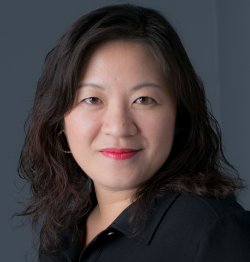
Meiyin Wu
Professor, Biology, College of Science and Mathematics
- Office:
- Center for Environmental & Life Sciences 300
- Email:
- wum@montclair.edu
- Phone:
- 973-655-7117
- vCard:
- Download vCard
Profile
Dr. Meiyin Wu, Professor in the Department of Biology, is an aquatic ecologist whose research focuses on protecting water quality, sustaining water resources, maintaining biodiversity, and restoring ecosystem functions and services. Her research goal is to advance the understanding and practice of aquatic ecology and ecosystem management by developing innovative technologies, improving habitat quality, safeguarding ecosystem functions and services, and informing policy-making to address complex environmental challenges. Her current research agenda focuses on managing non-point source pollution, controlling harmful algal blooms, and reconnecting fragmented habitats—key challenges facing aquatic ecosystems today.
Specialization
Dr. Wu’s research focuses on human impacts on aquatic ecosystems, such as impacts of urban development on lakes, rivers and watersheds. Wu’s team studies water quality, emergent contaminants, invasive species, hydrology, geomorphology, erosion, pathogen indicators, aquatic biota, and riparian wetlands. This research extends to harmful algal blooms, invasive control, watershed management, nonpoint source pollution reduction, storm water management and habitat connectivity.
Her research emphasizes on sustaining biodiversity via rebuilding habitat connectivity and controlling water pollutions including invasive species. Due to high human population density and dense urban development, wildlife habitats are fragmented and/or destroyed. Extensive road network has been shown to create complete barriers to wildlife movement and cause mortality of wildlife. Dr. Wu’s research identifies and prioritizes wildlife crossing/mortality hotspots for mitigation planning to restore habitat connectivity and for the long-term persistence of wildlife species.
Species invasion is a global environmental problem associated with increasing human activity, which causes significant global ecological and economic consequences. Dr. Wu’s research examines the impacts of invasive species at population, community and ecosystem levels, efficacies of invasive management strategies, as well as development of new technologies to control invasive populations.
Dr. Wu's current research agenda includes harmful algal blooms management. While phytoplankton play an important role as the primary producers in a balanced ecosystem, too much of a good thing can be very harmful. Harmful algal blooms (HABs), or the excessive growth of various species of phytoplankton, protists, cyanobacteria, and macro/benthic algae in waters, are of growing international concern. Under the right conditions HABs can occur, some of which produce cyanotoxins that pose health risks to both animals and humans. The increase of HABs is a global challenge which severely impacts our public health and economy. New Jersey has seen significant increases in cyanobacterial HABs that produce cyanotoxins, which can be dangerous for humans, pets, livestock, and wildlife. Wu's team investigate potential impacts of climate change on HABs, examine HAB’s health impacts on human and other biota, identify environmental triggers for HABs, and develop novel technologies for HAB management.
Globally, wetlands are disappearing at an alarming rate. Dr. Wu’s research interests extend to wetland ecology, management, restoration, and impacts of global climate change on wetlands. Scientific evidence suggests that anthropogenic emissions of greenhouse gases are having a discernible effect on the global climate, including acceleration of global temperature and sea-level rise. Dr. Wu’s research studies the role of wetlands in global climate change. Do wetlands produce a surplus of greenhouse gases to the atmosphere or retain them? Are wetlands acting as carbon sinks or carbon sources? Should wetland construction be used in exchange for carbon credits? Moreover, with sea-level rise, there could be substantial loss of floodplain and coastal wetlands. Conversely, many terrestrial ecosystems today may be flooded and become wetlands in the future. Invasive species, insects and pathogens may increase their competitive ability, expand their distribution ranges and move poleward, outcompete native species and occupy the newly developed wetlands. Dr. Wu’s research investigates the impacts of global climate change on wetland distribution, biogeochemical cycles, structure and dynamics, and ecosystem functions and services.
For more information on her research, please visit https://sites.google.com/view/wulab/.
Resume/CV
Links
Montclair State University does not endorse the views or opinions expressed in a faculty member's webpage or website. Consistent with the principles of academic freedom, the content provided is that of the author and does not express the opinions or views of Montclair State University.