
What’s Your Cell Phone Number?
Posted in: Fraud
Phishing Alert: Attackers Posing as Campus Community Members Requesting Phone Numbers
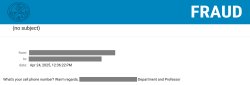
Information Security has received reports of a new phishing campaign targeting members of our campus community. Attackers are impersonating faculty, staff, and other trusted individuals by email and asking recipients to share their personal phone numbers. These messages are often brief and vague, such as:
“What’s your cell phone number?”
These emails are designed to seem urgent and personal, creating a false sense of trust by using the names and email formats of real campus members—sometimes even spoofing display names to match known contacts.
Alert: This is the start of a gift card smishing attack
Once a victim replies with their phone number, the attacker typically follows up via text message (SMS). The next stage often involves a request to purchase gift cards (like Apple, Google Play, Steam or Amazon cards) under the pretense of a favor or emergency. Victims may be asked to take photos of the cards and send the codes back via text. This is known as a smishing (SMS phishing) attack.
How to Recognize and Respond to These Attacks:
- Unusual Requests: Legitimate university employees will not ask for your personal phone number or gift card purchases via email or text
- Check the Email Address: Even if the name looks familiar, check if the sender’s email address matches the person’s real university address
- Don’t Respond or Click: Do not reply to suspicious messages, provide your phone number, or click on links in these emails
- Report It: Use the PAB button or forward the email/screenshots to phishfiles@montclair.edu
What You Can Do:
- Stay Skeptical: If a request seems odd, especially if it involves urgency, secrecy, or money—verify it through another channel
- Protect Your Info: Never give out your personal contact details, passwords, or payment information in response to unsolicited emails or texts
- Let Spam Stay Spam: Let Google do the heavy lifting and keep Spam messages in Spam
If You Fall For This Scam
-
- Report the gift card scam: Contact the gift card company right away
- Ask for your money back: In some cases the gift card companies might give your money back
- Report It: Make sure to report it to the Federal Trade Commission
Want To Know More?
Federal Trade Commission | Avoiding and Reporting Gift Card Scams
CNBC |Tricked by a gift card scam? You may be able to get your money back
Apple | About Gift Card Scams
Google | What to do if you’re a victim of a Google Play gift card scam