View Profile Page
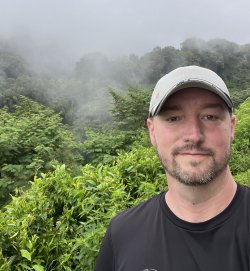
Matthew Schuler
Associate Professor, Biology, College of Science and Mathematics
- Email:
- schulerm@montclair.edu
- Phone:
- 973-655-7191
- vCard:
- Download vCard
Profile
I am a freshwater and coastal ecologist investigating how human activities reshape aquatic ecosystems. My research asks what drives the distribution, abundance, and coexistence of species in ecological communities, and how those patterns respond when environments are altered by pollution, land-use change, and climate change. My lab currently works along three connected lines of inquiry: the resilience of coastal wetlands under rising sea levels and salinization, the accessibility of coastal resources to the communities that depend on them, and the aquatic–terrestrial linkages in streams disrupted by road-salt pollution.
My work is motivated by a commitment to translating ecological research into policy and management. I collaborate regularly with state and local agencies, municipal leaders, and community organizations in New Jersey and beyond to move findings from the lab and field into practical decisions about water quality, wetland restoration, and coastal access.
I use a variety of approaches to address these questions, including controlled microcosm and mesocosm experiments, long-term field observations, environmental DNA and RNA sampling, microbial shotgun sequencing, sensor networks, quantitative modeling, and partnerships with community scientists. Across projects, I rely on aquatic invertebrates, zooplankton, and microbial communities as sensitive sentinels of ecosystem change.
Opportunities for students
I advise doctoral, master’s, and undergraduate students working across these themes, and I welcome inquiries from prospective students interested in coastal and freshwater ecology, community ecology, and applied conservation. More information about the lab is available at www.freshwaterlab.com.
If you would like to meet with me about research or class, please email me at schulerm@montclair.edu.
Specialization
Community ecology
Freshwater and coastal ecology
Wetland resilience
Limnology
Ecotoxicology
Aquatic–terrestrial linkages
Salinization and road-salt pollution
Environmental DNA and microbial community ecology
Conservation and environmental policy
Resume/CV
Office Hours
Spring
- Monday
- 11:30 am - 1:00 pm
- Tuesday
- 3:30 pm - 5:00 pm
Links
Montclair State University does not endorse the views or opinions expressed in a faculty member's webpage or website. Consistent with the principles of academic freedom, the content provided is that of the author and does not express the opinions or views of Montclair State University.
Research Projects
Coastal wetland resilience to salinization and sea-level rise
Coastal wetlands in the mid-Atlantic are among the most rapidly changing ecosystems in North America. Saltwater intrusion, altered hydrology, and shifting plant communities are transforming the physical and biological structure of these habitats, often faster than resident organisms can adapt. My lab investigates the mechanisms that allow — or prevent — coastal wetland communities from persisting under these pressures. We combine manipulative experiments with tidal wetland plants, soils, and zooplankton with field surveys across salinity gradients to ask how evolved tolerance, microbial function, and nutrient cycling interact to buffer or amplify the effects of seawater intrusion. Recent work in collaboration with colleagues at Montclair has shown that salinization interacts with plant root exudates to alter soil phosphatase activity in coastal soils, with consequences for nutrient availability and wetland productivity. Ongoing projects test how zooplankton populations from tidal wetlands differ in their tolerance to salinity stress, and what that variation means for community-level resilience.
Aquatic–terrestrial linkages in streams affected by road-salt pollution
Road salts are one of the most widespread and growing pollutants in northern freshwater ecosystems. In streams, elevated chloride alters invertebrate and microbial communities, and those changes ripple outward across the aquatic–terrestrial boundary by reducing the flux of emerging insects that feed riparian spiders, birds, and bats. My lab studies how salinization disassembles stream communities and how that disassembly propagates into adjacent forests. We use stream mesocosms, field studies in headwater streams across the Hudson and Passaic watersheds, emergence trapping of aquatic insects, stable isotopes, and molecular tools such as environmental DNA and shotgun sequencing to track how salt-driven shifts in aquatic diversity reshape the energy and nutrient subsidies that connect streams to land. We also examine how road salts interact with other stressors — including herbicides, pesticides, and nutrient loading — to magnify or modify these effects. This work informs efforts to establish protective water-quality guidelines for chloride and to design road-salt management practices that reduce ecological harm without compromising winter safety.
Accessibility of coastal resources
Coastal ecosystems provide food, recreation, flood protection, and cultural value, but access to these resources is uneven across communities and is increasingly threatened by degradation, privatization, and climate-driven change. This line of work asks what coastal resources are available, under what conditions, and how ecological degradation compounds existing inequities in access. The lab combines ecological assessments of habitat and access point condition with mapping tools to understand how environmental change and human use interact along New Jersey coastal systems. We are particularly interested in how policy choices can maintain both ecosystem function and public access, so that the benefits of coastal ecosystems are broadly shared.
Bird movement and habitat use in a changing freshwater landscape
Birds integrate the condition of aquatic ecosystems across scales that are difficult to capture with traditional sampling, and the rapid expansion of community-science platforms has made it possible to track their responses to water-resource change across continents. My lab uses eBird observations, paired with remote-sensing and water-quality data, to ask how bird movement, abundance, and community composition are shaped by the quality and distribution of aquatic resources. We are particularly interested in how degradation of natural wetlands, the spread of artificial wetlands and wastewater treatment ponds, and shifts in water availability under climate change redistribute waterbirds and the birders who follow them. Artificial wetlands and wastewater ponds often support unexpectedly high bird diversity and have become magnets for birding activity, but their ecological value depends on water chemistry, surrounding land use, and management practices that vary widely. By combining eBird checklist data with watershed-scale measures of contamination, salinization, and hydrology, we quantify which aquatic features concentrate bird use, how community composition shifts along gradients of water quality, and how birder visitation patterns track \u2014 or diverge from \u2014 the underlying ecological signal. The work informs wetland restoration and management decisions, helps identify artificial habitats that punch above their weight for conservation, and contributes to a broader understanding of how freshwater change propagates into the communities that depend on aquatic resources.