
Clinical Psychology
- MA
- Master's

The Clinical Psychology MA Program is a STEM-designated, terminal, non-licensure eligible MA program that provides foundational knowledge and training in clinical psychology. Grounded in the scientist-practitioner model, this 36-credit program emphasizes integrating psychological science and evidence-based principles to understand mental health and human behavior.
Students benefit from small cohorts, faculty mentorship and opportunities to participate in supervised research or clinical externships that connect classroom learning with applied practice. Although the program does not qualify graduates for independent licensure, it provides foundational training that students may use to pursue supervised employment opportunities in license-exempt settings or as a stepping stone toward doctoral study in psychology or related fields.
Featured Faculty
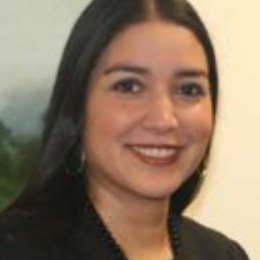
Jessica Spat-Lemus
- Assistant Teaching Professor

Tina Zottoli
- Associate Professor

Jeremy K Fox
- Associate Professor

Erin Kang
- Associate Professor

Jazmin Reyes-Portillo
- Associate Professor

Pevitr Bansal
- Assistant Professor

Elizabeth Chan
- Assistant Professor

Adam Natoli
- Assistant Professor
Admission Requirements
- Equivalent of a U.S. bachelor’s degree.
- Applicants must have a bachelor’s degree in psychology OR a minimum of 12 undergraduate credits in psychology, including a course in statistics and an experimental/research methodology course. Please note: an introductory course in psychology does not count toward the minimum credit requirement, though it might be needed as a pre-requisite to other psychology courses.
- Applicants with non-U.S. degrees: Please visit the international applicants page to review U.S. degree equivalency information.
- Minimum undergraduate GPA of 3.0
- Applicants with a GPA between 2.7 and 3.0 will be considered for admission if other aspects of their application indicate strong potential for success in the program. However, a GPA of 3.0 or above is recommended. Applicants with a GPA below 2.7 will not be considered for admission.
Application Checklist
- Application Deadline: For Fall semester admission only. Priority deadline: March 15.
- Applications completed by March 15, including all required supplemental materials, will receive priority review and an admission decision by April 30th.
- Applications received after March 15th will be reviewed on a rolling basis until the program is full.
- Online Application: Submit application and $60 non-refundable fee (or waiver if applicable).
- Transcript: One from each college attended.
- Essays/Personal Statement: Articulate clearly, concisely, and in specific terms your relevant academic, research, and psychology-related experiences and interests.
- Please describe the way you foresee the child/adolescent or forensic psychology concentration aiding your future educational and/or career goals.
- Finally, you may also highlight any additional strengths that will make you an excellent candidate for our program, as well as explain any areas of relative weakness in your application (e.g., if your GPA is below the recommended minimum or your performance in a course was suboptimal).
- Letters of Recommendation: Two letters, preferably from faculty familiar with your work.
- Sample of written work related to the field(s) of psychology, particularly in your desired area of concentration. This might be a paper written for a previous course, an original research project summary, or some other original writing that was prepared and completed prior to this application process.
- Resume/CV: Required
- Standardized Test Scores: GRE General Test; optional if your overall undergraduate GPA is at least a 3.3 or have completed a master’s level degree
- Interview: All applicants who are selected to proceed to the next stage of the admissions process following review of their applications, must complete an admissions interview with program faculty.
- The Psychology Department will hold pre-selected interview days for this program.
- Interviews are conducted virtually via Zoom with faculty members and/or the Director of the Clinical MA Program.
- After selecting an interview date, candidates receive a confirmation email from the Psychology Department with additional details and program information. Interviews allow the admissions committee to learn about each candidate’s background and interests; assess readiness for graduate study, clinical placement, and written communication; and ensure that applicants understand how the program aligns with their professional and educational goals.
Questions? We’re Here to Help.
Get guidance on every step of the application process, from admission requirements and deadlines to transcripts, test scores and next steps toward enrollment. The Office of Graduate Admissions provides the information and resources needed to put forward a strong application.
- graduate@montclair.edu
- 973-655-5147
- The Graduate Center, 4th Floor
Program Coordinator: Dr. Jessica Spat-Lemus
Get detailed information about the program itself—from curriculum and faculty expertise to research, internships and career outcomes. The program coordinator can explain how the program connects to your academic and professional goals.