
The Dogs of Montclair: How Therapy and Service Animals are Changing Campus Life
Meet the four-legged friends transforming well-being, community and student life at Montclair State University
Posted in: Admissions, Homepage News, University

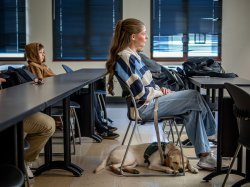
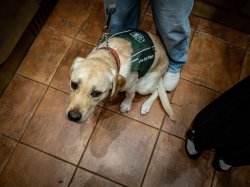
When Makayla Snyder heads to class at Montclair State University, she’s joined by Katherine, a yellow lab in training to be a guide dog for people with vision loss. Every elevator ride, hallway and classroom lecture becomes a teachable moment for Katherine, who quietly settles under Snyder’s desk during late afternoon Business classes.
“I’ll give her a bone if she’s being a little antsy,” Snyder says, “but most times she’ll sleep.”
Across Montclair’s campus, therapy dogs, service animals and emotional support pets are woven into daily life, championing a culture of well-being, belonging and mental health. For students and staff alike, these animals aren’t just companions – they’re essential partners in creating an inclusive university community.
“For our students, these animals bring comfort, connection and community – reflecting the very heart of Montclair’s mission,” says Dawn Meza Soufleris, vice president for Student Development and Campus Life.
Animal Support for Human Well-Being
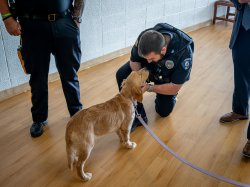
Montclair’s therapy and service animals foster comfort and support far beyond the classroom. Summer, a therapy dog, works with University Police and Victim Services through a grant supporting trauma-informed wellness programs. Charley and Pebbles spread joy and belonging at student events and in residence halls – helping Montclair feel like home.
More than 30 emotional support animals – including dogs, cats and small pets – live with students in residence halls, all approved through the Disability Resource Center. During finals, students de-stress at University wellness events with bonus visits from therapy animals – rabbits, ponies and plenty of pups – invited by the Office of Health Promotion.
There’s real research behind what we see every day.
Human-canine connections promote belonging, reduce stress, strengthen emotional well-being and lift academic performance.” – Dawn Meza Soufleris
“We have seen for years with our dogs and the students how they bring calm,” adds Senior Associate Provost Joanne Cote-Bonanno. “Sometimes a student just sits with a dog and pets them for a while, because that’s what they need at that moment.”
Building a Culture of Care
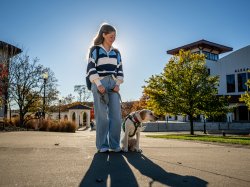
Montclair stands out for its partnership with The Seeing Eye, supporting students who train guide dog puppies. Snyder, a junior majoring in Business Administration, and Sara Brocken, an MBA student raising Fuji – her fourth puppy-in-training – teach obedience, resilience and essential public exposure.
“We get the puppies at seven to eight weeks old, and they’re with us for about a year,” Brocken explains. “Once they’ve had all their shots, we bring them everywhere – baseball games, hockey games, classes. I even brought Fuji to vote. Anywhere we can expose them, we do.”
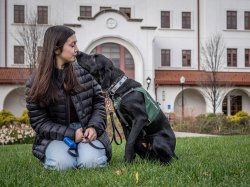
Cote-Bonanno, training her third puppy – a black lab named Cody – with her husband, John, shares: “We brought our puppy to a theater production on campus. The staff welcomed us and gave us a special section to sit in. Once the puppies reach six months old and are in their official vests, they learn to settle and observe quietly, which isn’t easy for young dogs but is vital for their training.”
She continues, “It’s rewarding for us and the puppies, but it’s also meaningful for those around us. People become more comfortable and less apprehensive about service animals when they see them in the community.”
For people with blindness and other disabilities, access is essential. Even with laws on our side, barriers to participation still exist. That’s why every step toward greater inclusion counts. It’s what we strive for every day.” – Joanne Cote-Bonanno
Stories of Change
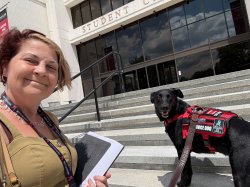
Treasury and Finance’s Internal Audit Director Trisha Silvasy’s journey with Loki is one example of how Montclair’s commitment to access and equity ensures that every community member can thrive and be fully included in campus life.
Loki’s telltale bark sometimes startles new faces – yet it’s this alertness that has saved Silvasy’s life three times, alerting her to critical symptoms.
“For people like me who have disabilities, our service dogs are our lifeline,” Silvasy says
Students as well find support in Montclair’s inclusive animal policy. “We’re not just trying to do the right thing; we really are doing the right thing, the right way,” Silvasy observes.
Celebrities on Campus
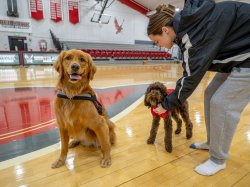
Charley, a golden retriever, began as emotional support for the women’s basketball team and quickly became a campus celebrity. Her warmth and enthusiasm have made her famous far beyond Montclair – appearing on TV and in People magazine and regularly drawing crowds to “Paw-ffice Hours,” wellness events where students gather for hugs and a dose of her calming energy.
“Her presence changes the energy in a room,” says Courtney Cunningham-Jones, assistant dean for Student Services in the College of Humanities and Social Sciences and special assistant to the head coach of Red Hawks women’s basketball.
“It’s hard to be upset, anxious or overwhelmed when a golden retriever is running toward you,” she says.
Pebbles, a mini chocolate labradoodle, is Montclair’s official “pupscot.” From Welcome Week to finals season, the campus community looks forward to seeing her at special events, like her celebrated third birthday, and scheduled “surprise” visits.
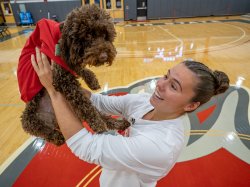
Living with her handler Thea Dyer, associate director, Housing Operations, in the residence halls, Pebbles has built a devoted following – helping students ease homesickness and deepen their sense of belonging.
Pebbles was originally overlooked for adoption because of her trademark curly tail, but today she’s beloved across campus. “For the puppy that no one wanted, she’s now the puppy that everyone wants,” Dyer says.
Students in Student Development and Campus Life help train Pebbles. “We want her to be prepared so interactions can be the best they can be at that moment,” Dyer says.
“But she’s a dog at the end of the day, so you’ve got to give her some grace.”
Ready to Start Your Montclair Journey?
Discover a campus where comfort, connection and community are part of everyday experience. Visit campus and connect with the Disability Resource Center to explore supportive services that help every student thrive.
Journalists: Contact Montclair’s Media Relations for assets or to schedule an interview with faculty or students.
Story by Marilyn Joyce Lehren, University Communications and Marketing.