When Tropical Storm Irene barreled through
New Jersey in August 2011, it left independent “hyperlocal” journalists up a
creek.
“It’s tough to cover a story like that
without support. I wasn’t sure exactly when it would hit, whether I should stay
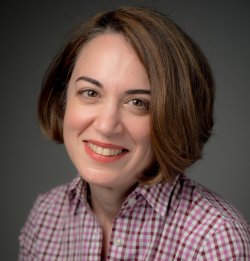
up and wait for it or get some sleep,” recalls Debra Galant, former editor of
Montclair’s hyperlocal news website, Baristanet, and now the director of the
New Jersey News Commons for the Center for Cooperative Media at Montclair
State.
Launched in July, the Center is partnering with
news organizations—large and small—to help the media better cover New Jersey.
With major grants from the Geraldine R. Dodge Foundation and the John S. and
James L. Knight Foundation, its goals are to bolster news coverage and analysis
for state residents while giving students at Montclair State’s School of Communication
and Media valuable hands-on, professional experience.
“In launching our new School of Communication
and Media, we are pursuing a clear and compelling vision: to take the lead in
media education,” said Dean Daniel Gurskis of the College of the Arts. “The
Center uniquely positions us to pursue bold initiatives in the teaching and study
of journalism.”
With this new initiative, Montclair State joins
a handful of other universities around the country looking to shape the future
of an industry in transition.
“One of our aspirational goals is to help the
news industry survive and thrive in New Jersey,” says Matthew Frankel, the University’s
executive director for media industry partnerships. “In the process, we are
leveraging resources to benefit our students.”
President Susan A. Cole agrees. “The Center
will offer students invaluable exposure to a rapidly changing industry, and give New
Jersey residents deeper access to exciting and relevant New Jersey-specific content.
From a home base here on campus, it will encourage the interaction between
media partners and the creation of new and exciting media initiatives.”
Galant will run the Center’s first
initiative, the New Jersey News Commons, and, among other things, will help
local news outlets collaborate to cover big stories and important issues such
as education, health care, natural disasters and crime trends that affect
communities locally and statewide.
“We’ll be able to share stories and collaborate
when something big happens,” she says. “During a hurricane, 100 reporters don’t
all need to ask the forecaster the same questions. We can share advice and
information.”
To prepare the Center’s new home, the
University has made major capital investments in HDTV studios and production
facilities, new digital radio studios, wireless newsroom spaces, offices and
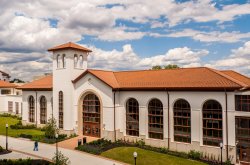
areas designated for collaboration. The Center’s wing in Schmitt Hall is
designed to create a kind of National Press Club for New Jersey.
The initial focus of the Center’s work includes
developing collaborative statewide news and public affairs programming projects,
disseminating content through multimedia platforms and providing an environment
on campus that supports ongoing changes in the media. Galant will also oversee
a dedicated website to point to the best current stories about New Jersey,
including news from and for local communities.
The Commons plans to partner with University
faculty and students to provide professional development and training for journalists
learning the business side of news, such as advertising sales, online platforms
and servers, marketing and managing resources. It will help facilitate workshops
and round-table discussions with political, academia and industry leaders to
address issues facing the state.
The idea for a news co-op has been percolating
for a while among New Jersey journalists, many of whom have been downsized out
of jobs as the news industry continues to evolve in an online era.
“I’ve been on a lot of panels to discuss the future
of news,” Galant says. “It became clear: Why don’t we create a news co-op in
the state of New Jersey? Everyone’s struggling. Maybe we can use our resources more
wisely.”
The Center’s initial partners include NJTV, which
broadcasts its nightly news show, NJ Today, from its campus
headquarters; New Jersey Public Radio, a branch of New York Public Radio; and
NJ Spotlight, a foundation-funded news site that focuses on statewide issues of
education, energy, the environment and health care. Likening the network to an
“ecosystem” of local news sites, Frankel says, “Together we hope to
dramatically increase the coverage of New Jersey news and build new foundations
of collaboration between the state’s various media entities.”
The Dodge Foundation’s President and CEO
Chris Daggett says, “Access to high quality, meaningful news and information is
the cornerstone to civic engagement and community building. We believe this is an
extraordinary opportunity to help unite journalists and news
organizations—large and small—in service to the 8.8 million residents of New
Jersey.”
NJ Spotlight reporters and editors work in
the Statehouse’s Press Row, in their homes, or at coffee shops with WiFi. The Montclair
State campus will be the home of NJ Spotlight’s northern New Jersey bureau, where
editors hope to collaborate with other news organizations and will provide opportunities
to student interns.
“It’s a wonderful chance to have space, get
out of our homes and be around other journalists and to get everyone working together,”
says NJ Spotlight co-founder John Mooney. “There’s a lot of collaborative work
being done, and it is nice to have a place to do it together and to get our
stories on more websites.” He also sees other perks to partnering with the
Center: “It will be nice to have some help on marketing or back-office help
with things like software development.”
Glocally Newark, run by developer Derek Ware,
is a small, independent site targeting Newark’s artistic community. Ware bought
Glocally Newark last January to keep it going in order to provide a balance to
the constant barrage of crime stories coming out of his hometown.
“We’re looking at the new population in this
neighborhood—they’re very artsy, multicultural and don’t have the baggage of the
Newark riots affecting how they see the city,” he says. “We are providing a
voice that needs to be heard.”
Because he is new to publishing, Ware will turn
to the Commons as a place to learn the business. “The Commons helps me avoid
tripping along the way,” he says.
Ware also sees the Commons as a place to find
more exposure for Glocally Newark’s stories and get more material for his site.
“My staff can produce three stories a day, but you need more than that to grow,”
he says. “We offer urban arts and entertainment coverage. Suburban sites might
be interested in our stories, which could, in turn, generate interest in what’s
going on in Newark.”
As part of her role as director, Galant has reached
out to hyperlocal journalists around the state to determine their needs. Some
of what she has learned so far has surprised her. Though she thought everyone
would say that increasing revenue was their top concern, one publisher’s
biggest need was pooled high school sports coverage. “Sports are a big deal in
her town and there are sometimes three or four events going on at once—home and
away. If she could share coverage with sites in other towns, she said that
would help her more than anything.”
In addition to the work of the Commons, the Center
will also serve as an incubator for start-ups, Frankel says. “We hope we can create
Baristanet-esque sites throughout the state. If someone needs assistance for a start-up,
we’re here to help.”
NJ Spotlight’s Mooney says a Center for Cooperative
Media could not happen without the support of the University and the Dodge and
Knight foundations, and he hopes it will ultimately help answer the biggest
question of all. “The toughest notion is how to make online journalism —not
even profitable—but sustainable. No one’s figured that out yet.”
For more information, visit montclair.edu/cooperative-media.