2008 Sokol Science Forum Video

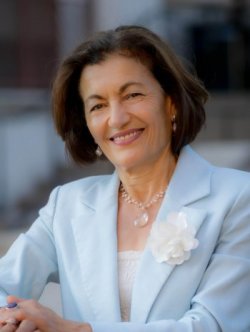
Photo: Mike Peters

Michael Oppenheimer

"The Environment and Sustainability, the Next 100 Years"

With the world focused increasingly on sustainability and the environment, the Centennial edition of Montclair State University's annual Sokol Science Forum was devoted to this important subject. Michael Oppenheimer, Ph.D., a member of the Nobel Peace Prize-winning Intergovernmental Committee on Climate Change and professor at Princeton, delivered the keynote address and participated in the subsequent panel discussion moderated by National Public Radio's Ira Flatow, science correspondent and host of "Talk of the Nation: Science Friday."

Other panel members included:

· Andrés Edwards, founder and president of EduTracks, a firm specializing in green building and sustainability education;

· Lisa P. Jackson, commissioner, New Jersey Department of Environmental Protection (NJDEP); and

· Eric Svenson, vice president of environment, health and safety, PSEG Services Corporation

View individual segments of the evening's discussion below.

Chapter 1. Welcome from Dean Robert S. Prezant and introduction of keynote and moderator

Chapter 2. Dean Prezant introduces Ira Flatow – welcome and introduction

Chapter 3. Dean Prezant introduces keynote speaker Michael Oppenheimer

Chapter 4. Keynote Speech – Michael Oppenheimer

Chapter 5. Ira Flatow introduction

Chapter 6. Ira Flatow introduces panel

Chapter 7. How do we tackle rise of oceans?

Chapter 8. Making link between climate and our daily activities - Andres Edwards

Chapter 9. Extra things power can do - Eric Svensen

Chapter 10. Audience Question: Impact of meat production on global warming: Could the amount of corn to make one gallon of ethanol feed one person for a year?

Chapter 11. Growing algae and wind power in Texas - Ira Flatow

Chapter 12. Think about New Jersey: importing power from other states - Lisa P. Jackson

Chapter 13. California energy incentives - Andres Edwards

Chapter 14. Educate the public: It will be a more costly environment - Eric Svensen and Ira Flatow

Chapter 15. Costs of off-setting global warming vs. reducing emissions now

Chapter 16. Mandatory caps on CO2 emissions in New Jersey - Lisa P. Jackson

Chapter 17. Be prepared for alternate energy: The political problem – “Go Vote for It” - Michael Oppenheimber

Chapter 18. Audience question: Can we get off-shore technologies – why not greater strides in wind-generated energy? - Lisa P. Jackson: Policy, Eric Svensen: Technologies out there

Chapter 19. Do we know that the public won’t pay more? Ira Flatow, Lisa P. Jackson, Eric Svensen and audience

Chapter 20. No one considers this a real crisis - Ira Flatow, Andres Edwards

Chapter 21. Audience question: Storing greenhouse grasses in ice pockets? - Oppenheimer

Chapter 22. Are Chinese any closer to making changes? Flatow and Oppenheimer

Chapter 23. Audience question: Currents stopping gulf stream - When do we stop worrying about initiatives and focus resources on disaster recovery? - Oppenheimer

Chapter 24. Audience question: What kind of future do our children have? Andres Edwards – Our greatest resource is our imagination.

Chapter 25. Money to be made by company’s going green, a model for living - Lisa P. Jackson, Ira Flatow

Chapter 26. A trip to the store to buy a quart of milk - Ira Flatow

Chapter 27. Audience question/comment: Businessmen are in control. Go into business for the environment.

Chapter 28. Audience question: How can we speed up questioning of conventional assumptions: lifestyle change, behavior change, carbon tax

Chapter 29. How to engage citizens - Andres Edwards

Chapter 30. The Most Effective Energy Policies - Oppenheimer

Chapter 31. Audience question: Any initiatives in New Jersey to make new building green? - Lisa P. Jackson

Chapter 32. Audience question: Need for national policy - Oppenheimer

Chapter 33. Audience question: Can we really avoid disaster in the absence of population control? - Oppenheimer

Chapter 34. Audience question/comment: The Skylands Watershed - Lisa P. Jackson

Chapter 35. Conclusion: Are you optimistic? Flatow and Oppenheimer

Media: