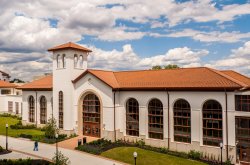
Setting foot on the campus of Montclair State University as
a freshman, I could hear music and students conversing as well as smell the
aroma of food in the air as various student groups were joining together to
celebrate culture and diversity on the Student Center Quad. Four years later, Montclair State still has
that same essence, but there is a new wave of energy. The sounds of music are being accompanied by
the voices of hundreds of students gathered chanting, “THIS IS MY CAMPUS!” The
voices of students echoing throughout the University are felt by the faculty,
staff and administration.
Now at Montclair State, the sight of rallies, candlelight
vigils and demonstrations are far more common than even a few short years
ago. In my four years at the University,
I have observed a shift in students’ energy.
Now, more than ever, students are becoming involved in politics,
activism, human rights and social justice work.
Why is this happening now? There is a plethora of reasons
why students have become more involved in activism in their community at
Montclair. For one, some students become
activists or involved in a cause because they have been touched by something
through a personal experience such as knowing someone serving in the military
or a family member with HIV/AIDS.
For me, that is how I became an activist on campus. During my freshman year, while I was a peer
counselor at the Drop-In Center, I worked with a young woman who was a survivor
of a sexual assault. This young woman
taught me the meaning of true strength.
From then on, I committed myself to helping educate and raise awareness
in the community to end violence against women on college campuses. This is why I am involved with the Center for
Non-Violence and Prevention Programs on campus under the mentorship of Jhon
Velasco.
Historical and political events over the past four years
have also played a significant role in the increase in student activism. When I first came to Montclair State, I was
not even registered to vote because I thought that my vote did not matter. It was through professors and mentors that I learned
that my vote can, and does, make a difference.
I truly believe that with the upcoming presidential election, we have an
opportunity to create change in the world and make history.
Many on campus agree. “Now there are things at stake,” says
Anthony Neglio, vice president of the History Club. “For every action there is a reaction. For
example, the economy is being affected and now we have a weak job market, or
people are getting killed in Iraq so we react and protest the war. Now that we see what is occurring, we, as
students, must do something about it.
The political events of today are affecting our future as college
students.”
Another reason for increased student involvement on campus
is the profound impact of technological advancements. “During the war in Vietnam, we received
information via the radio,” says Neglio. “This method was insufficient, so we
turned to television to provide us with graphic, visual images of world events.
But during the Vietnam War, even the television began to be censored. So now we
have resorted to the Internet to provide us with more accurate information of
what’s happening in the world.”
Not only is this true with the news media but the Internet
has had a huge impact on college students in many other ways, particularly with
the creation of social networking sites like Facebook and MySpace. College students have become connected to a
whole new world and it has affected the ways and rates at which students have
become involved on campus.
These Web sites allow students to receive constant updates
of what other student organizations are doing on campus. Furthermore, if students do not like
something that has happened at the University, it takes just minutes to create
a group on Facebook to allow students to voice their opinions. The University has already seen such Facebook
groups protesting parking, housing and other concerns.
The Internet has also allowed students to organize
large-scale events more rapidly. For
example, when the school shootings occurred at Virginia Tech in April of 2007,
it took just 24 hours for Montclair students to organize a candlelight vigil,
promote it on Facebook and hold the event with over 200 members of the
community in attendance. This is just
one of many examples in which technological advances have aided in student involvement
and activism at the University.
But with any form of student involvement, especially
activism, there will always be supporters and dissenters. “One of the rewards of being an activist is
knowing that you can make a difference to at least one person,” says Erica
Emmich, a senior broadcasting major and president of Students Against
Violence. “One of the challenges has
been negativity from other students because when you are promoting something,
students can give mean or negative responses because they are trying to degrade
the cause you are promoting.”
Emmich feels the negative responses are usually because the
dissenters think the cause is unimportant. “The reason they think it is
unimportant is because they think it does not affect them,” notes Emmich. “In
seeing this negativity, we have tried to make a change in people’s attitudes
and have created programming on campus that is fun and inviting to students.”
In this new era of awakening student interest in
involvement, there are more activist student organizations on campus than perhaps
ever before, ranging from organizations raising awareness on global warming to
organizations looking to end the genocide in Darfur. Students now are also showing renewed
interest in politics. Just this past
semester, the Latin American Student Organization and Lambda Theta Phi
organized an event to gather to watch and discuss the results of the “Super
Tuesday” primaries. Montclair State
students are not only concerned citizens but are agents of change in their community.
I truly believe and hope that with our generation and the generations to come, there will be a great deal of positive change created—positive change not only at Montclair State but also in the U.S. and the world. In the words of Mahatma Gandhi we need to, “Be the change we want to see in the world.” I believe we are on the right path to making this happen because we are the future. Carpe futura!
Brian Yankouski recently graduated from Montclair State with a B.A. in psychology. While he was a student, he worked at the Center for Non-Violence and Prevention Programs, was a member of the Sexual Assault Response Team (SART) and was actively involved in Students Against Violence. He now plans to take a year off to gain further practical experience in the field of psychology before enrolling in a doctoral program in clinical/community psychology.