Dr. Lee Analyzes Tariff Pressures Reshaping U.S.–Korea Economic Ties
Posted in: Economics
Dr. Sunhyung Lee, Assistant Professor in the Department of Economics department, shared insights on evolving tariffs in a recent article for The Peninsula, highlighting how they pressure Korean firms to boost U.S. investments and what this could mean for future U.S.–Korea economic ties.
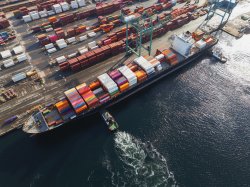
On July 7, 2025, the White House notified South Korea that a 25 percent tariff on Korean imports would take effect on August 1 unless a new trade agreement is reached. While negotiations are ongoing, this development raises important questions about the future direction of South Korea’s investment strategy, particularly in relation to the United States.
Professor Sunhyung Lee’s analysis highlights that beyond trade balances, the letter signals strong U.S. preferences for South Korean firms to expand production and investment within America. South Korea and Japan, two of the largest foreign direct investors in the U.S., were among the first countries targeted. Recent moves, such as Hyundai Motor Group’s $5.8 billion facility announcement in Louisiana, illustrate how greenfield investments may be used to ease tensions and generate political wins tied to American manufacturing jobs.
With the August 1 deadline approaching, Korean companies face mounting pressure but also opportunity. President Trump has made clear that no extensions will be granted, pushing firms to consider proactive announcements of U.S. projects, especially in politically strategic states. Such moves could reduce tariff risks, navigate growing labor pressures at home, and build long-term goodwill with U.S. policymakers.
The article concludes that Korean companies should treat this moment not just as a challenge, but as a chance to deepen U.S. ties through visible, job-creating investments. How these decisions unfold over the next few weeks may shape U.S. – Korea economic relations for years to come.