
2025 Green Teams
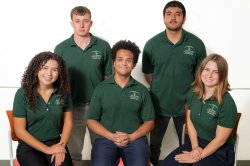
About Foodshed Alliance
The Foodshed Alliance is a nonprofit organization in New Jersey focused on supporting farmers, improving access to healthy food, and protecting the environment. Its mission is to enhance sustainable and regenerative farming practices while safeguarding community resources. The organization believes that the health of communities, land, and local farms is interconnected, as farmers are essential to maintaining this relationship. To achieve its goals, the Foodshed Alliance collaborates with farmers, consumers, agricultural professionals, academia, and community partners to build a resilient and healthy foodshed that nourishes people, respects the land, and strengthens local communities. As a registered 501(c)(3) nonprofit, it is dedicated to promoting sustainable agriculture and fresh, locally grown food in northern New Jersey.
Deliverables
The Foodshed Alliance Green Team worked to advance sustainable farming practices through robotics, soil science, and spatial analysis. Their work combined hands-on field trials, sensor development, and drone/GIS mapping to study the impacts of biochar and compost on soil health. The results highlight innovative approaches to soil monitoring, data collection, and sustainable resource management.
- Programmed a robotic hand to autonomously grip, insert, and swap soil sensors with 3D-printed mounts for hands-free field sampling.
- Designed and mapped 48 plots for biochar and compost application, guided by a literature review.
- Built an Arduino-based system in a custom 3D-printed case to collect soil temperature, moisture, humidity, and NPK data.
- Conducted a parallel pot study with identical amendment rates, tested on campus, and validated with Rutgers University soil results.
- Field-tested a Husky A200 rover for sensor deployment and compared soil moisture data to the pot study.
- Captured NDVI drone imagery and analyzed crop stress and vegetation cover with ArcGIS Pro.
- Upgraded Arduino R4 WiFi system for real-time, timestamped data with LoRa/SD logging and weather-resistant 3D-printed casings.
- Created geo-referenced maps and soil health zones, integrating drone imagery and historical data for long-term analysis.
- Applied biochar at controlled rates and monitored pre-/post-treatment soil conditions with robotics and lab testing to evaluate effectiveness.
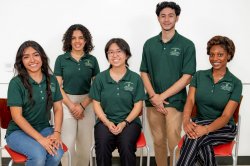
About Greens Do Good
Greens Do Good, a hydroponic vertical farm in Hackensack, NJ, is dedicated to transforming how the local community sources fresh, sustainable produce while empowering individuals with autism. Through its Workforce Development Program, Greens Do Good provides teens and adults with autism hands-on training and paid employment, teaching essential job skills and environmentally sustainable farming practices. With over 800 hours of training offered annually, participants gain valuable work experience and build their resumes. By partnering with local businesses and engaging in community outreach, Greens Do Good creates employment opportunities, raises autism awareness, and promotes eco-friendly farming methods.
Deliverables
Build upon the 2024 prototype by refining core components, user interface, and interaction models based on feedback from users with autism and HCI specialists.
- Updated the 2023 Green Teams prototype to a mixed reality Finalize 8 interactive XR training modules with structured task flows covering vertical farming
tasks for seeding, watering, pruning, and harvesting. - Integrate accessibility features, including adjustable audio guidance, visual cue options, and simplified or advanced interaction modes to support diverse user needs based on learning capabilities.
- Implement in-VR learning support such as progress bars, scaffolded feedback, guided narration, and repeatable practice modes to reinforce procedural learning.
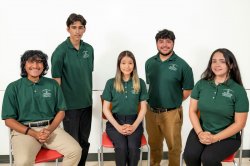
About New Jersey Natural Gas
New Jersey Natural Gas is the primary subsidiary of New Jersey Resources (NJR), a Fortune 1000 company that provides clean energy services like home services and asset management, and provides natural gas to its customers. New Jersey Natural Gas serves over 500,000 customers across New Jersey’s counties and operates the most environmentally sound natural gas system in the state. As a leader in the competitive energy marketplace and a lifeline service provider, New Jersey Natural Gas is committed to service excellence and delivering save, reliable energy customers depend on to keep their homes and businesses running.
Deliverables
- Developed CO2 Purification Business Case: Created a comprehensive analysis of the economic feasibility and market potential for CO2 purification and sale;
- Performed Sensitivity Analysis: Evaluated financial and technical risks for various CO2 purification systems under changing market and regulatory conditions;
- Compared Purification Technologies: Analyzed purification systems from different providers, focusing on costs, performance and certification compliance;
- Assessed Market and Regulations: Summarized market demand, certification needs, and regulatory requirements for CO2 purification in New Jersey;
- Integrated Renewable Byproducts: Identified opportunities to align renewable energy byproducts with CO2 purification using insights from the Ariana Yar study;
- Conducted Technical Feasibility Study: Used data and meeting notes to assess the implementation viability of CO2 purification systems.

About Montclair Township
The Township of Montclair, located in Essex County, New Jersey, is classified as an urban suburban community that is a thriving commercial and cultural hub. Incorporated in 1868, the township is most known for its residential engagement, efficient public services, and advocacy for the financial equity of its residents. Its proximity to New York City, as well as a diverse art and cultural scene, make the township desirable for local businesses and entrepreneurs to seek out the region.
The Montclair Township’s Office of Sustainability was established in 2023 to initiate and maintain the sustainability efforts of Montclair. Located in Essex County, New Jersey, its objective is to make Montclair cleaner, healthier, and more resilient. Through policy development, strategizing sustainable projects, and boosting public engagement, the office efficiently reduces emissions and promotes environmental justice.
Deliverables
The Montclair Township Green Team worked in evaluating its street trees and developing strategies to expand canopy coverage. The team’s work focused on field surveys, equity assessments, and planning for long-term environmental benefits through the following deliverables:
- Street Tree Field Survey: Conducted fieldwork and created a street tree database documenting the location of the tree, pit length, pit width, diameter at breast height, scientific name, common name, and tree condition for a subset of streets in the Township of Montclair.
- Overburdened Community Tree Assessment: Quantified tree density and compared it to township-wide averages, and measured the carbon uptake of the trees using a carbon sensor to quantify vegetation and evaluate the environmental benefits of increasing the tree canopy in those areas.
- Equity Analysis: Developed an equity dashboard with summary reports on canopy disparities around the township.
- Implementation Plan: Developed a report and presentation outlining a strategic plan for enhancing the city’s tree canopy in the overburdened communities of Montclair.
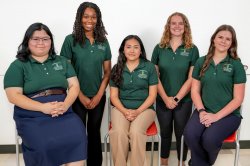
About The Nature Conservancy
The Nature Conservancy is a global environmental nonprofit working to create a world where people and nature can thrive. Founded in the U.S. through grassroots action in 1951, The Nature Conservancy has grown to become one of the most effective and wide-reaching environmental organizations in the world. With the help of over a million members and the dedicated efforts of our diverse staff and over 1,000 scientists, The Nature Conservancy impacts conservation in 81 countries and territories.
Deliverables
The Nature Conservancy team completed a series of deliverables that combined technical analysis with community outreach. These efforts included reviewing feasibility studies, developing communication tools, building climate risk datasets, and conducting a cost-benefit analysis of green infrastructure implementation. Together, these deliverables provided both actionable data and accessible resources for the City of Paterson and its residents.
- Feasibility Study Analysis: Reviewed the WSP Green Infrastructure (GI) Feasibility Study, created notes and a database of key values, and used the findings to inform subsequent deliverables.
- Outreach Materials: Produced infographics, videos, and an ArcGIS StoryMap to educate landowners and the community about flooding issues and GI solutions.
- Social Media Campaign: Filmed eight outreach videos, including a general GI overview, a Paterson-specific GI video, and six videos covering specific GI types (pervious pavement, bioretention systems, rain gardens, planter boxes, cisterns, and downspout planters).
- Climate Risk Dataset: Built GIS layers mapping flood risk, heat risk, and vulnerable communities, culminating in a climate prioritization dataset for future policy use.
- Cost-Benefit Analysis: Modeled the return on investment (ROI) of GI implementation over 1-, 5-, and 30-year horizons, quantifying co-benefits, maintenance costs, and ward-level priorities.
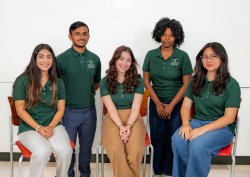
About Eisai
Eisai is a leading research and development based global pharmaceutical company. Eisai works on manufacturing, marketing, and research and development with a focus on prescription drugs. Outside of developing pharmaceuticals, Eisai focuses on potential corporate activities that go beyond the provision of medicine by giving first thought to patients and the people in the daily life living domain and increasing benefits to patients, called “human health care”. With its over 10,00 employees, 9 production sites, and 40 subsidiaries, Eisai is dedicated to listening and aiding the families and patients they serve.
Deliverables
The team supported Eisai in advancing its Scope 3 emissions strategy by compiling data, researching regulations, and identifying best practices. Their work included the following deliverables:
- Emissions Inventory: Developed a comprehensive database of all available Scope 3 emissions data by leveraging procurement and transportation information and clearly identified any data gaps.
- Policy Research: Conducted in-depth research on emerging Scope 3 reporting requirements, with a focus on California Senate Bills 219, 253, and 26.
- Competitor Analysis: Performed a competitor analysis on current Scope 3 reporting practices, identifying industry benchmarks and highlighting best-in-class approaches.
- Implementation Timeline: Prepared a detailed roadmap outlining Eisai’s required action items and implementation timeline.
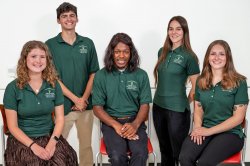
About The City of Newark
The City of Newark Office of Sustainability was created in 2010 to address the looming effects of climate change and environmental injustice. Through community engagement, policy analysis and education, the office prioritizes four main goals. These goals include making Newark healthier, greener, more resilient, and cooler for its residents. By collaborating with other municipal departments, the Newark Environmental Commission, public/private stakeholders and residents, they effectively advance sustainability and climate resistance.
Deliverables
The City of Newark Green Team supported Newark’s Sustainability Action Plan by combining community engagement, data analysis, and spatial planning to strengthen green space access and infrastructure. Their work included the following deliverables:
- Community Outreach Efforts: Conducted stakeholder mapping, developed an inclusive outreach strategy, and implemented engagement tools (surveys, interviews, and community events) to gather diverse perspectives.
- Community Input Reporting: Analyzed and synthesized feedback to identify community priorities, needs, and barriers to green space access.
- Environmental and Social Analysis: Investigated factors influencing neighborhood conditions and green space equity using Newark’s Sustainability Action Plan and other relevant sources.
- GIS Mapping and Green Infrastructure Opportunity: Developed GIS layers to identify and visualize vacant lots and highlight spatial gap opportunities in green infrastructure, complementing Newark’s Sustainability Action Plan.
- Conclusive Tools: Produced an executive summary, visual materials, and presentations to communicate sustainability plan priorities with a focus on green space infrastructure, along with an action item timeline to complete the project.
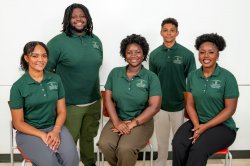
About the Port Authority of New York and New Jersey
The Port Authority of New York and New Jersey is a government agency responsible for managing and maintaining vital infrastructure that supports the trade and transportation network in the New York/New Jersey region. This includes overseeing five airports, the seaport, the PATH rail transit system, and six tunnels and bridges connecting New York and New Jersey. Generally, a port authority is a governmental body that manages, operates, and develops transportation and trade infrastructure within a specific area, often owning facilities at seaports and airports while also handling bridges, tunnels, and rail systems.
Deliverables
The Port Authority of New York Green Team developed a water management plan that addressed usage, vulnerabilities, and conservation opportunities. Their work included the following deliverables:
- Water Assessment: Incorporated preliminary estimates of water usage, vulnerability, priority use types, and emergency response.
- Identified metering deficiencies and performed thorough water audits to evaluate current water usage.
- Loss Prevention Analysis: Detected leaks to minimize water loss and ensure efficient resource management.
- Opportunity Analysis: Identified opportunities to improve efficiency and water conservation across the system.
- Recommendations: Built on the Port Authority Emergency Drought Management Plan to enhance water efficiency and promote sustainable practices.
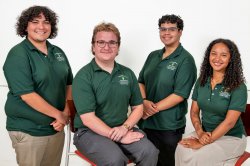
About Hazel Avenue Elementary School
Hazel Avenue School, established in 1906 near Eckhardt Field, has long served as a cornerstone of its diverse community. A K–5 Title I institution with about 326 students and a 10:1 student-to-teacher ratio, it provides a supportive learning environment where over 60% of students qualify for free or reduced lunch. The school reflects its community’s rich diversity, with students speaking English, Spanish, and Haitian Creole, and a demographic makeup of 50% Hispanic, 29% African American, 12% White, 8% mixed ethnicity, 0.6% Asian, and 0.4% American Indian. Rooted in history with features like the old toboggan slide and trolley, Hazel Avenue continues to adapt alongside a neighborhood shaped by cultural variety, community connections, and shifting costs of living—remaining committed to equity, inclusivity, and growth for its students and families.
Deliverables
The Hazel Avenue Green Team advanced food security, sustainability, and education through site planning, community engagement, and long-term program design. Their work included the following deliverables:
- Site Assessment & Planning: Tested soil, measured flood potential, and designed layouts for a greenhouse and community garden with options based on funding.
- Community Engagement: Ran surveys, gathered student and parent input, and hosted events such as a carnival table and soft launch to build buy-in and connection.
- Long-Term Plan: Created a phased engagement strategy with volunteer programs, local partnerships, and workshops to address food insecurity and sustain the garden.
- Curriculum Development: Designed STEAM-aligned lesson plans with hands-on learning (gardening, composting, nutrition) integrated into classrooms and the garden.
- Waste Reduction: Proposed composting programs, waste audits, and visual signage to reduce waste, increase recycling, and empower students as leaders.

About Greener Bloomfield
Bloomfield, a township in Essex County, New Jersey, is an inner-ring suburb of Newark with a population of 53,105 as of the 2020 census. Home to the Bloomfield Green Historic District, the township has a strong legacy of community and history. Since 2009, Greener Bloomfield has served as the township’s official Green Team, leading sustainability efforts and community projects. Their work helped Bloomfield earn a Sustainable Jersey Bronze Level certification, positioning it among the first 28 municipalities in the state recognized for advancing sustainable practices.
Deliverables
The team supported Greener Bloomfield and the Township of Bloomfield by developing resources, conducting assessments, and creating plans to guide the establishment of a community microforest. Their work included the following deliverables:
- Educational Outreach: Created educational materials explaining the value of microforests for air quality, biodiversity, stormwater retention, and heat island mitigation.
- Community Engagement: Engaged community stakeholders to co-create a vision for the microforest site on a vacant lot.
- Impact Assessment: Conducted an environmental, social, and economic impact assessment for the half-acre site.
- Implementation Outline: Recommended project specifications including soil amendments, tree species selection, planting strategy, and location planning.
- Outcomes Forecast: Investigated and predicted the potential impacts of the microforest.
- Future Project Timeline: Developed a project roadmap outlining the development sequence, cost estimates, and 3–5 year maintenance needs.