2024-2025 Cohort

Alicia A. Broderick, Teaching and Learning: Disrupting Institutionalized Neuronormativity through the Development of an Institute for Neurodivergent Innovation & Leadership
Dr. Broderick will use the HEAL Fellowship to develop an Institute for Neurodivergent Innovation and Leadership here at Montclair. This three-pronged initiative is designed to cultivate and nurture a more neuroinclusive culture at Montclair; to platform and amplify neurodivergent talent, innovation, and leadership on campus; and to curate and support the production of vanguard neurodivergent scholarship at Montclair and beyond. The Institute’s aims will be addressed through the development of a community Neurodivergent Safe Space Training program, and through collaboratively exploring and building partnerships with existing entities and initiatives on campus–for both students and employees–that might recognize, value, and develop neurodivergent leadership on campus. BRODERICK HEAL Final Report
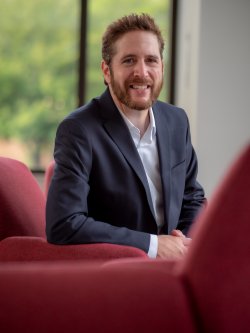
Christopher Donoghue, Sociology: Enhancing Student Belonging & Resilience in Higher Education: A Competing Demands Framework

Livia Alexander, Art and Design: NextGen EduVerse: Innovating Higher Education with Customizable Immersive Media and Game-Based Learning Tools
January 2024 Cohort
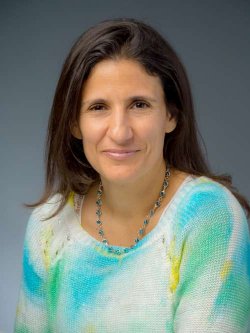
Jennifer Bragger, Psychology: Soaring with Collaborative Service-Oriented Development and Design Thinking: A Needs Analysis to Redesign the Leadership Development and Civic Engagement Minor
Dr. Bragger seeks to redesign the Leadership Development and Civic Engagement Minor to better align the learning and experiences within the minor with student preferences, organizational needs, and the strategic direction of Montclair. Through redesigning the minor, Montclair can be uniquely positioned to lead the charge of developing students to lead through serving others in their community. HEAL Proposal 2023 – J Bragger

Blanca Vega, Educational Leadership: Toward an Equity Minded Faculty Development Model
Dr. Vega will use this fellowship to explore, develop, and implement a set of initiatives that would inform an equity-minded faculty development cycle model by drawing on research and practices advocated for by Gina Garcia and others and encapsulated by the phrase “servingness” to include a set of organizational practices that move HSIs away from simply enrolling Latine students to supporting them (Garcia et al., 2019). These indicators and structures (Garcia et al., 2019). Within this model, faculty development is an important structure to consider as Montclair State strives to enact critical and sustained support for all its students. My goal is to enact servingness by providing support to faculty throughout their development cycle with knowledge, skills, and dispositions in equity-mindedness. HEAL – VEGA Final Report
September 2023 Cohort

This project focuses on two primary areas: exploring the heterogeneity of the Latine student
population at MSU (1) and assessing the readiness of MSU for the Seal of Excelencia awarded by Excelencia in Education (2). In the first area, he will survey undergraduate students to understand how other identity variables such as country of origin, racial-ethnic identification, skin color, and intersectionality inform their academic lived experiences. In area two, he will key review components from the Excelencia framework, such as data, practices, and leadership at Montclair to see how well we are serving our Latine students.

Dr. Harrison will be undertaking the First Gen Faculty Initiative which is a new volunteer initiative among MSU faculty (and staff and administrators) who are themselves the first in their families to graduate college, and who hope to improve the sense of belonging, efficacy, retention, and graduation rates among First Gen Montclair students (who constitute about 45% of our student body). These students are more likely to be retained less than non-First Gen students.
She is working with various offices and departments to form individual and group mentorship cohorts, create programs for current, prospective, and incoming students to increase their sense of belonging and ease the transition to higher education, and discover best practices being used at other colleges and universities around to the country to serve the needs of First Gen students. Harrison HEAL Final Report

Dr. Strickland has begun a student success initiative that has three interrelated goals. First, he will implement data-informed curriculum reform to create equitable student pathways to success using Curricular Analytics.
Second, he will create and implement a plan for course redesign of general education courses
that supports teaching, learning, success, completion, and retention.
Finally, he will evaluate student assessment practices in courses to improve equity and success in general education courses. Together, the aforementioned goals will foster a more equitable curriculum aimed at serving our racially and ethnically diverse students. HEAL Proposal 2022 – J. Strickland.