ITDS serves as a partner to provide course design and faculty development services to ensure Montclair’s online program courses are designed and delivered to meet high standards of quality. Whether a program consists of a few courses to earn a certificate or a full sequence of courses to earn a bachelor’s or master’s degree, ITDS’s instructional designers help design and develop all courses in a close collaboration with faculty members.
Online Program Course Development Process
When a program is identified and approved to be delivered online, the curriculum and their initial delivery schedules (semester or term-based) should be shared with ITDS via Dr. Yanling Sun.
The process generally follows the phases detailed below.
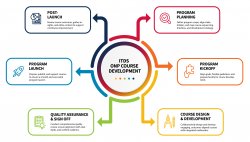
This phase typically occurs approximately one year prior to the anticipated launch of a new online degree program. During this phase, Montclair Unbound, academic program leadership, and ITDS collaboratively define expectations/resources for curriculum, the full scope of courses for development, the sequence of course delivery, and development timelines. All faculty assignments should be determined at this phase. A program-specific project plan should be developed to include these elements, enabling appropriate allocation of instructional design resources needed to support the successful launch of the program.
This phase typically occurs approximately 1-2 months before the first course development term.
- Course Design Guidelines: ITDS collaborates with program leadership to compose customized course design guidelines that meet the unique needs of the program (i.e., multimedia production expectations, required optional synchronous meetings, etc.) and align with other standardized expectations across all online programs.
- Program Kick-Off Meeting: In collaboration with Montclair Unbound and the new program’s leadership, ITDS hosts a program kickoff meeting to review program goals, expectations, and the course design process.
- Contracting: Faculty agreements are finalized during this stage. The first group of faculty course developers is expected to sign contracts or agreements to begin the course design process.
To ensure adequate development time and quality, courses are typically designed at least two semesters before their first offering. For example, courses for a program launching in the Fall semester would normally be developed during the previous Spring semester. Instructional designers work with faculty to develop each course using the ITDS course design model. The course design process includes:
- Course Design Foundations (4 weeks)
- Kickoff meeting between the instructional designer and faculty
- Develop course design roadmap and multimedia plan
- Develop syllabus and course outline (sent for departmental approval)
- Course Development (10 weeks)
- Initial Module Development (2 weeks)
- Develop the first complete learning module, including learning objectives, instructional materials, activities, and assessments
- Faculty and instructional designer review the first module to ensure a strong structure and flow that will be replicated for the remaining modules
- Full Course Development & Multimedia Production (8 weeks)
- Design and develop the remaining course modules
- Instructional designers provide guidance on learning objectives, assessments, activities, and alignment with course outcomes while building modules in the learning management system
- At the same time, faculty collaborate with ITDS multimedia specialists to produce video lectures and other multimedia content
- Initial Module Development (2 weeks)
Once development is complete, the course undergoes a structured review using the ITDS Online/Hybrid Course Review Checklist. Faculty and the instructional designer conduct a self-review, followed by an additional quality assurance review by another ITDS team member to ensure accessibility, consistency, and readiness for delivery.
Final approval is documented and shared with stakeholders. Once sign-off is complete by all parties, Montclair Unbound will initiate payment.
ITDS assists with the initial setup the first time a new course is offered. Online program courses are set to automatically publish one week before the official course start date.
After the course is delivered, instructional designers may meet with faculty to discuss minor updates or improvements for future course offerings.
Course Design Services
The course design services provided by ITDS involve close collaboration with faculty members. This includes, but is not limited to:
- Ensuring learning objectives for each course and module are well articulated
- Ensuring learning objectives, learning activities and course content are well aligned
- Suggesting appropriate online teaching strategies to engage students
- Promoting and helping faculty members develop a community of inquiry by adopting 3-way online interactions between faculty members, students and content
- Making sound recommendations for a variety of assessment practices
- Advocating for and integrating effective instructional technologies to enhance teaching and learning
- Assisting faculty members in the creation of high-quality video in our professional studio and editing facilities as needed
- Refining and detail the syllabus for each course upon communication with faculty
- Following principles of Universal Design for Learning (UDL)
- Using the Montclair course design pedagogical model (OCIA) to apply pedagogical alignment, strengthen online interactions, and develop learning assessments
- Using a well-designed course template customized for each program so that the courses under the program have a similar look and feel
- Using emerging course design technologies to enhance visual presentation and learning navigation in each course
The ITDS instructional design team also assists each individual academic department/program with developing program-specific guidelines for faculty members teaching online program courses. Faculty members who are assigned to design and/or teach online courses for the first time should complete the Empowering Online Teaching and Learning course and Introduction to Canvas workshop offered through ITDS.
Model Course
Our course templates are customized for each program so that the courses under the program have a similar look and feel. Our course design model, OCIA, includes pedagogical alignment between content, interaction, and assessments.
Here’s an example course:
Click on an image below to enlarge photo.
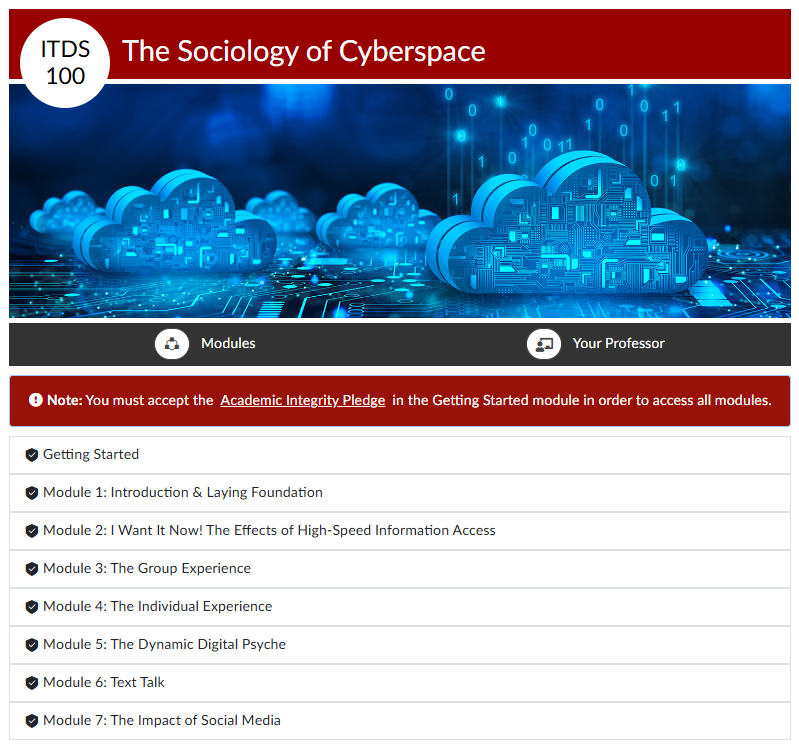
 This is an example of a Home Page. The content is fully customizable, allowing you to provide your students with an introduction to the course along with an overview of the content that will be covered in the modules themselves.
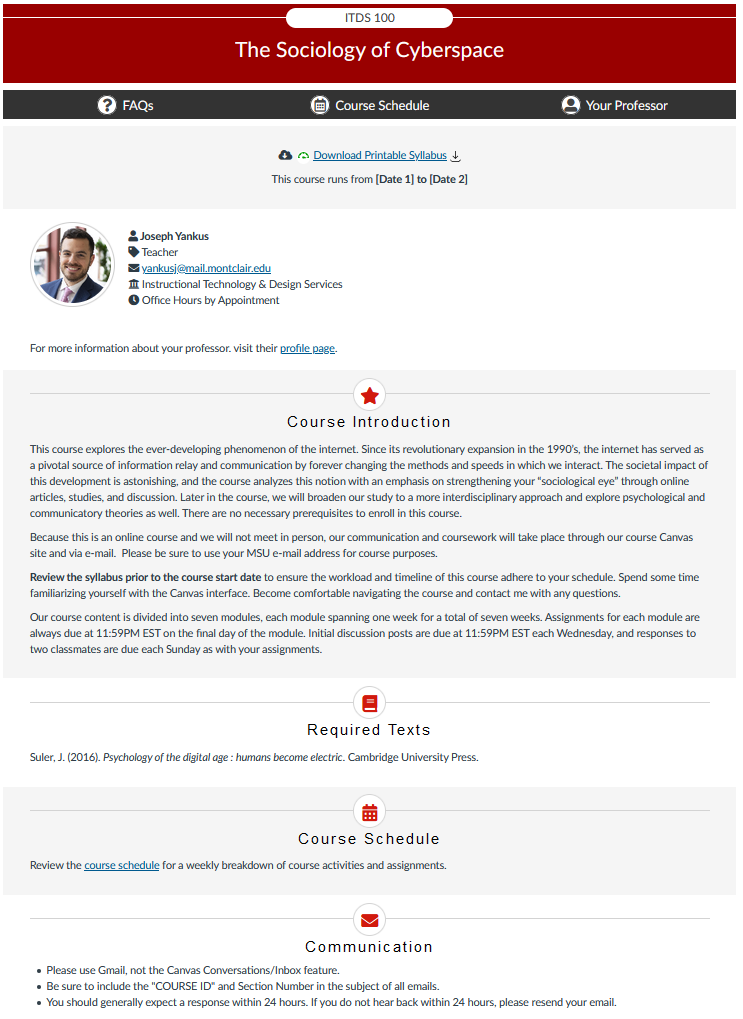
 In this screenshot, we have an example of a Syllabus page. Content is chunked into rows with alternating background colors to increase legibility and highlight different aspects of the course.
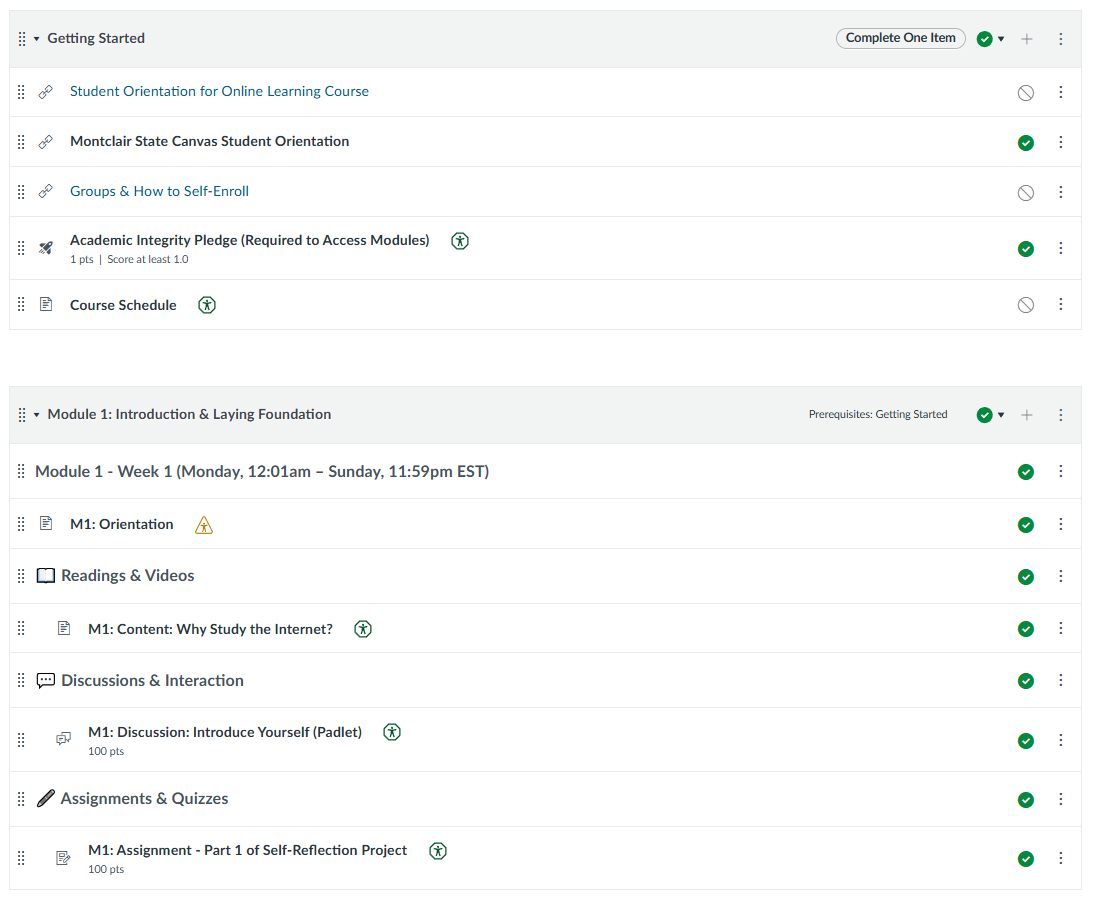
 This screenshotsshowcases our OCIA Model that is used in our course design frameworks.
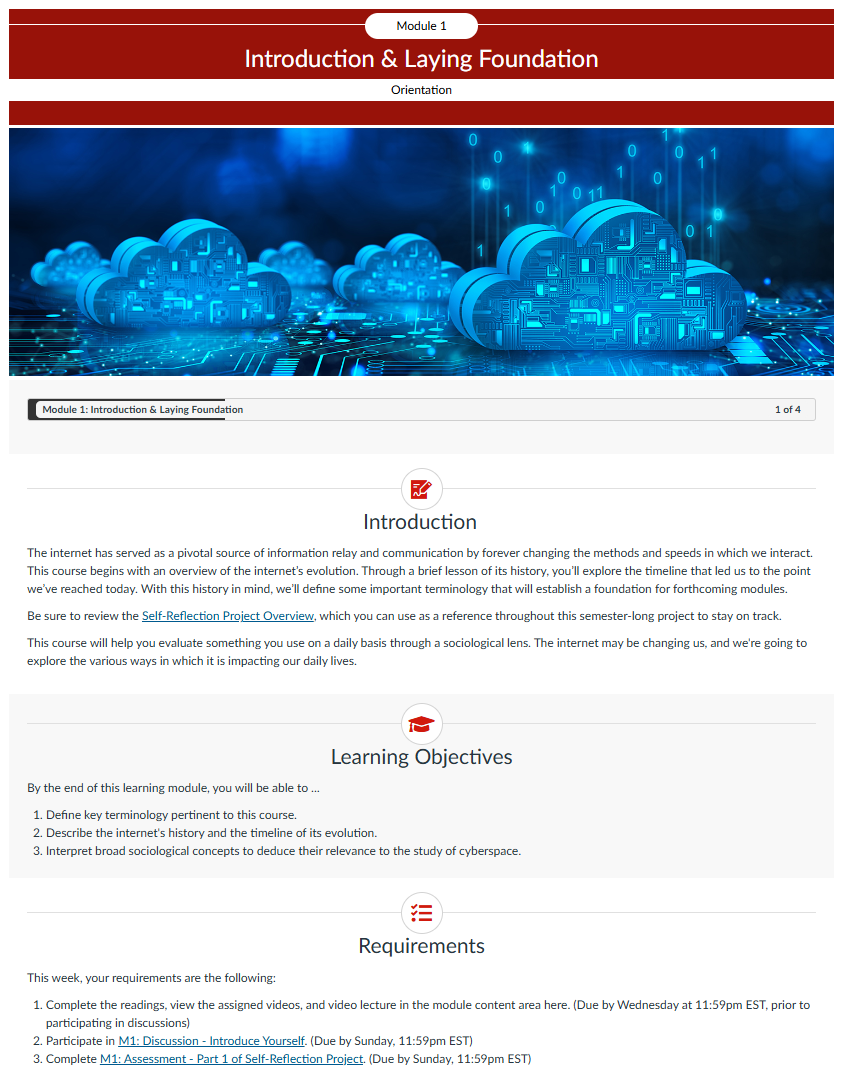
 In this example orientation page, we have three content blocks: an introduction, the learning objectives for the module, and this week’s requirements.
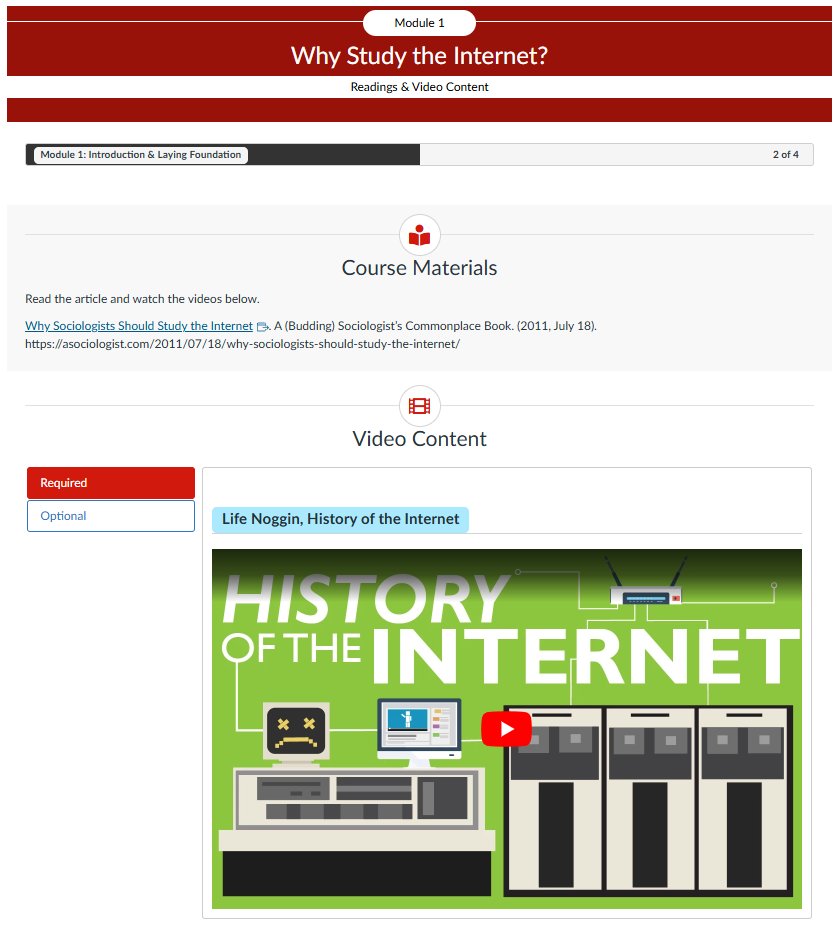
 In this example Content page, we have two content blocks: the course materials and readings, and the video content for the current week’s module.