
Alex Moore
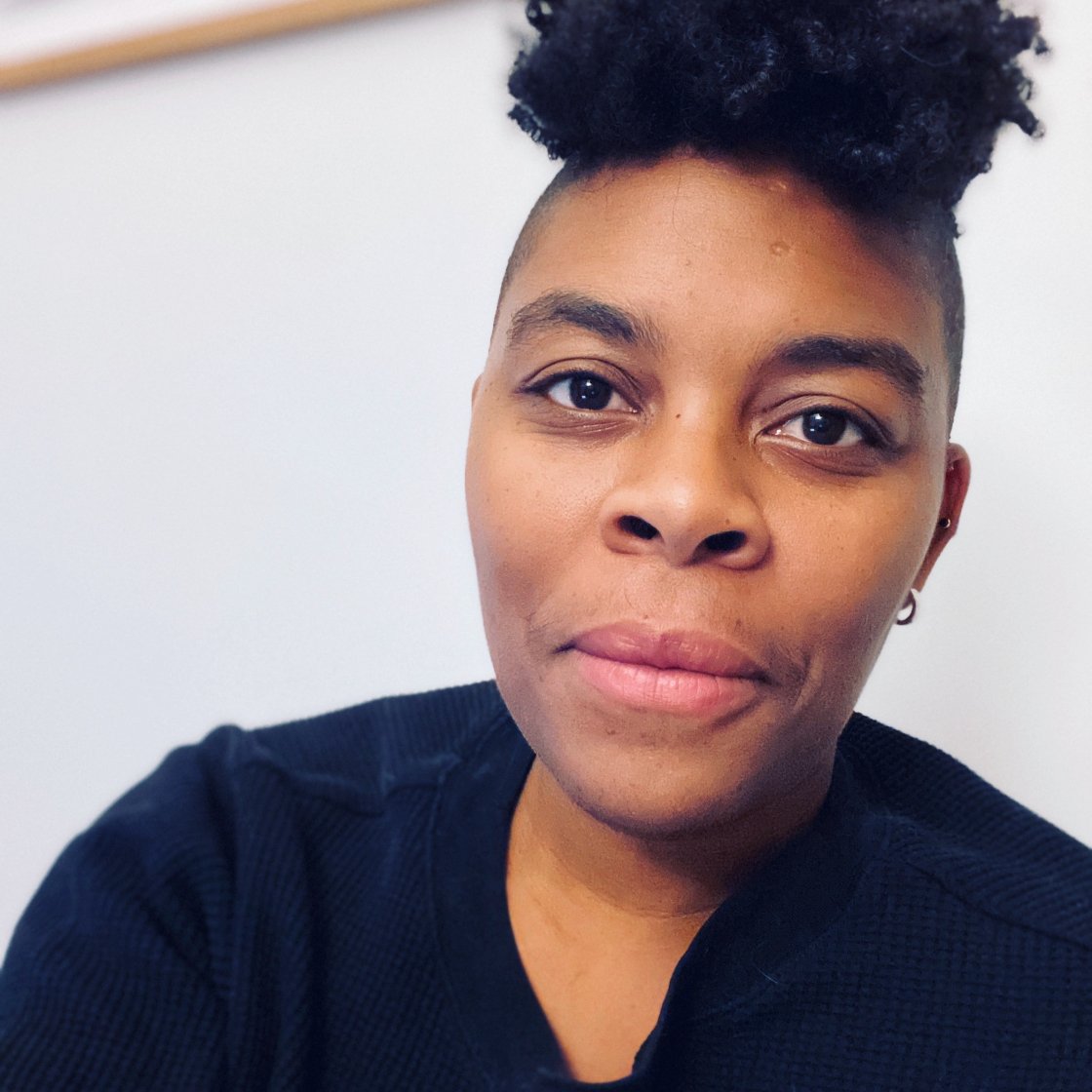
- Director, PSEG Institute for Sustainability Studies College of Science and Mathematics College of Science and Mathematics
- moorea@montclair.edu
- Phone
- (973) 655-2596
- Location
- Montclair > Center for Environmental & Life Sciences > 100G
Biography
Dr. Alex Moore (they/them) is the Director of the PSEG Institute for Sustainability Studies at Montclair State University. Prior to taking on this role, Dr. Moore was Assistant Professor at the University of British Columbia and consulted as an Environmental Scientist at Carbon Direct, a climate technology company. They conducted their doctoral studies at the Yale School of the Environment, followed by completing a postdoctoral fellowship at the American Museum of Natural History and another at Princeton University. Their work has focused on integrating ecological knowledge and sociocultural dynamics into conservation/restoration research and practice while emphasizing the importance of equity and inclusion. Dr. Moore brings these varied experiences and perspectives to their role as Director and supports the development of programs that address the challenge of sustainability both locally and globally.
Publications
- Moore AC, and Gaynor S. The prevalence of predator-risk effects in coastal wetland ecosystems. Ecosphere (in press).
- Gillis LG, Arkema K, Chee SY, Hortua DA, Huxham M, Moore AC, et al. 2026. Mangroves and Seascape Connectivity: Identifying the next steps for research and management. Estuarine, Coastal and Shelf Science. Special Issue.
- Chaudhary VB, Kim S, Medina M, Srivastava DS, Traylor-Knowles N, Brito-Millan M, Carmargo-Cely A, Chatterjee S, Chen N, Chen Y, Gotanda K, Halsey S, Jack C, McGuire R, Miller C, Moore AC, et al. 2025. Protect US racial affinity groups. Science 387(6737): 937. https://doi.org/10.1126/science.adq4733.
- Rice M, Tumber-Davila JS, Baiz M, …and Moore AC. 2025. Language Matters: Terminology in ecology and evolutionary biology disproportionately harms marginalized groups. PLoS Biology 23(1): e3002933. https://doi.org/10.1371/journal.pbio.3002933
- Moore AC, Calhoun K, Wilkinson C et al. 2024 Queer Black Voices in Conservation. Conservation Biology 38: 6. https://doi.org/10.1111/cobi.14385
- Moore AC, and Kumble S. 2024. Community-based conservation and restoration in coastal wetlands: A review. Wetlands. DOI 10.1007/s13157-024-01818-3
- Cheng S, Gaynor K, Moore AC et al. 2023. Championing inclusive terminology in ecology and evolution. Trends in Ecology and Evolution.
- Moore, AC. 2022. Human-wildlife conflict: assessing the complexity of stakeholder perspectives – Remote learning adaptation. Network of Conservation Educators and Practitioners, Center for Biodiversity and Conservation, American Museum of Natural History, New York, NY. Available from https://ncep.amnh.org.
- Moore AC, Hierro L, Mir N, and Stewart T. 2022. Mangrove Cultural Ecosystem Services: Current Status and Knowledge Gaps. People and Nature. http://doi.org/10.1002/pan3.10375
- Merow, C., P. J. Galante, J. M. Kass, M. Aiello-Lammens, C. Babich Morrow, B. E. Gerstner, V. Grisales-Betancur, A.C. Moore, E. A. Noguera-Urbano, G. E. Pinilla- Buitrago, J. Velasquez-Tibatá, R. P. Anderson, M. E. Blair. 2022. Operationalizing expert knowledge in species' range estimates using diverse data types. Frontiers of Biogeography 14: e53589. https://doi.org/10.21425/F5FBG53589
- Moore AC and Schmitz OJ. 2021. Do predators have a role to play in wetland restoration? An experimental study in New England coastal salt marshes. Ecology and Evolution. doi: 10.1002/ece3.7880
- Betley E, Sigouin A, Pascua P, Cheng S, MacDonald K, Arengo F, Caillon S, Isaac M, Jupiter S, Moore AC, et al. 2021. Assessing multidimensional well-being constructs with equity and environmental aspects: A review of the landscape. People and Nature.
- Maas B, Grogan KE, Chirango Y, Harris N, Liévano-Latorre FL, McGuire KL, Moore AC, et al. 2020. Academic leaders must support inclusive scientific communities during COVID-19. Nature Ecology & Evolution 4: 997–998.
- Moore AC, Fauset E, Asher F. 2020. Consumer impacts on ecosystem functions in coastal wetlands: The data gap. Ecosphere 11(2): e03042. 10.1002/ecs2.3042
- Moore AC. 2019. What is the role of ecosystem engineers in New England salt marshes? A mesocosm study of the fiddler crab and the purple marsh crab. Wetlands. DOI 10.1007/s13157-019-01123-4.
- Moore AC. 2018. Context-dependent consumer control in New England tidal wetlands. PLoS one, https://doi.org/10.1371/journal.pone.0197170
- Smith-Ramesh LM, Moore AC, Schmitz OJ. 2016. Global synthesis suggests that food web connectance correlates to invasion resistance. Global Change Biology 23(2): 465-473.
- Moore AC, Burch JB, Duda TF. 2014. Recognition of a highly restricted freshwater snail lineage (Physidae: Physella) in southeastern Oregon: Convergent evolution, historical context, and conservation considerations. Conservation Genetics 16(1): 113-123.