
Arnaud Kurze
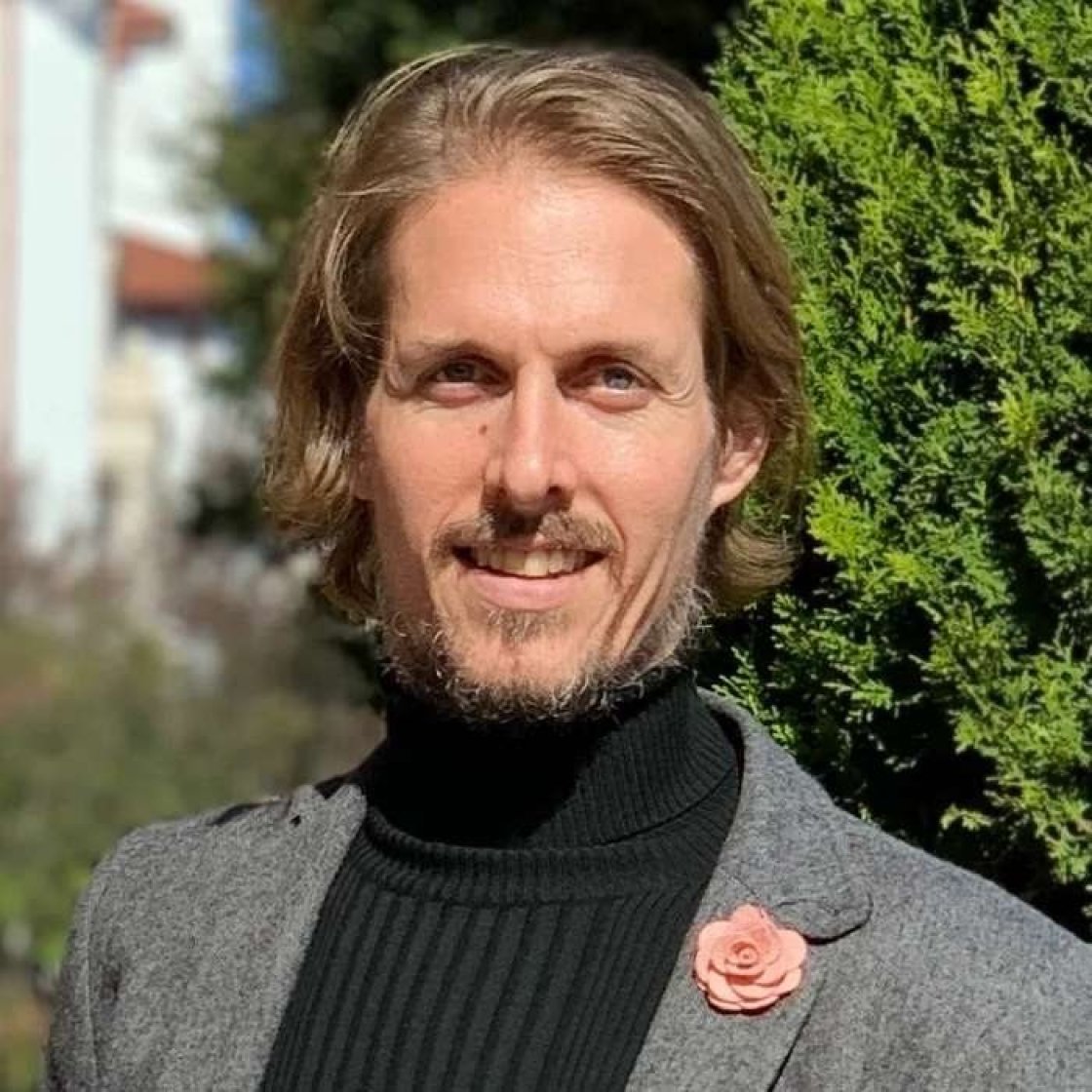
- Professor Sociology, Criminology, and Justice Studies College of Humanities and Social Sciences
- kurzea@montclair.edu
- Phone
- (973) 655-7960
- Location
- Montclair > Dickson Hall > 352
Biography
Dr. Arnaud Kurze is a scholar of transitional justice, memory politics, and global governance. His work asks how justice is practiced, contested, and reshaped from below, by youth movements, civil society organizations, and informal actors, in societies living through conflict, political change, and now climate and technological disruption. This is the throughline of justicecraft, the analytical framework he has developed with colleagues, including Lauren Balasco, Eliza Garnsey, and Christopher K. Lamont, over the past decade.
Dr. Kurze is Professor of Justice Studies at Montclair State University and directs Project AROS Lab, a research-apprenticeship model that brings undergraduates into faculty-led projects. He holds a Non-Resident Senior Fellowship in AI Governance at the Global Governance Institute in Brussels, and lectures at Columbia University and NYU. He was a Global Fellow at the Woodrow Wilson Center (2016–2025) and held a Library of Congress Kluge Center fellowship (2023–2026).
He has published widely on transitional justice and human rights, and writes reports for governments and international organizations through his consultancy, Justicecraft Solutions.
Dr. Kurze is co-author of Mapping Queerness in Times of Uncertainty (2025), Justicecraft: Imagining Justice in Times of Conflict (2024), and Mapping Global Justice: Perspectives, Cases and Practice (2022), and co-editor of New Critical Spaces in Transitional Justice: Gender, Art & Memory (2019). Justicecraft in Bangladesh: Accountability and Political Transformation in a Time of Crisis, co-edited with Christopher K. Lamont and Samina Luthfa, is forthcoming with De Gruyter Brill. His work appears in the Journal of Comparative Policy Analysis, Progress in Disaster Science, the Journal of Human Rights, the Journal of Gender Studies, and PARISS, alongside policy briefings for the Global Governance Institute and textbooks on international justice and the Balkans. He is a Fulbright Specialist (2021–2026) and has been interviewed widely on global justice, memory politics, LGBTQ rights in the Middle East, and Tunisia's democratization.
Education
- BA, Sciences Po, France
- MA, University of Hagen, Germany
- PhD, George Mason University
Resume/CV
Research
My research plots along three intersecting lines of inquiry. Each begins from the same question (how do people make justice when formal institutions fall short?) and extends it into a distinct domain. The throughline is justicecraft, an analytical framework I have developed with colleagues over the past decade for reading justice as something crafted, contested, and remade from below. I direct Project AROS Lab (PAL) at Montclair State University, where undergraduate researchers are integrated into each of the strands below, and I hold affiliations with the Global Governance Institute in Brussels, NYU, and Columbia.
Transitional Justice and Justicecraft
How do societies confront past violence, and how is that reckoning reimagined by those outside official processes? With colleagues I develop justicecraft as a lens attentive to memory politics and to youth- and art-based activism as sites where new justice claims emerge. Where conventional mechanisms such as war crimes trials and truth commissions aim to close the books, youth activists use street art, performance, and digital campaigns to keep public debate open and to contest impunity at the local level. This strand runs from the post–Arab Spring world and the Balkans to ongoing work on alternative and informal justice across regions. It informs Justicecraft: Imagining Justice in Times of Conflict (Palgrave, 2024) and my book manuscript Alternative Justice: Youth, Art and the Politics of Transition, currently under review with Oxford University Press.
A related project extends the framework to Bangladesh, asking how accountability claims take shape during rapid political transformation. Justicecraft in Bangladesh: Accountability and Political Transformation in a Time of Crisis, co-edited with Christopher K. Lamont and Samina Luthfa, is forthcoming with De Gruyter Brill.
Climate Justice: Gender and Mobility
Climate change is not only an environmental problem but a justice problem: its burdens fall on those who did least to cause it. With Christopher K. Lamont I advance transversal climate justice, tracing how climate connects to migration, health, development, and human rights across borders and scales.
Empirically, I study the gendered and intersectional dimensions of climate-related human mobility. Collaborative work published in Progress in Disaster Science (2026) analyzes how National Adaptation Plans in Bangladesh, Ethiopia, and Fiji shape women's agency across the mobility cycle. A companion project investigates how civil society organizations in Africa act as de facto governance actors translating gender-sensitive adaptation commitments into practice. The aim is to reframe mobility as a transformative risk-management strategy, not a failure of adaptation.
AI, Technology, and Human Rights
Digital technology and artificial intelligence are reshaping how rights are claimed, how the past is remembered, and how justice is governed. As a Senior Fellow in AI Governance at the Global Governance Institute, I examine AI policy through the lens of human rights and transitional justice: the digital politics of memory, technology's role in serving and surveilling victims, and capacity building for legal technology. Related work makes the case for justice-ready digital public infrastructure, embedding accountability into the digital layer on which democratic participation increasingly depends, and compares social media campaigns as tools of atrocity prevention in Canada and Syria (Journal of Comparative Policy Analysis, 2026).
This axis brings the justicecraft question into the algorithmic present: who gets to make justice when its tools are increasingly automated?
Related Links
Montclair does not endorse the views or opinions expressed in a faculty member's webpage or website. Consistent with the principles of academic freedom, the content provided is that of the author and does not express the opinions or views of Montclair State University.