Anthropology Students Unearth African American History at Montclair’s Howe House
A University archaeological project at the James Howe House is helping students and faculty uncover new clues about the lives of the people who lived there
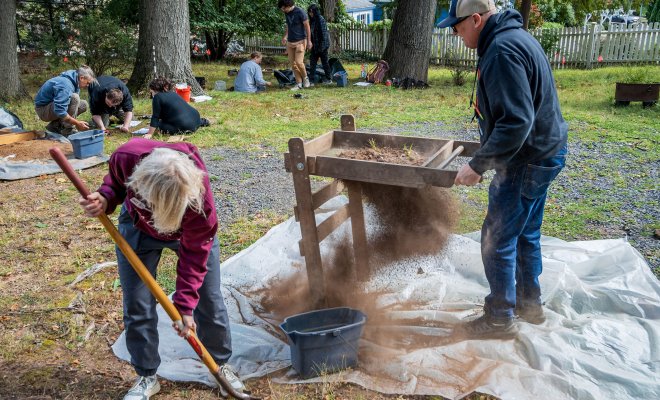
A Montclair State University team works with board members from the Friends of the Howe House on an archaeological survey of the Howe House property. (Photo by University Photographer Mike Peters)
Aiming to gain a better understanding of African American history in the Township of Montclair, a team of Montclair State University faculty and students began work in September on an archaeological project at the historic James Howe House in Montclair. One of the oldest buildings in the township and listed in the State and National Registers of Historic Places, the house became the property of James Howe, a formerly enslaved African American, in 1831.
The house and grounds now belong to the nonprofit organization, Friends of the Howe House, which is active in preserving the site and documenting its history. The organization reached out to the University looking for a partner in its historic preservation work and the archaeological project came about from the partnership.
Excavating the past
Led by Anthropology Professor Chris Matthews, Montclair’s team is conducting a survey of the property, which includes reviewing historical documentation such as maps and other documents as well as excavation work in the field and lab work back on campus.
“We dug shovel test pits,” explains Matthews. “These are about 50 centimeters wide, and we dig down about 50 to 100 centimeters on specific grid points five meters apart to see if there are any artifacts, or what we call features, which could be, perhaps, buried foundations or other kinds of things that would be in the yard.”
Gaining hands-on experience
Working alongside Matthews at the site were his colleague, Will Williams ’22, who works at the University’s New Jersey Center for Indigenous Justice, and four anthropology students and alumni with whom Matthews has worked before: Natalia Orlowski ’25, Michael Sperrazza, Olivia Davis and Troy Davitt ’25.
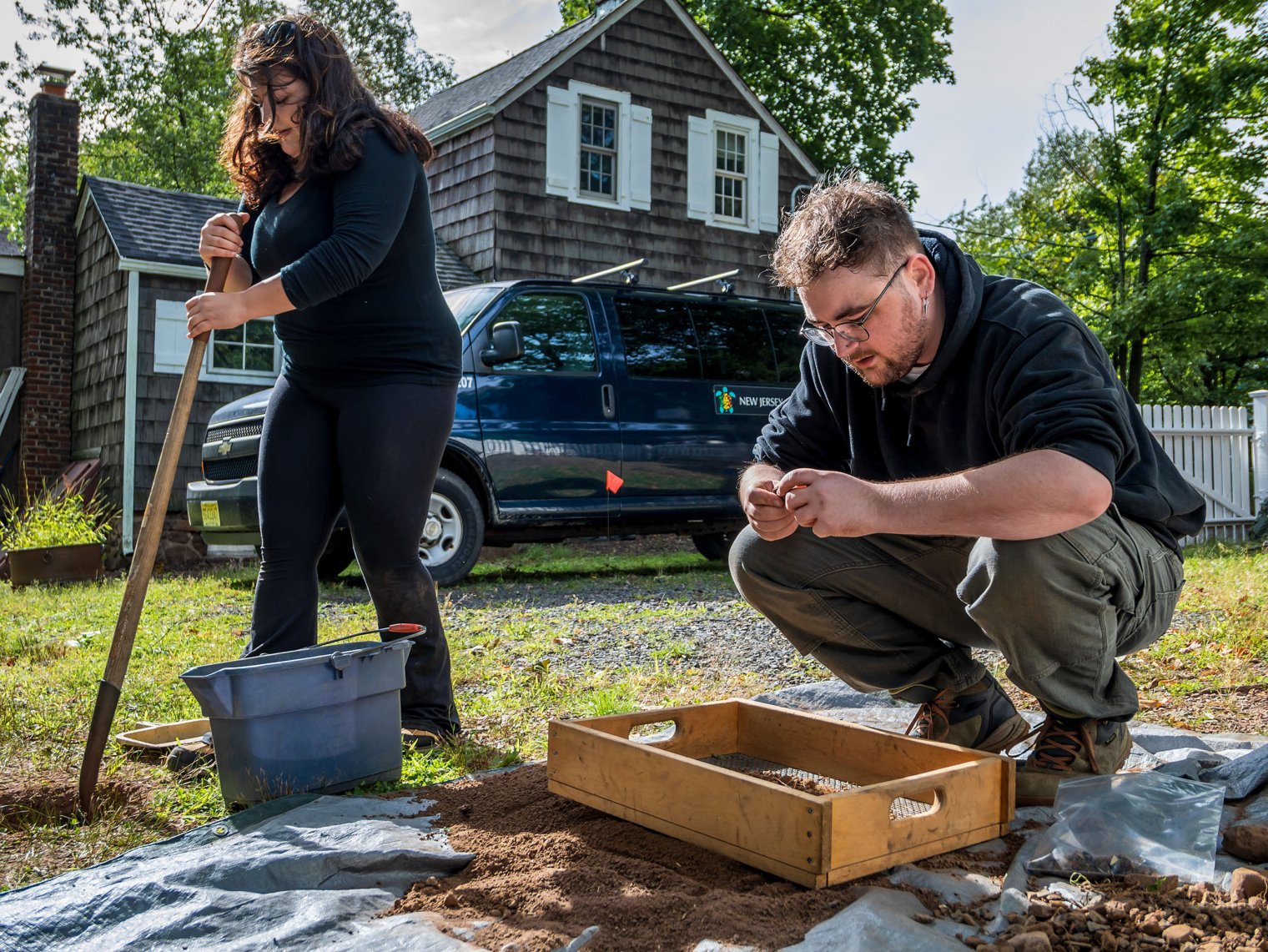
Like many professors at Montclair, Matthews believes in the importance of involving students in his work and giving them opportunities for hands-on learning experiences.
“It’s absolutely important,” he says. “Many of these students want to go into the field. They want to do archaeological research in one capacity or another and so they need this kind of experience to know what it's like.
“A lot of what we do in archaeology is training in the field such as learning how to see the deposits of soil. We actually learn how to feel them with our fingers, to feel the differences, which is essential training for going into the field.”
Working with the community
The University’s partnership with the Friends of the Howe House underscores its commitment to engaging with the community and working together. In addition to the University team, Friends of the Howe House board members Cathy Smith and Maria Towe joined in the work at the site, lending a hand to help uncover this important part of the township’s past.
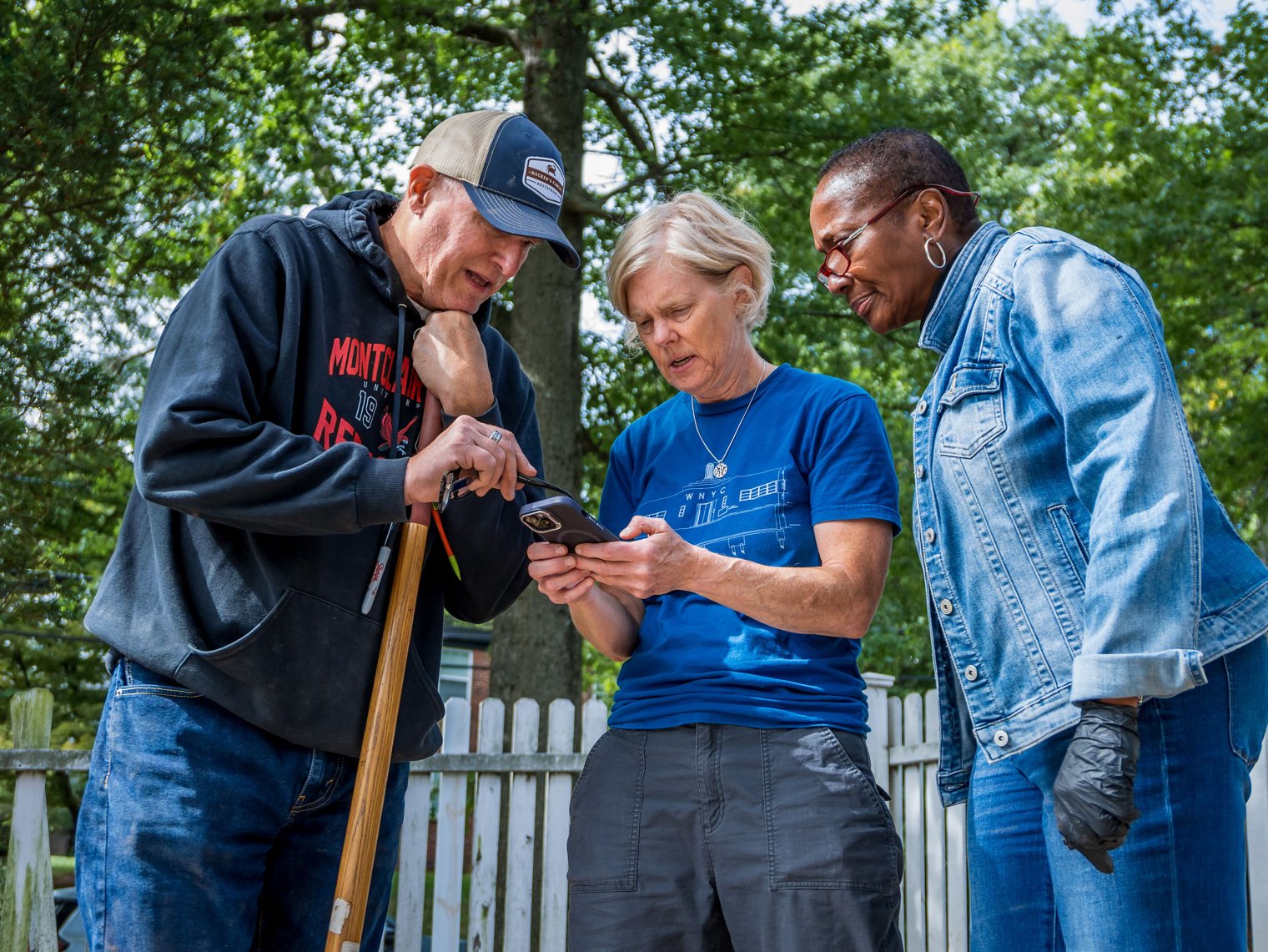
“There's no other site in Montclair with this historic African American association,” says Matthews. “The possibilities for archaeology to contribute to African American history are really rich because so much of African American lives is not well documented.
“Archaeology just gives us another view into understanding how their lives passed, what their community was like, and what they did from day to day, which is really what creates an archaeological record.”
The work continues
Due to a nor’easter that blew through the region the weekend of the survey, the team paused after the first day of work and plan to return later in October to finish the excavations.
“We completed 11 shovel test pits, so slightly less than half of what we have planned,” Matthews says. “We recovered a couple nice artifacts, including a clay tobacco pipe bowl, a medicine bottle finish [the lip area of a bottle], and the standard ceramics and glass shards. We also learned that someone recovered a couple boxes of historic bottles and other artifacts from the site a few decades ago. They returned them to the site and we will be analyzing them as part of the project.”
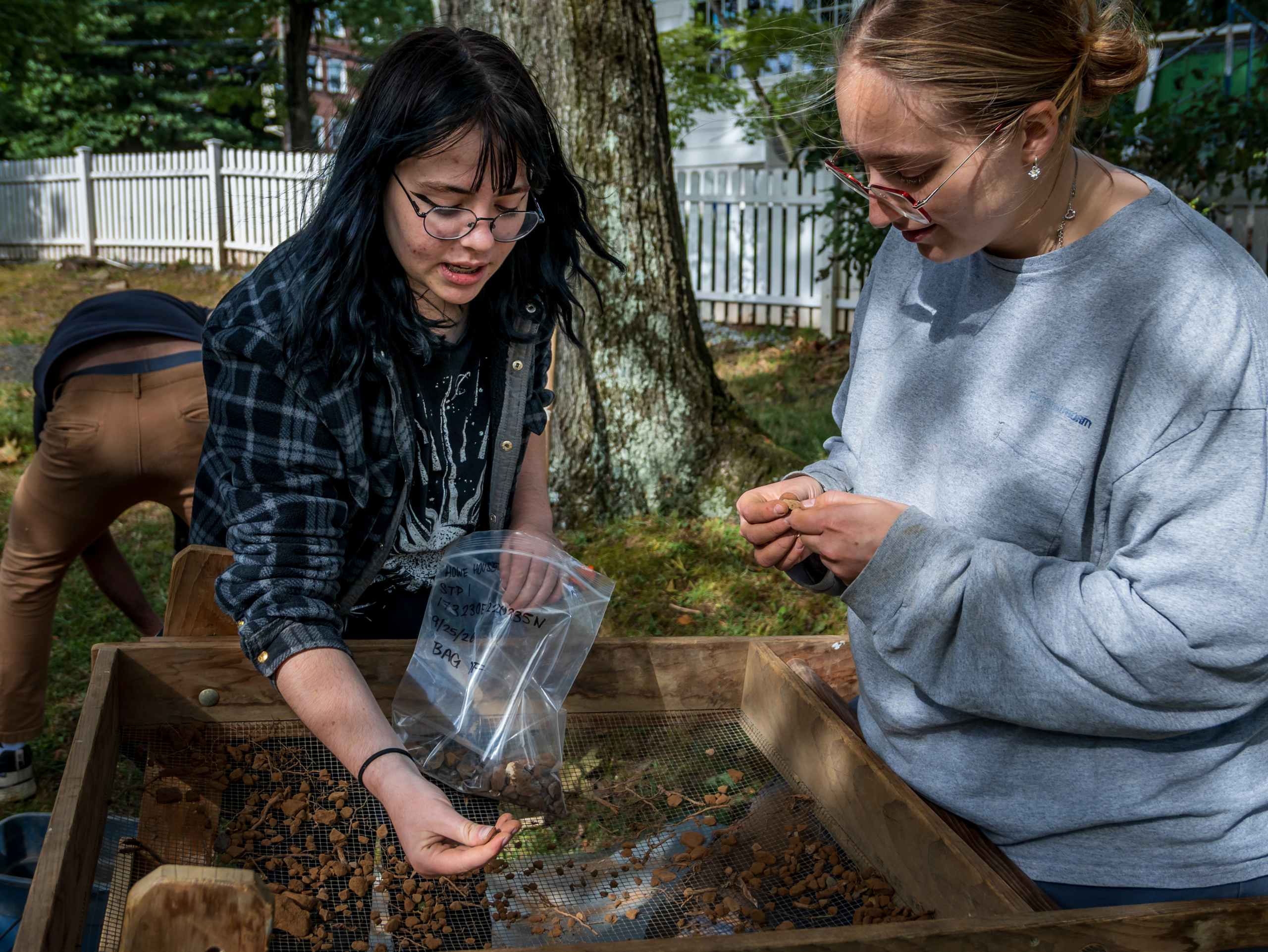
As they plan for their return to the site, the team will be doing lab work on campus, which begins with artifact processing: washing and identifying the artifacts, and creating an artifact catalog.
“From there we do analysis of the data, looking for patterns in the number and distribution of artifacts by type as well as looking for any materials that we can use to assign dates to the deposits,” Matthews explains. “Hopefully that will support some interpretations that will add to the story of the site.”



- Published
- Type
- Topic
- School or College