Illustration

  • BFA
  • Major
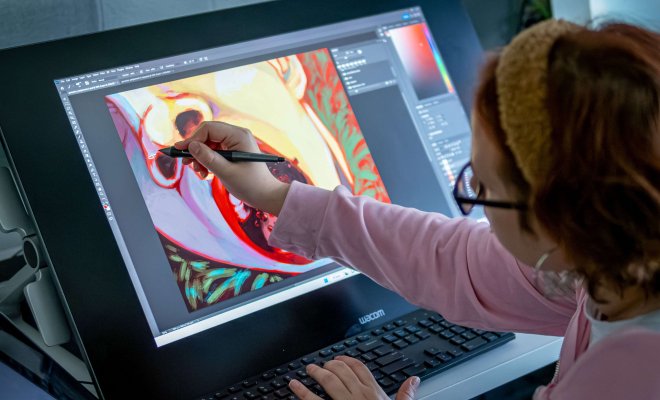
Illustration student painting on a digital screen.

Bring your imagination to life—one drawing at a time! If you've always seen the world a little differently, the BFA in Illustration at Montclair State is where that vision becomes a practice—and a career.

Located just outside New York City, home to the world's top publishers, studios, and design agencies, you'll have access to professional connections and opportunities that few programs can match. Our multidisciplinary curriculum prepares you to tell visual stories across a wide range of media, from traditional pen and ink to digital painting and motion graphics. You'll explore character design, concept art, worldbuilding, comics, children's book illustration, editorial work, and more—graduating with a final project, a professional portfolio, and real internship experience.
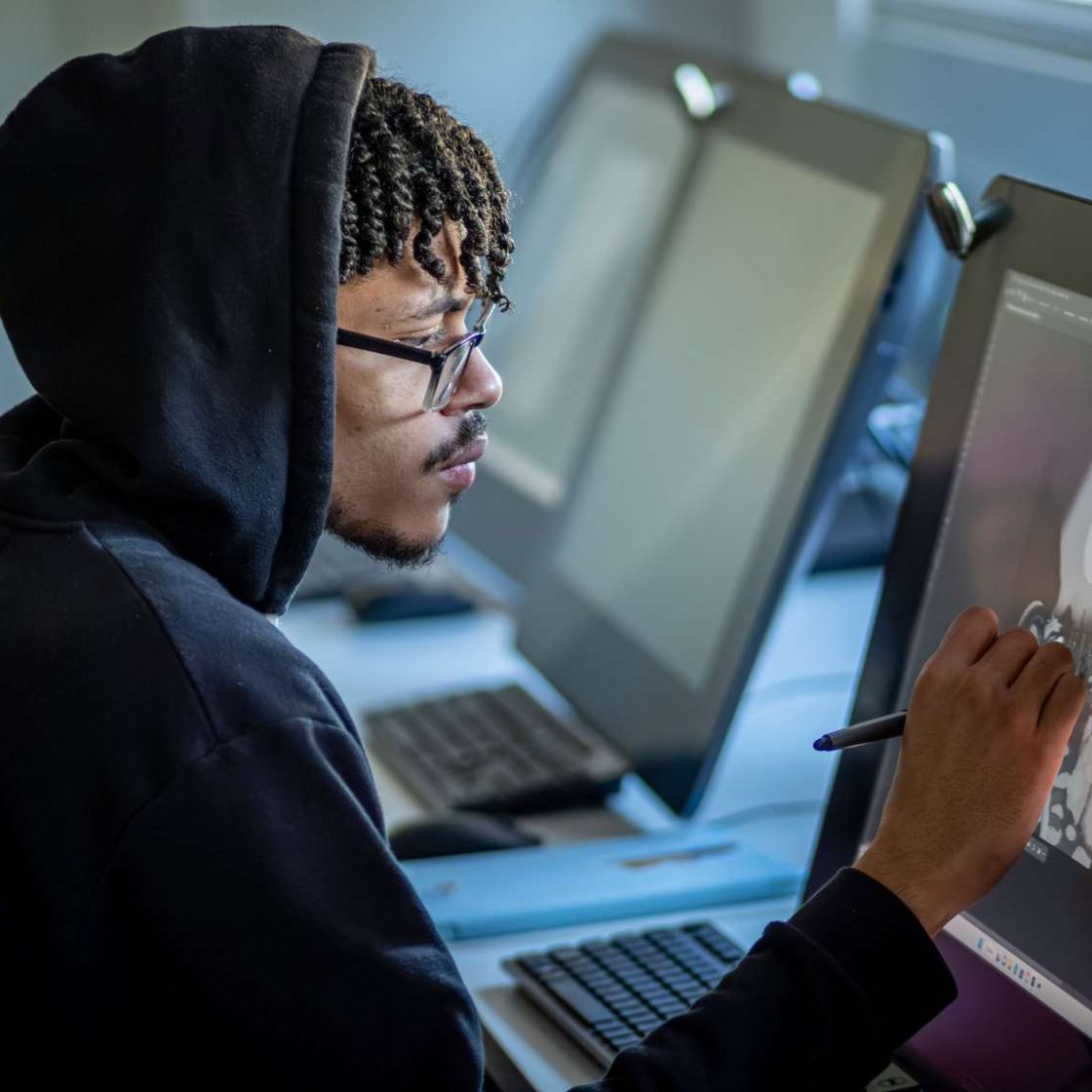
Illustration student wearing a hoodie and glasses drawing on a digital screen.

Program Highlights

  • Courses in traditional and digital media: acrylic, watercolor, digital painting, vector drawing, and more
  • Advanced coursework in editorial, graphic novels, visual development, motion, zines, and licensing
  • Projects include character sheets, storyboards, animated walk cycles, and an entrepreneurial business model
  • A mandatory creative internship
  • Final-year exhibition and portfolio tailored to your career goals
  • Award-winning faculty with deep industry experience and NYC connections
  • Small class sizes for personalized mentorship

Explore Concentrations

From concept sketches to client-ready artwork, all students learn to create dynamic characters and worlds for comics, games, animation or publishing. Choosing a concentration will help you be further prepared for a career as an illustrator, art director or visual development artist in today’s creative industries.

Best suited for students who want to study visual development for gaming, film, animation, advertising art, or motion graphics.

Best suited for students who want to study comics, graphic novels, children’s books, magazine or editorial art.

Best suited for students who want a little bit of both the Pre-Production and the Publishing tracks with the additional option to study caricature drawing and how to license your art for retail stores.

The Illustration program at Montclair was integral to me getting my agent and book deal. The classes helped to build a strong portfolio and the professors gave me opportunities to put it in front of industry professionals.

Zach Rios '24

hawk icon

Turn your sketches into a storytelling career

Portfolio Requirements

While there is no exact formula or singular way to create a portfolio, below are standards and guidelines for preparing a portfolio for submission to Montclair State University. First and foremost, we recommend that you select examples of your work that best represent your approach to the visual arts. 

You will also be expected to present your work in a digital format as well as bring original works to a campus interview, where possible. In presenting your portfolio, please note that each work should be described with a title (even if “untitled”), medium and dimensions.

Preparing your Portfolio

While there is no ideal substitute for presenting artwork in its original form, the Department of Art and Design asks that you also upload your work electronically as part of your application. This will enable us to have a record of your work and enable additional faculty members to view
it. Below are some options for preparing digital files for submission:

  • Create a multi-page portfolio in PDF format.
  • Create a Google Slide presentation or a Power Point presentation so that you may label your work. Save the slideshow as a single PDF document and upload your file. If the PDF is over 10MB, please post a link to your slideshow and make sure that you select “Share” and open the restrictions so that your reviewers have access to view the document.
  • Upload all works as single files using the system in any of the following formats: jpg, pdf, tiff, word, .mov. Make sure that your images do not exceed 2MB each.
  • If you have a portfolio website, provide the URL in a PDF. Your PDF must be under 10MB.
  • 7-10 examples of observational drawing (e.g. drawing from life right in front of you)
  • 3-5 examples of portraiture, anatomy, and/or figure drawing 
  • At least one example of 2-point or 3-point perspective (e.g. buildings, room interior, etc.)
  • Works that use a full range of value to indicate a light source (shading from light to shadow and including midtones)
  • Work that shows conceptual thinking (e.g. using visual metaphors or symbolism)
  • Work that indicates use of composition
  • At least a few examples that indicate use of color
  • Sketchbook Pages to show your process in building an idea and to show what you like to draw for fun

**Optional:

  • You may include no more than 2 examples of sequential narratives (e.g. comic book panels.)
  • No more than 2 examples of character studies
  • No more than 2 examples of digital art
  • Work is presented neatly with labels or a quick blurb describing each piece and your process.

**Transfer students from another college institution may include more works from these categories so long as it is some of their best work

Number of Pieces

It is a good idea to include 15 to 20 pieces of work in your portfolio. Less than 10 may not show enough diversity of ideas. More than 20 can become repetitive. Include only your strongest work instead of trying to show everything you’ve done. Your art teacher(s) can help you edit your portfolio if you’re not sure what to include.

Color

Color can be represented in a variety of drawings and paintings. Check to see that you have a variety of color projects examining different color relationships.

Composition

The way you arrange shapes and forms on a page demonstrates your sense of composition. Even in realistic painting and photographs, the way you choose to crop an image and choose the view shows your compositional skills.

Media

For Illustration it is recommended to have mostly drawings and/ or paintings in your portfolio. You may include a few samples of video, photography or 3-D media if you consider this some of your best work.

Sketchbooks

No matter your area of interest, sketchbooks show how you think, and this is a very important element in a portfolio. Sketchbooks need not be fancy, but should show examples of various projects. In looking at these, the reviewer can see how you develop a project from start to finish. Sketchbooks also show what you like to draw for fun and can help a
reviewer see an area that you may potentially be interested in in the field.


Drawing directly from printed photographs

Drawing from photographs printed in magazines or books does not show how you would interpret an image, but how another artist already has. You may, however, use photos for reference, or draw from your own photographs.

Copied Work

Try not to copy directly from other artists or designers for your final portfolio work. Although copying can sometimes help you learn technique, you should only do it for exercise.

Dated Work

Include only your more recent work, completed within the last two years, in your portfolio. Although you may like a piece you did when you were a high school freshman, it will not show your current abilities.

Superheroes/Cartoons

One or two drawings of comic book superheroes may be acceptable to include, especially if this is an area you are interested in pursuing as a career, but most reviewers frown upon seeing too much emphasis on them. This is because in most cases, the student draws in a preexisting style as opposed to demonstrating a style of his or her own.

Celebrities

Everyone likes to do drawings or paintings of their favorite celebrities, but most often, these are inspired by another artist’s photographs. If you truly want to include a star piece, make sure that it is the art itself that is interesting, not just the fact that the subject is a celebrity.

AI Generated Work

By using AI generated images you are not showing how you are a creative problem solver or what creative technical skill sets you possess on your own. For this reason using AI software for any part of your process for your portfolio is prohibited.

Snapshots

Snapshots differ from photographs in that they tend to be quick remembrances of a vacation, party, occasion, etc. rather than thoughtfully conceived work. Photographs that are interesting compositionally through the use of tone, color and point of view, however, would be worthwhile to include.

Questions? We're Here to Help.

Undergraduate Admissions Office

Whether you’re looking to begin an application, have questions about transferring to Montclair or trying to check your application status, the Office of Undergraduate Admissions is pleased to help you in any way we can.

Department of Art and Design

For more than five decades, the Department of Art and Design has educated artists and designers who interpret, impact and often shape the world as we experience it.