
SCHOLAR Certificate at Bloomfield College

At Bloomfield College of Montclair State University, you can earn a SCHOLAR Certificate by turning your experiences, culture and community into college-level work that counts toward your degree. Required for incoming first-year students and open to transfer students, the program helps you build confidence, strengthen writing and critical thinking, and gain career-ready skills through hands-on projects with real community impact.
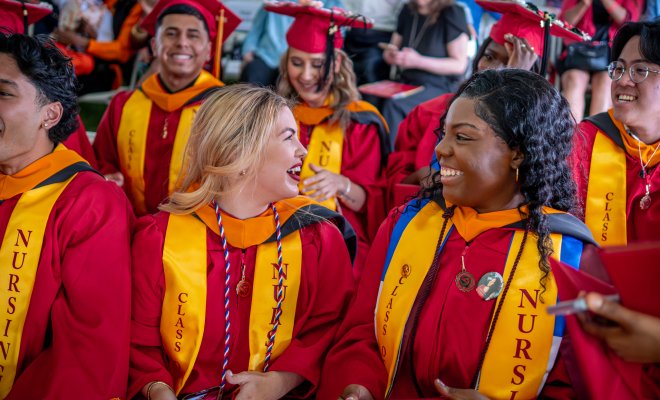
Students at Bloomfield College graduation.

The SCHOLAR Certificate gives you a meaningful way to begin college by learning from the community you already know. It is a 10-11 credit certificate required for incoming Bloomfield College students, and transfer students can also choose to take part.

SCHOLAR stands for Stewardship, Community History and Opportunities for Leadership and Academic Readiness. Through SCHOLAR-designated courses, you connect your coursework to real communities and build skills employers and graduate programs value, including critical thinking, collaboration, cultural competence and ethical leadership.

The program begins in Writing 105, where students complete a research-based project focused on a community they belong to. This work helps you grow as a college writer and thinker while showing that your background, experiences and perspective belong in the classroom.

Core Elements of SCHOLAR

  1. Reflection and self-awareness
  2. Reciprocity and exchange
  3. Culture and history

Together, these ideas help you do work that is personal, rigorous and connected to the world beyond campus.

Elective courses include select SCHOLAR courses in areas such as writing, nursing, informatics, game design, theater, social entrepreneurship, advocacy and Africana Studies. The certificate ends with the SCHOLAR Symposium, where students present work shaped by the communities they studied and engaged.

Learning that Starts with You

SCHOLAR helps you connect who you are with what you study, making college work feel more meaningful from your very first semester.
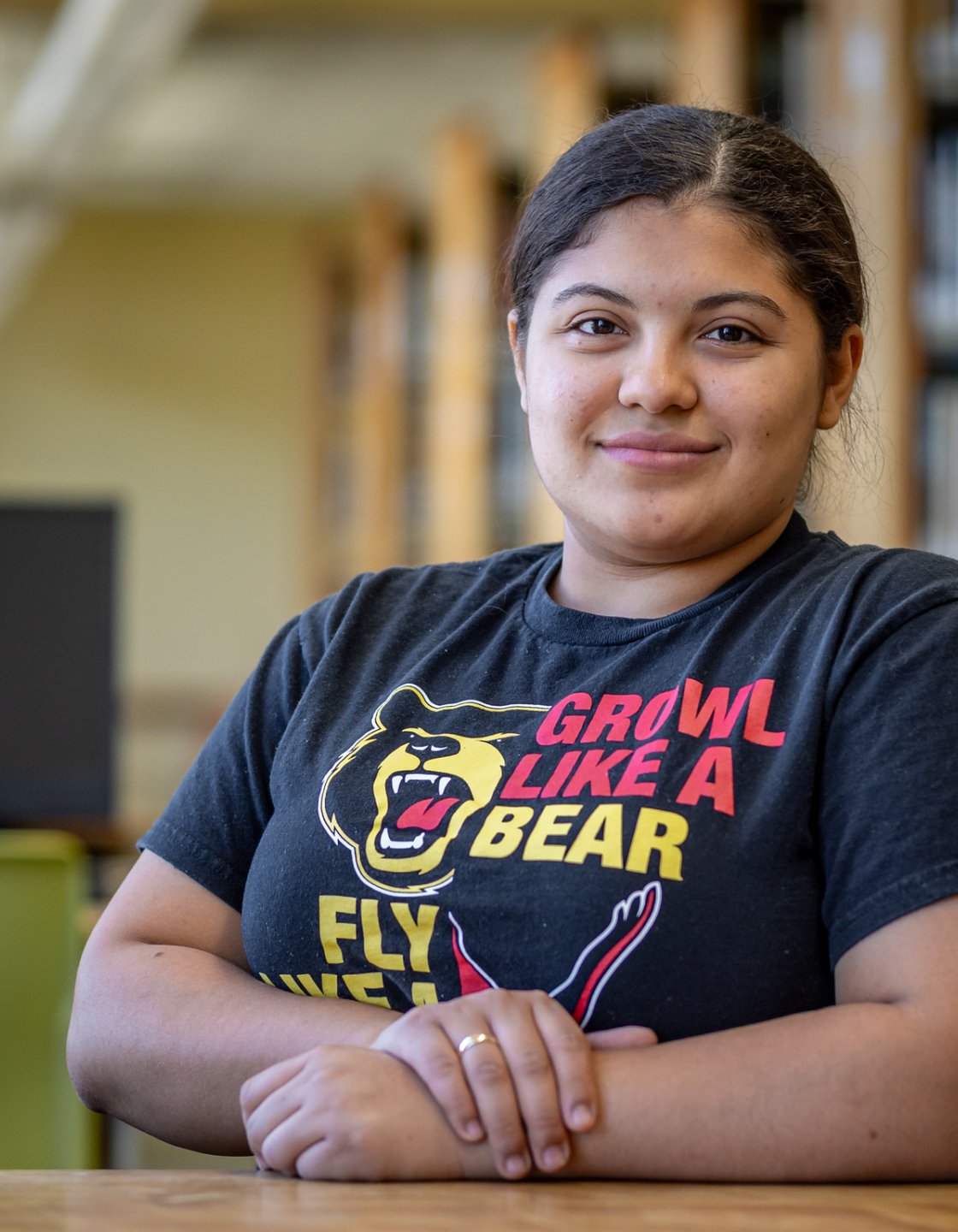
Odyeli Ramos Tobar sits at a table in the campus library.
“You’re not doing the work because someone told you to. It’s because it comes from you.”

Odyeli Ramos Tobar ’29

Nursing

hawk icon

SCHOLAR Courses

Required

This course is designed for students in need of enhanced instruction in college-level writing. It teaches writing as a process by requiring a number of written drafts per essay. The focus is on developing students' college-level competence in argumentative, thesis-based writing. Many classes are held in the computer lab to enable intensive writing instruction, and some out-of-class tutoring may be assigned. Students must receive a grade of C- or better to advance to WRT 109. Satisfies SEEDS Effective Writing I student learning outcome in alignment with Engagement, Agency, and Leadership value.

Students will register for IDS 300 in the same semester they complete their final SCHOLAR elective. This credit will enroll them in the SCHOLAR Symposium. At the end of the semester, students will share their SCHOLAR ePortfolio page at the BCMSU Student Research Symposium, the culminating assignment in the 10-11-credit hour SCHOLAR certificate program. Through this course, students will submit ePortfolio documentation of the community project they will present to the public at the bi-annual SCHOLAR Symposium.

Electives (Choose 2)

This special topics course examines the historical and contemporary intersections of race, gender, ethnicity, and class within Black, Africana, and African American experiences. Through interdisciplinary lenses – ranging from history, sociology, and cultural studies to science, technology, and political economy – students explore how systems of power, knowledge production, and socioeconomic structures shape Black life across global contexts. Topics include the impact of scientific discourse on racial formation, the dynamics of inequality and resistance, and the evolving cultural, political, and intellectual contributions of African and African-descended communities. Emphasis is placed on critical inquiry, comparative analysis, and engagement with both foundational texts and emerging scholarship. Satisfies SEEDS Analyzing Cultures and Societies student learning outcome in alignment with Social Justice and Equity value.

This course is a study of the relationships between animals and plants and their environment. Population growth and species interactions, organization of biological communities, ecosystem structure and function (energy flow and biogeochemical cycles) will be discussed. Current examples ("case studies") of environmental problems will be examined to show the real application of basic ecological principles. Laboratory consists of experimental and descriptive laboratories with experience in field techniques.

This course provides a foundational overview of informatics, focusing on how information is collected, managed, and used through technology. Students will explore core topics such as information systems, human-computer interaction, data ethics, and the role of informatics in society. Designed for students pursuing studies in computing, information science, or related fields, the course emphasizes real-world applications of informatics in areas like healthcare, business, and social systems. Through hands-on assignments and discussions, students will begin developing the technical and analytical skills necessary for further study in the discipline. No prior programming experience is required. Satisfies SEEDS Scientific Reasoning student learning outcome in alignment with Educated Citizenry value.

This course covers the broader aspects of the games industry such as its history, its current state and potential future evolution, and the team-based development environment. It then focuses on core game design concepts and their application as students create documentation and work in collaborative groups to develop analog games. Satisfies SEEDS Creative Expression student learning outcome in alignment with Self-discovery and Self-Care value.

An introduction to dramatic practice where students study and perform theatrical works while learning fundamental aspects of theater production and technical terminology. The course culminates in a four-week immersive final project that heightens aptitude for experiential learning. Students select plays, (dependent on course theme), design a production approach (including costumes, scenic elements, music, and blocking), and perform scenes for friends, family, and community. This experiential component develops NACE career readiness skills: critical analysis through interpreting theatrical relationships, cultural literacy via diverse perspectives, communication through articulating artistic choices, project management in realizing creative vision, adaptability in reimagining works for new contexts, and research capabilities exploring historical connections. Students develop valuable professional skills whether new to theater or with some experience. Satisfies SEEDS Creative Expression student learning outcome in alignment with Educated Citizenry and Engagement, Agency, and Leadership values.

This course explores the innovative intersection of business principles and social impact. Students will learn to identify social problems, develop market-based solutions and build sustainable ventures that create meaningful change. Through hands-on projects, case studies and interaction with practicing social entrepreneurs, students will gain the knowledge and skills needed to launch and grow ventures that balance profit with purpose. Satisfies SEEDS Political and Civic Life student learning outcome in alignment with Engagement, Agency, and Leadership value.

Introduces students to the knowledge base of professional nursing. Presents theoretical foundations that support practice such as critical thinking, communication, ethics and law, nursing theorists and health and illness. Introduces professional values of caring, altruism, autonomy, human dignity, integrity and social justice. Explores the history of nursing creating an understanding for current nursing practice and education. Initiates the socialization of the student to the expectations of the profession of nursing. Includes a weekly laboratory to foster success in the major.

Builds on nursing knowledge, expands focus from the nurse client interaction to the nurse community relationship. Community can be in family, a geographic location, and/or an aggregate population. Knowledge of epidemiology and economics support community health nursing. Clinical experiences provide students the opportunity to explore the roles of nurses in the community. Requires 2 clinical days.

This course uses social science frameworks to explore advocacy and civic engagement. Students will learn to evaluate information, understand sociopolitical structures, and enact social change through a collective social action project, applying theories and methods from social sciences to real-world community issues. Satisfies SEEDS Political and Civic Life student learning outcome in alignment with Engagement, Agency, and Leadership value.

This course surveys specific highlights in the rhetorical tradition (which, broadly speaking, focuses on the relationships between language and meaning) and what they can teach us about how we communicate persuasively. We will look carefully at a few specific points in the tradition's history (Nyaya systems, classical Greek, Enlightenment rhetorics of science, Ethiopian natural laws, and others) to explore their influences on (or exclusion from) language use in current social and political contexts. Satisfies SEEDS Political and Civic Life student learning outcome in alignment with Engagement, Agency, and Leadership value.

This variable-topics writing course engages students in the critical analysis and exploration of pressing social, political, cultural, and/or scientific issues that shape contemporary communities and societies, with topics determined by the instructor ranging from environmental justice and public health policy to digital media and democracy, migration and belonging, or other timely concerns. Students will produce research-driven and reflective writing that examines complex public issues from multiple perspectives, drawing on diverse sources and voices to construct well-informed arguments that move beyond personal opinion toward evidence-based advocacy. By semester's end, students will have produced an ePortfolio containing writing that demonstrates their growth as critical thinkers and ethical advocates who can analyze systemic issues, engage responsibly with diverse stakeholders, and use writing as a tool for civic participation, social stewardship, and structural change in their academic, professional, and community lives. As topics change, this course may be repeated for credit. Satisfies SEEDS Political and Civic Life student learning outcome in alignment with Engagement, Agency, and Leadership value.

Have questions? We’re here to help.

Contact the SCHOLAR Certificate program for more information about how the certificate works for incoming first-year and transfer students.