Dr. Fiore Presents Her Sabbatical Project at UNISG in Piedmont, Italy
Posted in: CHSS News, Endowed Chair's Research, Inserra Chair News and Announcements, Italian News and Events, Sicily, Teresa Fiore Research, World Languages and Cultures
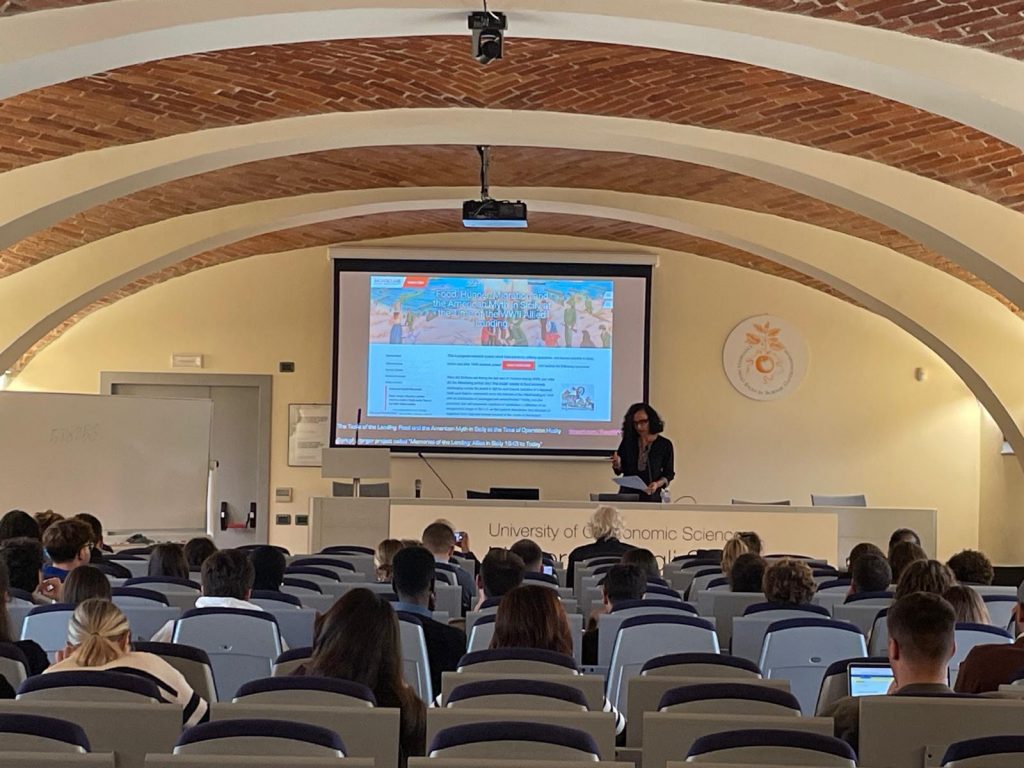
Dr. Teresa Fiore gave a talk titled “The Taste of the Landing; Food and the American Myth at the Time of Operation Husky” at UNISG (Università delle Scienze Gastronomiche) in Pollenzo (Piedmont, Italy) on Oct. 14.

Based on her sabbatical research on foodways at the time of the Allied Landing in Sicily (1943), the paper revises the narrative of the American forces feeding Sicilians through the use of eighteen interviews with direct witnesses and scholars sharing stories about the stark contrast between the local wartime food and the industrial food brought by the soldiers from the US. See webpage.
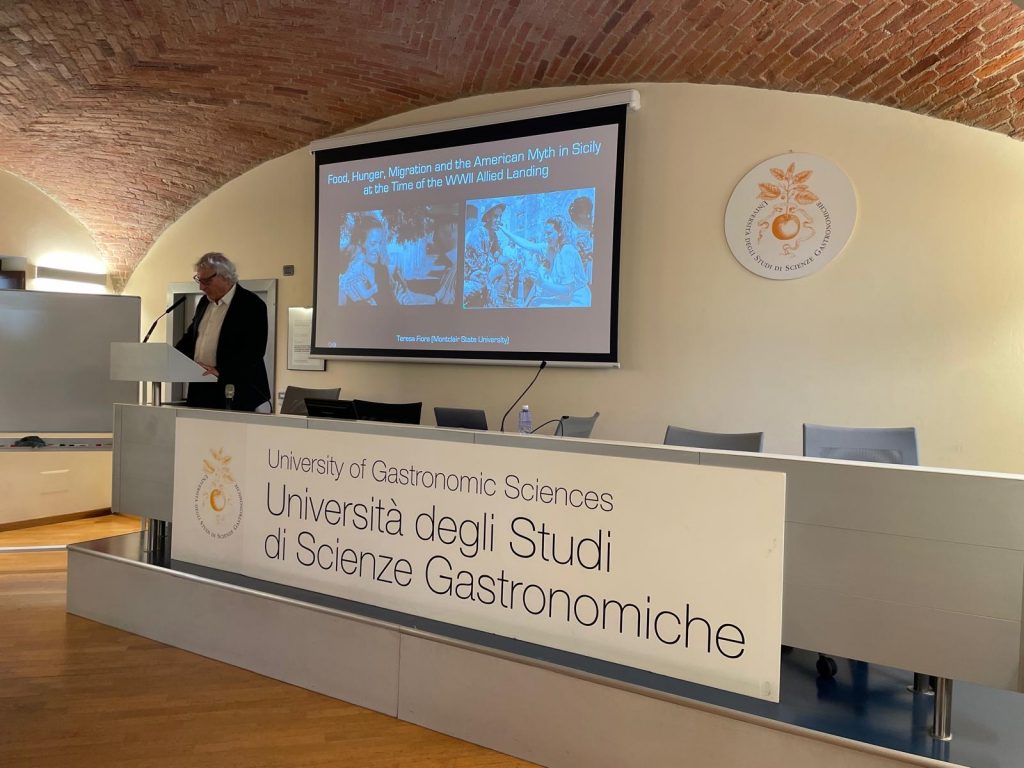
Prof. Cinotto introduced Dr. Fiore’s talk providing special insights into the impact of the landing in Italy in terms of U.S. control of the economic and socio-political sphere. The students’ questions during the Q&A revealed a keen interest in historical issues, in methodological aspects linked to oral history, and in the encounter of cultures during wartime.
UNISG has an institutional commitment to videos about food. Its film archive “Granai della memoria/Granaries of Memory,” directed by Dr. Gabriele Proglio, is devoted to oral history about food, food history, food practices, etc.
UNISG is a private university linked to Slow Food, the movement founded by Carlo Petrini in 1986. Focused on food and sustainability, the academic approach privileges collaborative hands-on projects ranging from cooking, cook-book writing, market visits, food history research, eco-agronomy techniques, etc.
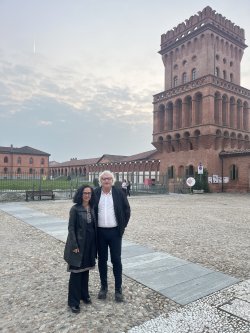

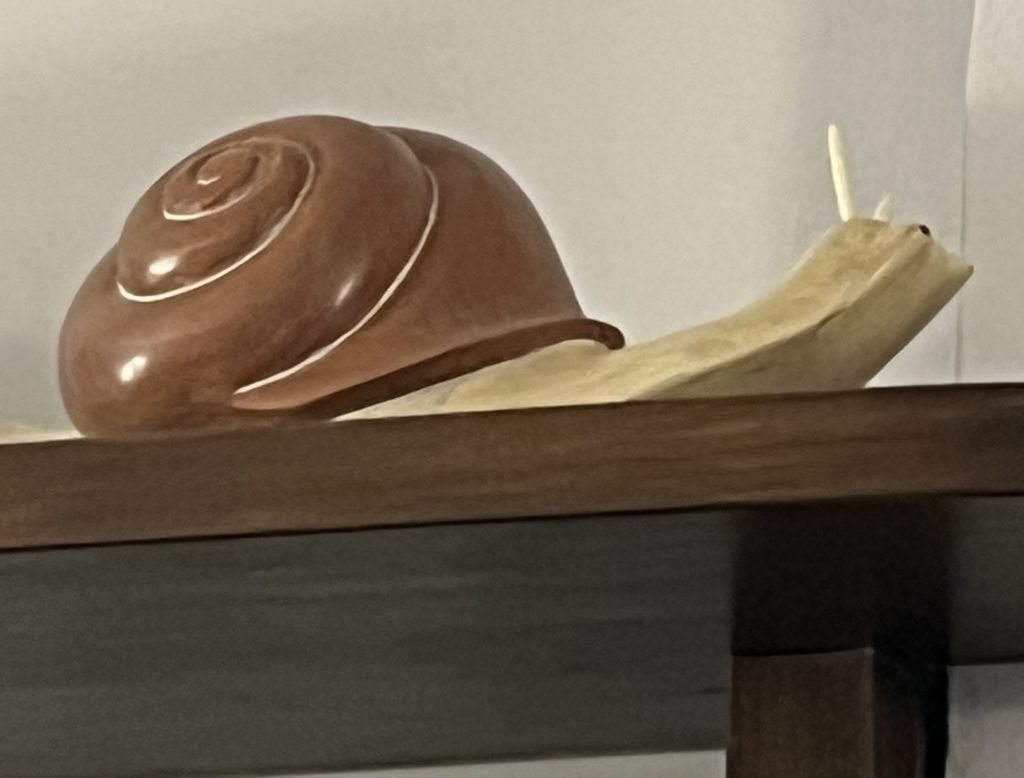
The UNISG campus is a World-Heritage (UNESCO) site with its distinctive historical buildings, imposing towers, elegant courtyards, printing office for student-managed publications, student-tended fruit and vegetable gardens, and a unique cafeteria that largely relies on the produce cultivated on campus. All under the watchful eye of the snail, the Slow Food symbol, under no time pressure.