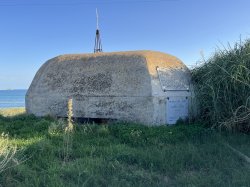
Dr. Fiore Searches for Traces of the 1943 Landing in Sicily (areas of Catania and Siracusa)
Posted in: CHSS News, Endowed Chair's Research, Teresa Fiore Research, World Languages and Cultures

Dr. Teresa Fiore (Inserra Chair in Italian and Italian American Studies, WLC Dept.) continues to focus on her sabbatical project about the Allied Landing in Sicily in the summer of 1943. After concentrating on the area of Licata in the province of Agrigento with the SBARCO project in July, this past November, Dr. Fiore visited the areas near Catania, as well as Siracusa and its environs, to identify potential locations and interviewees for the documentary she is working on in collaboration with Awen Films (she also gave a talk at a local museum in Floridia).
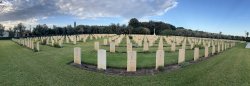
While this history remains quite unknown to the general public in the U.S., and in Sicily it is still narrated by locals in a fragmented and often partisan way, the landscape tells powerful concrete stories of Italian defense systems developed before the Landing, Allied military structures built after it, and pre-existing places adapted to the war needs.
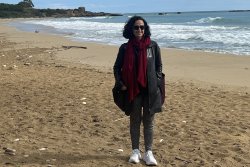
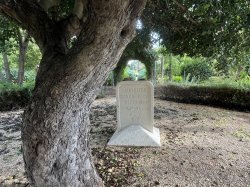
Ruins of trenches, firing positions for cannons, and fuel tanks carved into the ground, as well as well-preserved cemeteries, bunkers, plaques, bomb shelters, and quarries functioning as arm deposits have revealed to Dr. Fiore a completely new way of seeing Eastern Sicily, often visited for Greco-Roman archeological sites and Baroque architecture.
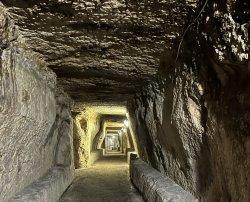
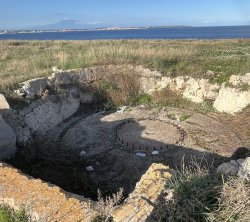
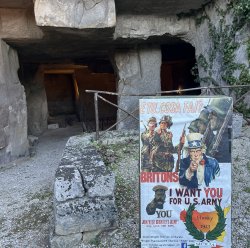
It is a mostly silent history that is interestingly gaining voice through thematic tours such as those designed by Daniele Valvo and theater re-enactments in key spots (see Melilli poster) that evoke the experience of frantically looking for a shelter against air-bombings or sadly killing a young soldier in what was a confusing war of allies turned into enemies and enemies turned into allies.
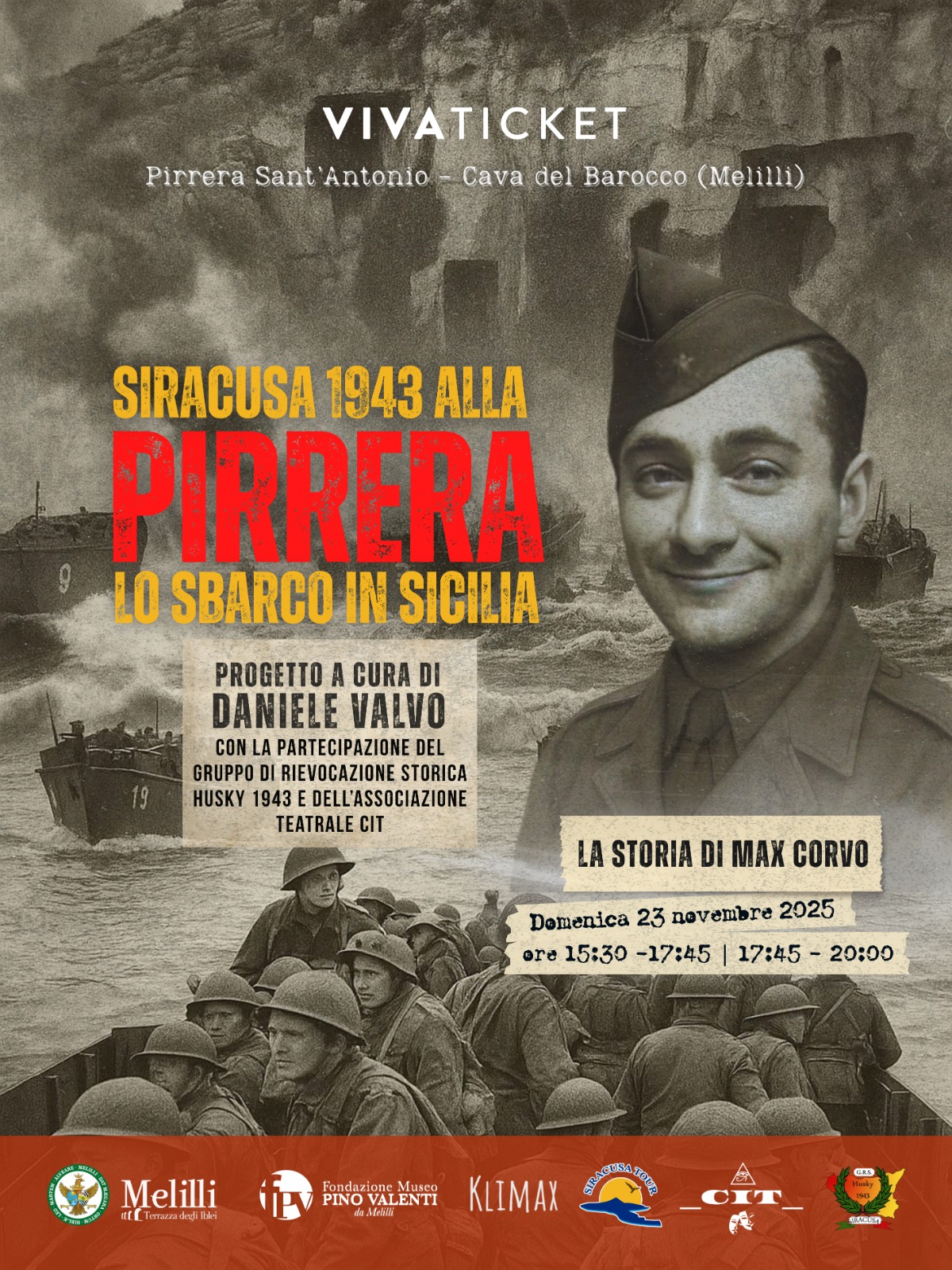
In the process, Dr. Fiore is discovering a plethora of small associations devoted to the collection of military gear (see Operation Husky organization) as well as organizations creating small museums and offering talks and debates: the memory of the event is a space of tension where nostalgia, ideology, archival research, and modern readings interweave and clash, providing rich materials for her sabbatical project.